
Darrell Issa introduces new US pirate site blocking bill
Text not yet published as Congress juggles multiple SOPA-style proposals, broadband providers face pressure to become copyright enforcers
Images
 torrentfreak.com
 torrentfreak.com
 torrentfreak.com
 torrentfreak.com
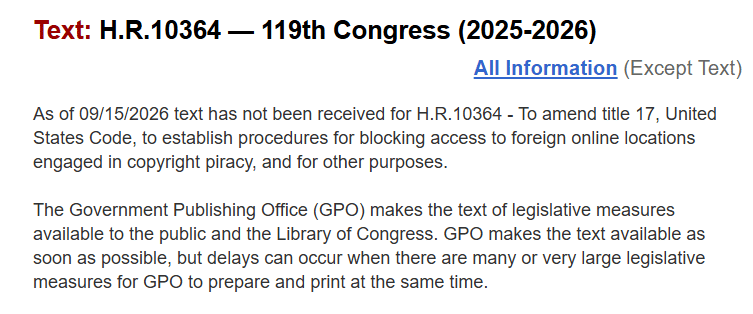
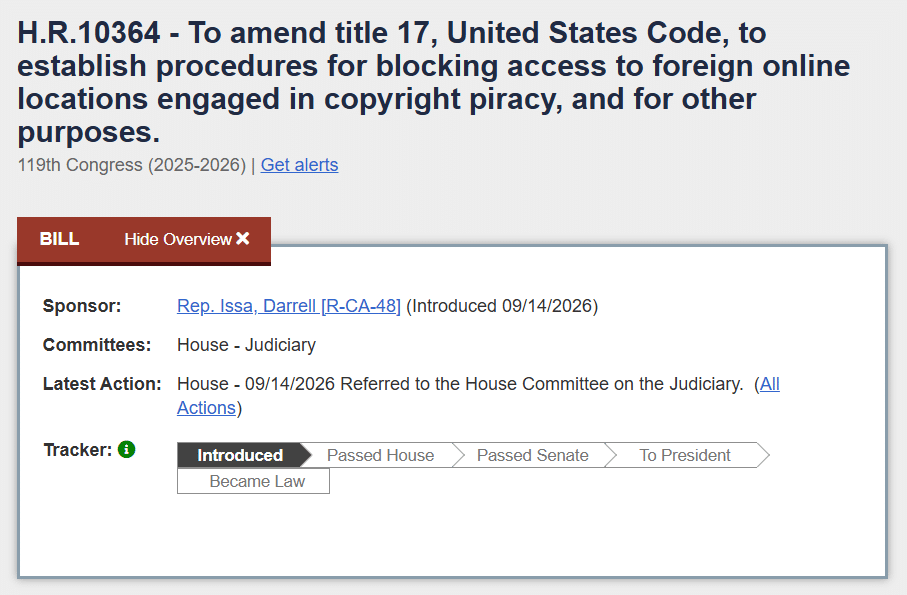
H.R. 10364 lands in Congress without a published text, as Rep. Darrell Issa introduces a new bill to create procedures for blocking access to foreign pirate sites. TorrentFreak reports the proposal is billed as the American Copyright Protection Act, reviving a tactic that has been politically toxic in Washington since the SOPA fight in 2012.
The unusual part is not that Hollywood wants site blocking; it is that lawmakers are again trying to normalize it through routine court process. According to TorrentFreak, Issa’s bill arrives alongside at least two other blocking efforts already moving on Capitol Hill, including earlier proposals tied to Rep. Zoe Lofgren and a Senate draft known as Block BEARD, with talk of a merged “four corners” agreement involving multiple offices. Issa, who chairs the House IP subcommittee and is expected to retire at the end of the term, has only a short runway to turn a sketch of a bill into enacted law, which helps explain the push for an expedited framework.
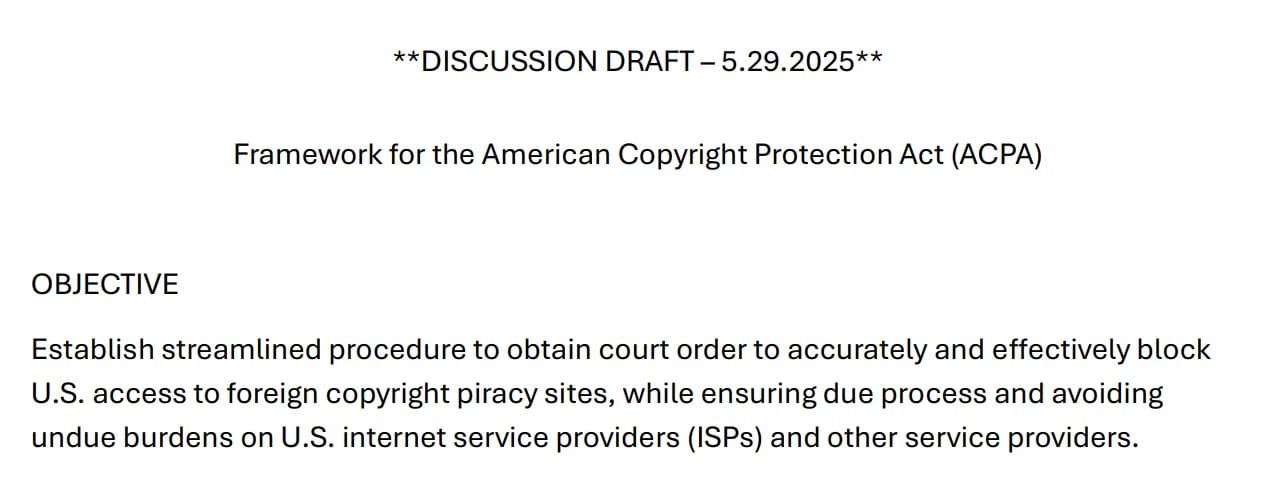
TorrentFreak notes that a 2025 discussion draft of Issa’s approach contemplated orders compelling ISPs and DNS resolvers to block access to targeted domains, with a designated roster of judges handling these cases and a public list of active blocking orders. The bill now introduced may or may not contain those elements; even the basic safeguards are unknowable until the text appears on Congress.gov. That opacity matters because site blocking is easy to overshoot: the same DNS and hosting infrastructure is shared by legitimate services, small businesses, and nonprofits that have no legal budget to contest a mistaken takedown. Public Knowledge, a digital rights group, opposed introducing the bill before publication, warning—according to TorrentFreak—that extending orders to global DNS resolvers can create global blocks, letting a single court decision ripple far beyond US users.
Europe is the cautionary case lawmakers cite in both directions. Rights holders point to routine blocking in several European countries as evidence the tool can be domesticated. Critics point to overblocking and knock-on outages when blunt technical measures collide with modern web plumbing, where one domain can front many services and where resolvers operate at international scale. The political appeal in Washington is that blocking shifts enforcement costs outward: rightsholders get a court order, and broadband providers and infrastructure firms do the policing.
Issa’s bill is now officially in the system, but the public still cannot read it. For a policy sold as a narrow procedure, the first procedural step has been to ask everyone to trust what is in the document.