
Reform UK Wales leader steps down after arrest
Dan Thomas bailed on suspicion of assault and controlling behaviour, Senedd opposition role shifts as party faces defections
Images
 Dan Thomas is the former leader of Barnet council in north London, but is originally from Blackwood, Caerphilly. Photograph: Finnbarr Webster/Getty Images
theguardian.com
Dan Thomas is the former leader of Barnet council in north London, but is originally from Blackwood, Caerphilly. Photograph: Finnbarr Webster/Getty Images
theguardian.com
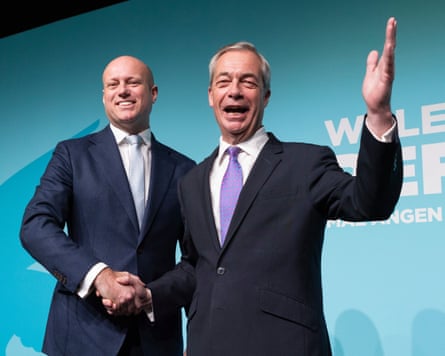 Dan Thomas, left, and Nigel Farage at the Reform Wales manifesto launch in March. Photograph: Jon Rowley/Getty Images
theguardian.com
Dan Thomas, left, and Nigel Farage at the Reform Wales manifesto launch in March. Photograph: Jon Rowley/Getty Images
theguardian.com
 Sarah Cooper-Lesadd accused her former party of not being serious about governing in Wales. Photograph: Senedd
theguardian.com
Sarah Cooper-Lesadd accused her former party of not being serious about governing in Wales. Photograph: Senedd
theguardian.com
A man arrested in south Wales on suspicion of assault and controlling or coercive behaviour has prompted Reform UK’s Welsh leader, Dan Thomas, to step down while police inquiries continue. According to The Guardian, Gwent police said a 45-year-old man from Aberbargoed was arrested and later released on bail pending further investigations; Thomas said he was released without charge and denied wrongdoing. Reform UK said he would not take part in Senedd business, after he missed the first plenary session of the new term and questions to the first minister on Tuesday.
The resignation lands in the middle of Reform’s first sustained test as a parliamentary force rather than a campaigning vehicle. The party became the second largest in the Welsh parliament after May’s election, winning 34 of the chamber’s 96 seats, and Thomas was elected leader of the opposition. That role matters procedurally as well as symbolically: it shapes speaking time, scrutiny, and the public face of a bloc whose vote share rose sharply from the previous Senedd election.
The Guardian reports that Thomas was presented by Nigel Farage in February as the party’s Welsh leader, and that he was seen by some in the Welsh branch as a headquarters pick—an outsider “parachuted in”—which had already created tensions. Reform’s leadership had reasons to centralise control: Farage chose Thomas in part to distance the party from its former Welsh leader Nathan Gill, who the paper notes was jailed for accepting bribes to make pro-Russia statements in the European parliament. But central selection also concentrates the downside risk. When a party’s credibility is tied to a small number of high-profile recruits, any police investigation becomes a governance problem, not just a personal one.
The immediate consequences are already visible. The Guardian says there have been reports of infighting within the Reform group in the Senedd since May, and that the party’s performance has drawn attention for unparliamentary conduct. At the same time as Thomas’s resignation was announced, one Reform member of the Senedd, Sarah Cooper-Lesadd, defected to Plaid Cymru, accusing her former party of unspecified issues.
Gwent police have not charged Thomas, and the inquiry is ongoing. Reform UK’s biggest platform to date now begins the new Senedd term without the figure it installed to front it.