
Elon Musk cheers AfD after German state election win
Researchers link X livestreams to media coverage jumps, agenda-setting shifts from parties to platforms
Images
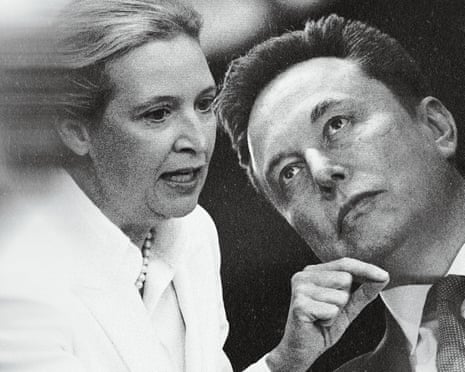 Composite: The Guardian/Getty Images
theguardian.com
Composite: The Guardian/Getty Images
theguardian.com
Elon Musk congratulates AfD after German state election win, Alice Weidel gains attention boost from X amplification, mainstream parties watch agenda-setting migrate to one account
Elon Musk used his X account to celebrate the Alternative für Deutschland after the party’s shock win in a German state election, a result that left the AfD a few seats short of being able to form what would be the first far-right state-level government in Germany since the second world war. According to the Guardian, Musk posted “Gut gemacht!” addressed to AfD leader Alice Weidel and followed up with at least a dozen posts about the party in the days after the vote. Ulrich Siegmund, the party’s leader in Saxony-Anhalt, publicly thanked Musk for his support and called him a “visionary”.
The episode illustrates how a single high-follower account can act as a distribution channel that political organisations would normally have to buy, build, or bargain for. The Guardian reports that Musk has spent years aligning himself with anti-immigration activists and hardline leaders across countries, and that his positions on immigration, politics and race on X now overlap with many AfD policies. That overlap is not just ideological signalling; it is practical media leverage. Researchers cited by the Guardian say a livestream Musk hosted for Weidel in early 2025 produced a large boost for her on the platform and then spilled into German-language media coverage, as editors and broadcasters treated the online surge as a news event in its own right.
For the AfD, the benefit is obvious: attention, legitimacy-by-proximity, and a way to reach voters without relying on German gatekeepers. For Musk, the relationship offers something different: a constant supply of political content that keeps his platform central to national debates, while positioning him as a patron of parties that define themselves against established institutions. The Guardian describes the relationship as symbiotic, and the details point to the mechanics of that bargain—politicians get reach, the platform owner gets relevance, and traditional media gets pulled into covering whatever the platform has already elevated.
The reporting also underlines how the “personal brand” of a billionaire can become an auxiliary campaign asset that sits outside normal party finance and advertising rules. Musk is described as having backed Donald Trump’s re-election bid in 2024 with more than $100 million of his own money, and as taking a prominent role in Trump’s second administration. In Europe, where parties operate under tighter funding and broadcasting regimes, an external amplifier can do what a domestic donor cannot: create momentum without a formal transaction. The Guardian notes that Siegmund has pushed for German schools to focus less on responsibility for the second world war, and that some of his top staffers previously belonged to a banned neo-Nazi youth group—details that would normally be political liabilities, but which compete for oxygen with the spectacle of Musk’s endorsement.
Musk’s earlier interventions show the same pattern. The Guardian writes that he appeared onstage with Argentina’s Javier Milei, presented an award to Italy’s Giorgia Meloni, attacked Italian judges over migrant rulings, and delivered a livestreamed speech to a UK rally led by Tommy Robinson, where he claimed immigration was bringing “the destruction of Britain”. In Germany, the paper reports, Musk began messaging a young climate and immigration activist, Naomi Seibt, after seeing her posts; she later promoted the AfD to him during their chats. The pipeline from private messages to public endorsement is short when the intermediary is also the megaphone.
In Saxony-Anhalt, the AfD’s vote count is what moves seats. But the Guardian’s account suggests the news cycle around the result was shaped by a different number: how many times one platform owner chose to post about it.