
Indian student cleans polluted river by hand
Ajnar cleanup draws viral praise and AI-editing accusations, wastewater drains keep refilling what one person removes
Images
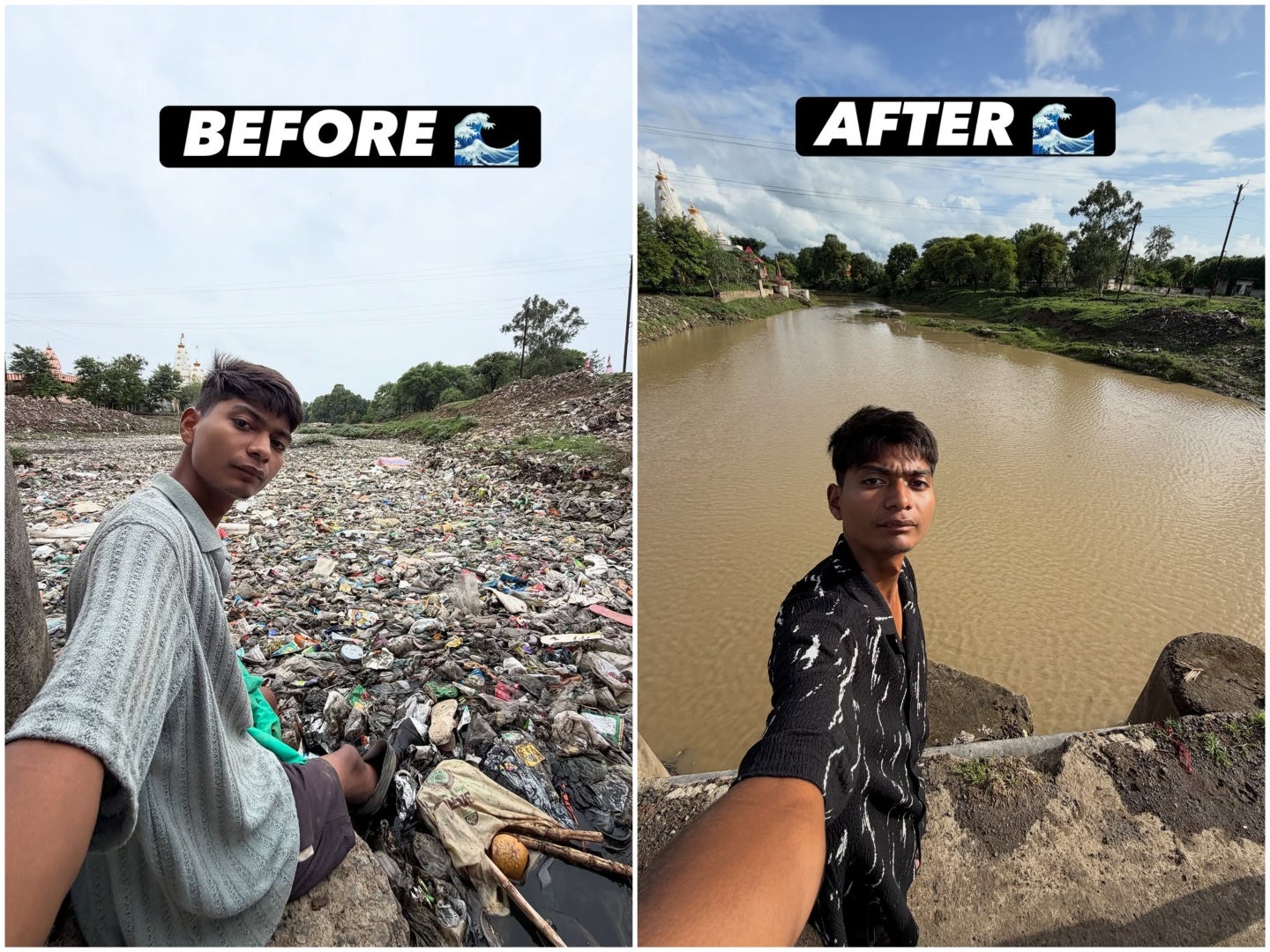 A 21-year-old student in central India has spent months wading into a filthy river to pull out plastic, bottles, algae, and other rubbish, with little more than basic tools and his own hands (Surendra Singh Choudhry/Instagram)
Surendra Singh Choudhry/Instagram
A 21-year-old student in central India has spent months wading into a filthy river to pull out plastic, bottles, algae, and other rubbish, with little more than basic tools and his own hands (Surendra Singh Choudhry/Instagram)
Surendra Singh Choudhry/Instagram
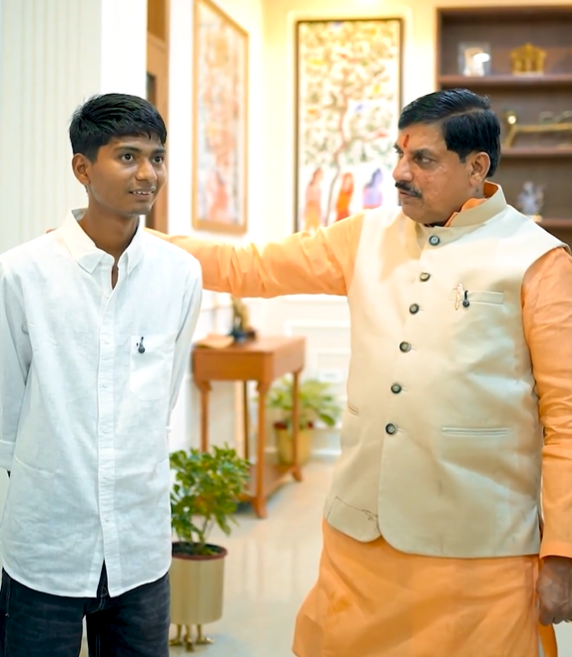 Madhya Pradesh chief minister Mohan Yadav met Choudhary at his residence in Bhopal on Saturday and praised his efforts (Dr Mohan Yadav/X)
Dr Mohan Yadav/X
Madhya Pradesh chief minister Mohan Yadav met Choudhary at his residence in Bhopal on Saturday and praised his efforts (Dr Mohan Yadav/X)
Dr Mohan Yadav/X
A 21-year-old student in Madhya Pradesh has spent months wading into a polluted river to pull out plastic and rotting waste by hand, despite not knowing how to swim and working without proper protective gear. According to The Independent, Surendra Singh Choudhary began cleaning the Ajnar river in January after seeing rubbish accumulate near a temple he visited regularly. The work left him with infections and skin peeling on his hands and feet.
Choudhary’s effort started with friends and gradually became a mostly solo routine: basic tools, bare hands, and evenings spent in contaminated water. He told the newspaper he initially lied to his parents about where he was going, saying he was playing cricket or meeting friends. He wanted to build a machine to clean the river but lacked the funds, so he did what he could manually.
The story travelled faster than the waste. Photos showing before-and-after scenes spread online, drawing praise from prominent figures, including Mahindra Group chairman Anand Mahindra, who shared a video on X, and former England cricket captain Kevin Pietersen, who posted on Instagram. The same visibility also produced its own backlash: some accused Choudhary of chasing social media attention, while others questioned whether the images had been altered using artificial intelligence.
Local officials told The Independent that municipal authorities provided heavy machinery to remove accumulated debris and that residents joined in. But the reporting also describes why individual clean-ups struggle to stay “finished”: five major drains discharge wastewater into the Biaora river, and the municipality has proposed a sewage treatment plant with a large price tag. Until that kind of infrastructure exists, rubbish and untreated water keep arriving downstream, turning volunteer labour into a holding action.
The river’s pollution is not only household trash. The Independent notes that people also leave flowers and materials used in Hindu worship as offerings, adding to the load; Choudhary has collected some of these and turned them into compost rather than letting them decay in the water. He told the newspaper that removing rubbish is only part of the problem if new waste keeps returning, and that he does not understand why people throw garbage into the river in the first place.
The incentives are visible in the division of labour. The easiest part of river “management” is the part that photographs well: someone physically removing visible trash. The harder part—building and operating sewage treatment, preventing illegal discharges, and enforcing basic rules—requires budgets, maintenance, and the willingness to confront local habits and local interests.
Choudhary is still going to the Ajnar river. The drains are still emptying into it.