
DHS watchdog confirms Alligator Alcatraz used phone-booth cages
DeSantis office shifts from denial to tougher-talk after report, Florida site closed months earlier
Images
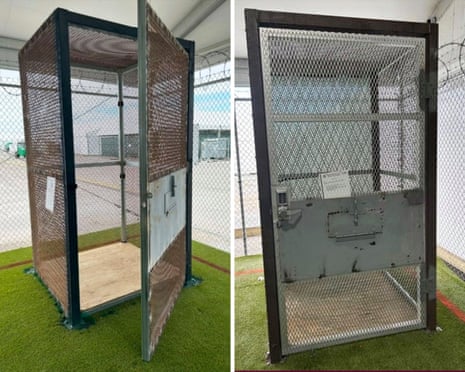 Small cages that were used in the ICE detention facility in Ochopee, Florida. Photograph: OIG/DHS
theguardian.com
Small cages that were used in the ICE detention facility in Ochopee, Florida. Photograph: OIG/DHS
theguardian.com
Alligator Alcatraz held detainees in outdoor metal cages no bigger than a phone booth, according to a report by the Department of Homeland Security’s inspector general on conditions at the Florida detention site in Ochopee. The facility—formally described as a Florida soft-sided facility and run by Governor Ron DeSantis’s administration on behalf of the federal government—was closed in June after about a year of operation, with officials citing hurricane-season risks for tent housing. The inspector general’s account follows months of public dispute over what was happening inside the camp.
According to The Guardian, the watchdog report provides official confirmation that guards repeatedly used the restrictive cages on detainees in ways the inspector general said violated ICE rules and did not align with standards for humane treatment. Amnesty International had previously alleged in a December dossier that detainees were shackled outside in metal cages for hours, exposed to extreme heat, sunshine and mosquito swarms; Florida officials dismissed those claims at the time as politically motivated fabrications. After the inspector general’s findings were published, DeSantis’s office declined to explain why it had denied the practice, and instead characterized detainees as “violent criminal aliens” without providing evidence, The Guardian reports.
The dispute over the cages sits inside a larger accountability maze typical of US immigration enforcement. The federal government sets detention standards and funds enforcement, while states and contractors often operate facilities and absorb the political theatre of “toughness” without bearing the long-run reputational cost in Washington. When conditions become indefensible, closure can be framed as a logistics decision—hurricane season, tents, wetlands—rather than a judgment on how detainees were treated.
Money appears in the background as a second clock. Critics argued the camp’s daily taxpayer cost was becoming a political liability, and lawsuits were filed over environmental impact on Florida wetlands as well as alleged harsh mental and physical treatment of detainees, according to the report cited by The Guardian. The inspector general’s unannounced visit in January 2026 also described cramped conditions and insufficient living space that could harm detainees’ physical and mental health—an operational reality that becomes harder to defend the longer a temporary site stays open.
DeSantis’s communications manager Alex Lanfranconi told The Guardian that the confinement area adhered to federal standards for criminal confinement and added that the administration would make the cages smaller if it could. The facility is closed, but the inspector general’s description fixes the size of the cages in the public record.