
Dangote refinery launches Africa’s biggest IPO bid
Nigerian billionaire pitches retail share sale via banks and fintech platforms, monopoly-era industrial policy meets minority-shareholder scrutiny
Images
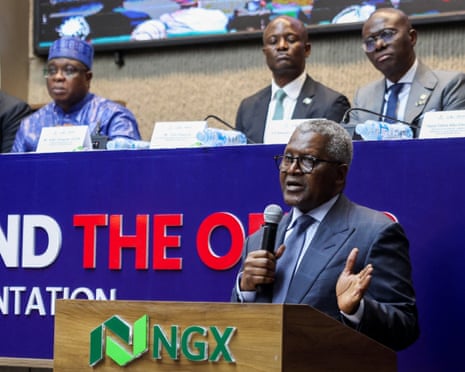 Aliko Dangote speaks at the Nigerian stock exchange in Lagos to launch the Dangote refinery IPO. Photograph: Sodiq Adelakun/Reuters
theguardian.com
Aliko Dangote speaks at the Nigerian stock exchange in Lagos to launch the Dangote refinery IPO. Photograph: Sodiq Adelakun/Reuters
theguardian.com
Aliko Dangote has launched what his backers call the biggest initial public offering ever attempted in Africa, selling shares in Dangote Petroleum Refinery and Petrochemicals in Nigeria. According to The Guardian, the offer opened on Monday with a one-month subscription window ending on 13 October, and is being pitched to both institutions and retail buyers via banks and fintech platforms. Dangote described it as “an IPO for the people”, with a minimum subscription of 10 shares.
The deal sits at the intersection of two Nigerian realities that usually collide rather than cooperate: private industrial ambition and political gatekeeping. Dangote built his fortune first in cement and sugar, and The Guardian notes that Nigerian policymakers have granted him near-monopoly positions in sectors he enters—an advantage that can look like efficiency from the consumer side and like exclusion from the competitor side. The refinery itself addresses a long-running structural absurdity: Nigeria exported crude oil but imported refined fuel for domestic use, while the state spent heavily subsidising pump prices and propping up ageing refineries. With the privately built plant operating, Nigeria became a net exporter of refined fuel for the first time, shifting some of the bill from taxpayers and importers to a single large balance sheet that has to make the numbers work.
If the IPO is fully subscribed, The Guardian reports the refinery could be valued at about 65.22 trillion naira, and Dangote’s personal wealth could rise sharply. That scale matters because African capital markets often struggle to offer large, liquid listings that can absorb pension funds and attract international investors without turning into thinly traded prestige projects. A successful float would broaden local ownership of an asset that sits close to the state—fuel pricing, supply security and foreign exchange—and would also test whether Nigerian retail investors trust the rulebook when the issuer is politically connected. The same proximity to power that helped assemble land, permits and market position can become a liability once minority shareholders expect disclosure, predictable governance and equal treatment.
Dangote is already framing the refinery as a launchpad for a wider industrial push, telling the IPO signing ceremony in Lagos on 7 September that Nigerians and Africans should lead development, and describing plans for a much larger manufacturing empire. The Guardian highlights a proposed energy complex in Lamu, Kenya, as part of that expansion. Projects of that size tend to attract governments looking for ribbon-cuttings and revenues, and they also attract rivals who lobby for new rules once the profits are visible.
For now, the offer is open and the minimum buy-in is small. The price discovery will happen in public, in naira, over the next month.