
Twelve European nations urge EU to expand Arctic presence
Kaja Kallas says new Arctic strategy arrives in October, Greenland investment grows as Trump keeps talking about acquisition
Images
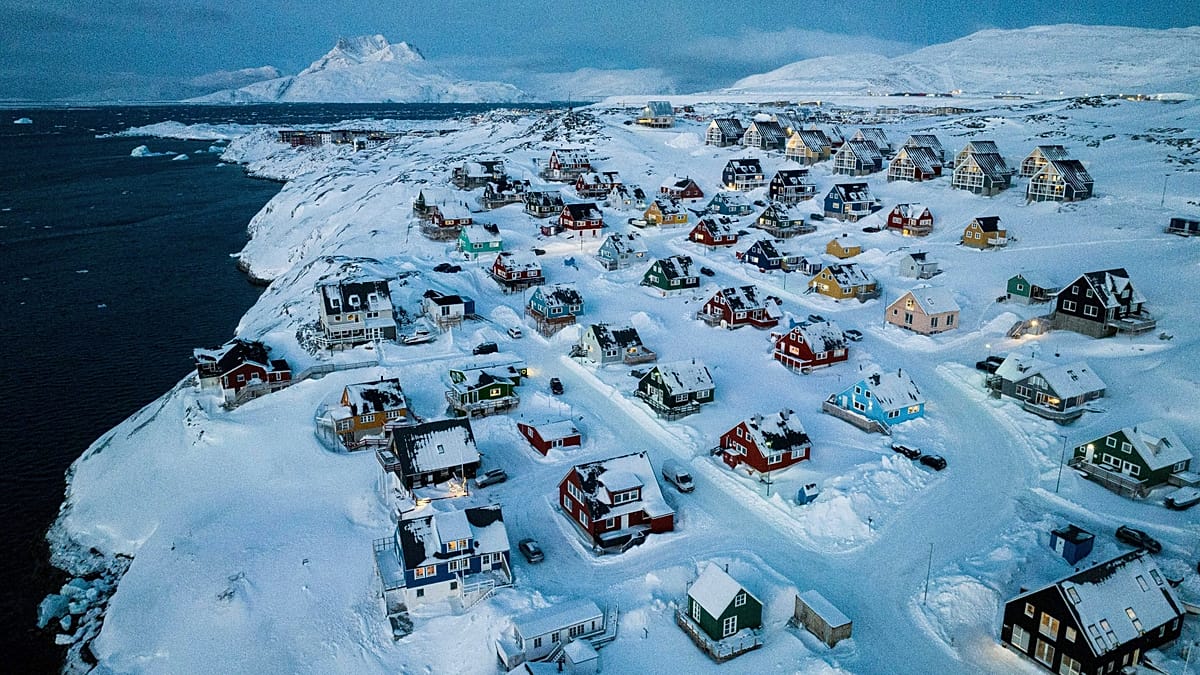 12 European nations call on EU to expand Arctic presence
euronews.com
12 European nations call on EU to expand Arctic presence
euronews.com
Twelve European countries have asked the European Union to expand its Arctic presence after a summit in Rovaniemi in northern Finland, according to Euronews. The joint statement comes as EU foreign-policy chief Kaja Kallas says a new EU Arctic strategy will be presented in October with security at its core, amid what she described as rising Russian military activity and growing Chinese interest.
The appeal reflects how quickly the Arctic has shifted from a distant environmental concern to a corridor that governments now describe in the language of “security architecture”. According to Euronews, Kallas pointed to the region’s role as a gateway connecting North America and Europe, with transport, communications and trade links that become more valuable as conditions change and infrastructure is built out. NATO, the report notes, says Russia has increased its Arctic posture by setting up a new Arctic Command, opening military sites and testing new weapons systems—moves that force neighbouring states to treat the far north as an extension of the war’s strategic map rather than a separate theatre.
The EU’s problem is that it does not control the hard assets that matter most in the Arctic—bases, ports, airfields, ice-capable fleets—but it does control money, regulation and long-term procurement. That is why the story’s concrete numbers cluster around investment and strategy documents rather than troop deployments. Earlier this month, European Commission president Ursula von der Leyen visited Greenland and announced a €200 million “partnership investment” planned for 2026 and 2027, Euronews reports, a signal that Brussels is trying to anchor itself in the region through projects that can be justified as economic development even when the driver is geopolitical.
Washington sits uncomfortably in the background. Euronews describes the joint statement as responding not only to Moscow and Beijing but also to US president Donald Trump, who has repeatedly argued the United States should acquire Greenland on national-security grounds. The report notes that the US once had a large Cold War footprint on the island—17 facilities and more than 10,000 troops—but now operates a single base, Pituffik Space Base, the Pentagon’s northernmost installation, used for missile warning, missile defence and space surveillance under the US Space Force.
The Arctic is being marketed as a shared European priority while the key military platform on Greenland remains American, and the EU’s main lever is a budget line. In Rovaniemi, leaders can sign a statement; in October, Brussels can publish a strategy; at Pituffik, one base continues to do the daily work of watching the sky.