
Israeli minister threatens to strip filmmakers of citizenship
Venice-winning Gaza documentary NAZA triggers calls for nationality revocation, legal process is rare but the pressure campaign is public
Images
 Israeli minister threatens to strip Israeli directors of citizenship over Venice-winning Gaza doc 'NAZA'
euronews.com
Israeli minister threatens to strip Israeli directors of citizenship over Venice-winning Gaza doc 'NAZA'
euronews.com
 NAZA directors Yuval Abraham and Rachel Szor with the special jury prize awarded at at the Venice film festival on Saturday. There are now calls to strip them of their Israeli citizenship. Photograph: Stéphane Cardinale/Corbis/Getty Images
theguardian.com
NAZA directors Yuval Abraham and Rachel Szor with the special jury prize awarded at at the Venice film festival on Saturday. There are now calls to strip them of their Israeli citizenship. Photograph: Stéphane Cardinale/Corbis/Getty Images
theguardian.com
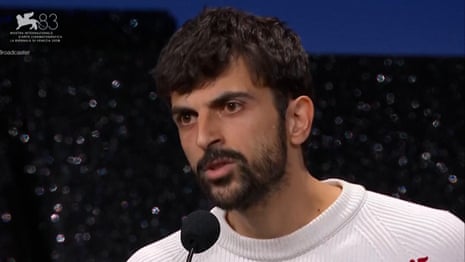 NAZA director says ‘it’s important Israelis watch this film’ after win at Venice festival – video
theguardian.com
NAZA director says ‘it’s important Israelis watch this film’ after win at Venice festival – video
theguardian.com
Israel’s culture minister Miki Zohar has called for the revocation of Israeli citizenship from documentary filmmakers Yuval Abraham and Rachel Szor after their film NAZA won a prize at the Venice Film Festival, according to Euronews and The Guardian. Zohar wrote that he would act “immediately” to strip the directors of nationality, with other ministers—including national security minister Itamar Ben-Gvir—publicly joining the criticism.
NAZA, an 80-minute film shot secretly at night on rooftops in Tel Aviv, is built around interviews with 24 Israeli military and intelligence whistleblowers, the outlets report. The film’s title refers to a military acronym used to denote “collateral damage” in Gaza targeting calculations, and the directors’ synopsis describes a system for estimating expected civilian deaths in airstrikes. The Guardian reports the film includes claims about AI-assisted targeting and the scale of civilian casualties, framing the documentary as an internal account rather than an external investigation.
The citizenship threat matters because it turns a cultural dispute into an administrative one. The Guardian notes that revocation of nationality is legally possible in Israel but rarely applied, and that the process is not a single minister’s decision: a request must be submitted by the interior minister, approved by the justice minister, and validated by judges. Israel’s supreme court confirmed in 2022 that the state may strip nationality for failure to show loyalty in cases such as espionage or treason, and the law was expanded in 2023 to include people convicted of terrorism, the paper reports.
Even if the legal bar is not met, the public campaign can still impose costs. The Guardian reports Abraham’s family home was targeted by a rightwing mob after the world premiere of the directors’ previous film, No Other Land, which won an Oscar and documented Israeli settler violence in the occupied West Bank. That history turns the current dispute into more than a rhetorical fight over a festival award: it signals to critics inside the country that the penalty for public dissent can extend beyond funding and reviews.
The episode also highlights a recurring feature of wartime politics: institutions that cannot control what is filmed or said abroad attempt to control the citizenship and funding status of those who say it. NAZA’s Venice reception—reported as a festival-record standing ovation—arrived at the same moment Israeli ministers framed the film as a betrayal, and the state’s most concrete lever in that argument was not a rebuttal of the film’s claims but the threat to change the filmmakers’ legal relationship to the country.
Zohar has said he led a cinema reform so Israeli citizens would not have to pay for work he views as harming the state, according to Euronews. The next step he is now discussing is whether two Israeli passport holders should remain Israeli at all.