
Miami immigration court shifts to mega hearings
El País reports 100-plus case dockets and curtailed Webex access, backlog politics turns into sidewalk triage
Images
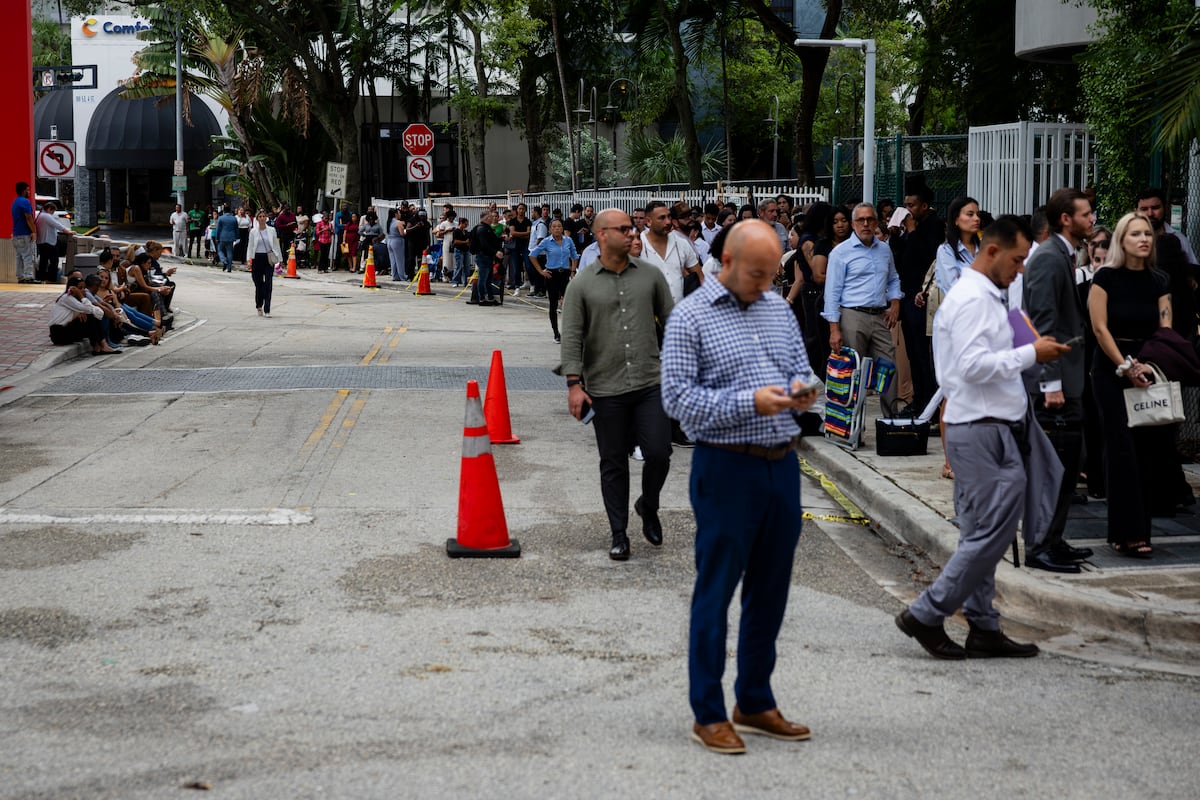 The ordeal of Miami’s migrant mega-hearings: ‘If I don’t make it, they’ll issue a deportation order’
english.elpais.com
The ordeal of Miami’s migrant mega-hearings: ‘If I don’t make it, they’ll issue a deportation order’
english.elpais.com
More than 100 migrants at a time are now being scheduled into Miami’s immigration courtrooms, a shift that has pushed some people to line up before dawn to avoid missing a hearing that can trigger a deportation order. El País reports that the court has also restricted use of Webex and begun requiring many immigrants to appear in person, even as the building’s courtrooms hold only about 20 people each. The change comes as the Trump administration says it is trying to cut an immigration-court backlog that exceeds 3.1 million cases, including more than 2.2 million pending asylum applications.
The mechanics of “mega master hearings” compress hundreds of cases into a single calendar slot, but they do not create more courtroom capacity, more judges, or more time for lawyers to prepare. According to immigration attorney Estefanía Echeverry, the bottleneck has shifted to the sidewalk: migrants can spend up to two hours waiting outside, then still have to navigate a schedule that can change with little notice. El País describes Roxana Valladares arriving at 4 a.m. for a 1 p.m. hearing after being rescheduled from September 2027 to the following week; she brought a folding chair, water and snacks, and her six-year-old son, who was unwell.
Miami-Dade County already carries the country’s largest number of pending deportation cases, according to data compiled by TRAC at Syracuse University cited by El País. When courts accelerate intake without expanding throughput, the cost is paid in missed workdays, childcare, transport, and—most directly—attendance risk: people told to appear at a set time can be physically stuck in the same line as everyone else. The policy also magnifies the gap between represented and unrepresented migrants. Echeverry says judges previously handled cases with attorneys first, then people joining by Webex, and finally those without representation; forcing more in-person appearances turns access to a stable internet connection into a less relevant advantage than the ability to take an entire day off and stand outside.
The administration’s argument is speed, but the system’s own constraints determine where “speed” shows up: in rescheduled dates, crowded dockets, and a greater share of outcomes decided by procedural default rather than substantive review. The same state that allowed large inflows now has to run a mass-processing apparatus to decide who stays, and each step requires guards, clerks, facilities and enforcement capacity. The courthouse becomes the choke point where policy ambition meets a building’s fire-code limits.
On one weekday in downtown Miami, El País reports, the line wrapped around the parking lot under the Metromover and down to the sidewalk near Southeast 3rd Street. Inside, the rooms still fit about 20 people at a time.