
Drone attack hits Saudi east–west oil pipeline
Satellite images show damaged pumping station and Yanbu stocks counted in days, traders price repairs before Riyadh publishes details
Images
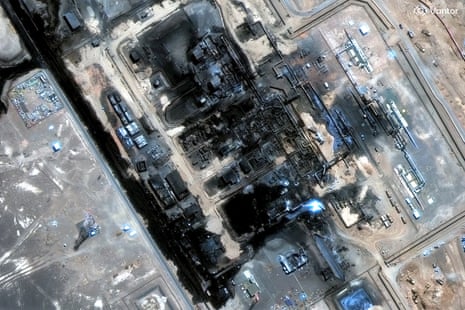 A satellite image released by Vantor shows a view of a damaged pumping station on Saudi Arabia's east-west pipeline in al-Mesabaah on 13 September, after a drone attack two days earlier. Photograph: Satellite image ©2026 Vantor/AFP/Getty Images
theguardian.com
A satellite image released by Vantor shows a view of a damaged pumping station on Saudi Arabia's east-west pipeline in al-Mesabaah on 13 September, after a drone attack two days earlier. Photograph: Satellite image ©2026 Vantor/AFP/Getty Images
theguardian.com
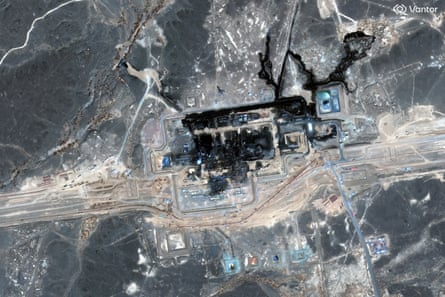 Satellite image released by Vantor of the damaged pumping station on Saudi Arabia’s east-west pipeline. Photograph: Satellite image ©2026 Vantor/AFP/Getty Images
theguardian.com
Satellite image released by Vantor of the damaged pumping station on Saudi Arabia’s east-west pipeline. Photograph: Satellite image ©2026 Vantor/AFP/Getty Images
theguardian.com
A drone strike has knocked out a pumping station on Saudi Arabia’s east–west oil pipeline, a route that has become a workaround as traffic through the Strait of Hormuz is restricted by war. The Guardian, citing satellite imagery released by Vantor and sources speaking to Reuters, reports Saudi Arabia has not said how long the line will be offline or how extensive the damage is. Traders and buyers told Reuters that the export system at Yanbu on the Red Sea has only limited stock cover if the pipeline stays down.
The east–west line carries crude across the Arabian Peninsula to Yanbu, reducing reliance on Gulf shipping lanes. For the past six months, it has helped Saudi exports avoid the worst effects of the wartime disruption around Hormuz, where Iran now requires vessels to obtain permission to transit, according to the Guardian’s account. With the pipeline out of service, Reuters sources said Yanbu’s inventories could cover only about five to seven days of exports, after which Saudi Arabia would need alternative supplies or reduced shipments. Saudi Arabia also holds oil stocks at Egypt’s ports of Ain Sukhna on the Red Sea and Sidi Kerir on the Mediterranean, but Reuters sources described those reserves as finite and not full.
Markets are already treating infrastructure as the scarce commodity, not crude in the ground. Brent rose more than 3% on Sunday to levels not seen since May, the Guardian reports, as traders priced both the physical outage and the risk that repairs drag on. Reuters sources gave varying timelines: one said repairs could take up to six weeks, while another suggested partial pumping could resume during repairs. Saudi Arabia blamed militants in Iraq for the attack, while the Guardian notes that Yemen’s Iran-aligned Houthi forces have also been expanding pressure across regional chokepoints, including the Bab al-Mandab strait.
The mechanics of the squeeze are simple: when a pipeline substitutes for a strait, the pipeline becomes a strategic target, and the buffer becomes measured in days of storage rather than months of spare capacity. In that setting, insurance, shipping schedules, and refinery feedstock planning can move faster than official statements. Saudi government offices did not immediately respond to requests for comment, according to the report, leaving buyers to rely on satellite pictures, trader briefings, and repair estimates from unnamed sources.
The satellite image shows a scorched pumping station and a pipeline system that was meant to bypass one bottleneck now operating with a different one: how quickly damaged equipment can be replaced.