
Russian drone hits Ukrainian passenger train near Polish border
Ukrzaliznytsia reports no believed casualties and cites early warning, Poland pauses border processing and scrambles aircraft without an airspace breach
Images
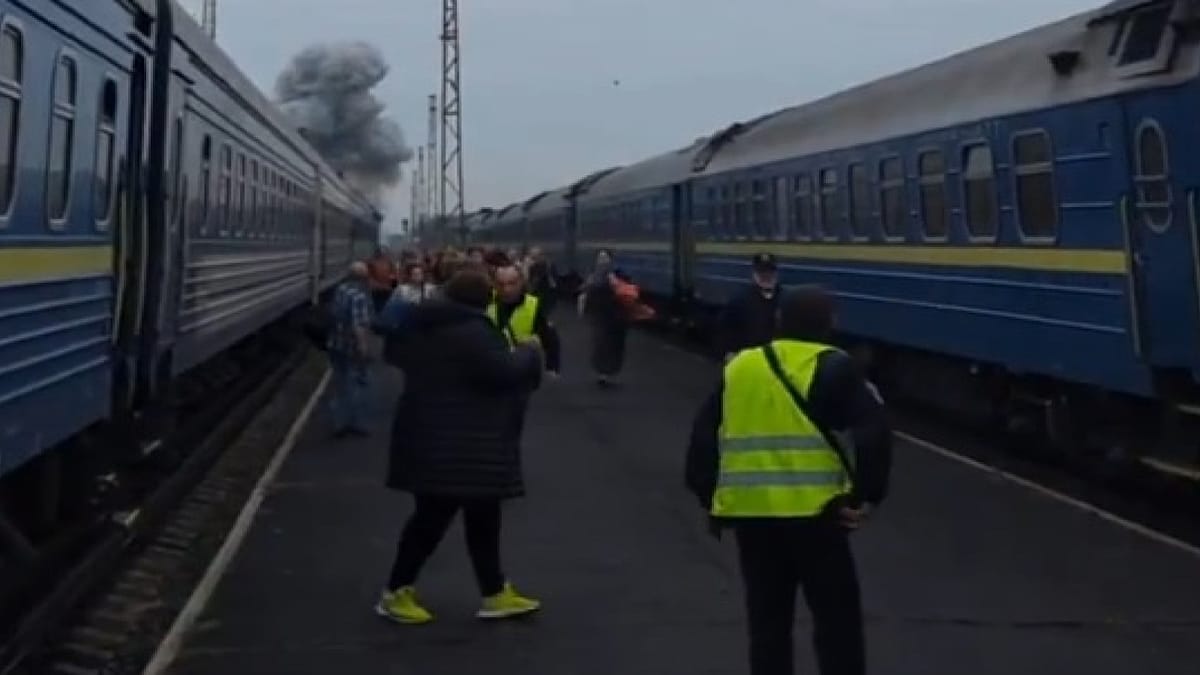 Breaking news. - Russian drone hits train two km from Polish border, rail operator says
euronews.com
Breaking news. - Russian drone hits train two km from Polish border, rail operator says
euronews.com
A Russian drone struck the locomotive of a Ukrainian passenger train in Volyn region on Sunday, about two kilometres from the Polish border, according to Ukrzaliznytsia. The rail operator said there were no believed casualties, and that an early-warning alert gave the crew time to take protective measures. The incident came as Poland temporarily restricted processing at several Polish–Ukrainian border crossings overnight, before traffic returned to normal, Euronews reports.
The strike sits inside a broader pattern that is starting to matter for countries that are not being bombed: the war’s cheapest weapons are pushing risk outward along Europe’s transport and logistics seams. Ukraine’s air force said Russia launched more than 450 drones overnight, including jet-propelled drones and Banderol missile drones, with at least three people killed and 36 injured across the wave. When that volume of airborne objects is in the sky over western Ukraine, Polish authorities end up making operational decisions on their own territory—scrambling aircraft, issuing public alerts in the Lublin and Podkarpackie regions, and pausing checks at crossings for safety reasons—despite stressing that Polish airspace was not violated.
Railways and border checkpoints are not front-line trenches; they are throughput machines. A passenger train that can be hit near the border without causing casualties this time still forces operators to prove they can keep running tomorrow, and forces neighbouring states to show they can distinguish between “near miss” and “spillover” in real time. The same dynamic applies to freight: Polish border officials said they received information from the Ukrainian side that a drone struck and destroyed a lorry roughly 800 metres from the Jagodzin crossing. Each such incident adds friction—temporary closures, rerouted traffic, higher insurance and security costs—paid by travellers, carriers, and ultimately consumers.
Ukrainian officials are trying to turn that friction into policy. Foreign minister Andrii Sybiha called the strikes “Putin’s terror knocking directly on the doors of the EU and NATO,” urging further sanctions including a full trade embargo, entry bans, and wider restrictions on Russia’s military-industrial complex. Poland’s defence leadership, meanwhile, described detections of drones near the border and said aircraft were deployed to guard airspace, a posture that is expensive to sustain even when no border is crossed.
On Sunday, the train kept its passengers alive because the crew received a warning in time. The border crossings reopened after a night of suspended checks, and the official line remained that Polish airspace had not been violated.