
Colombian armed groups scale weaponised drones
ACLED data shows events rising from one in 2023 to nearly 200 in 2026, cocaine corridors turn cheap consumer tech into air power
Images
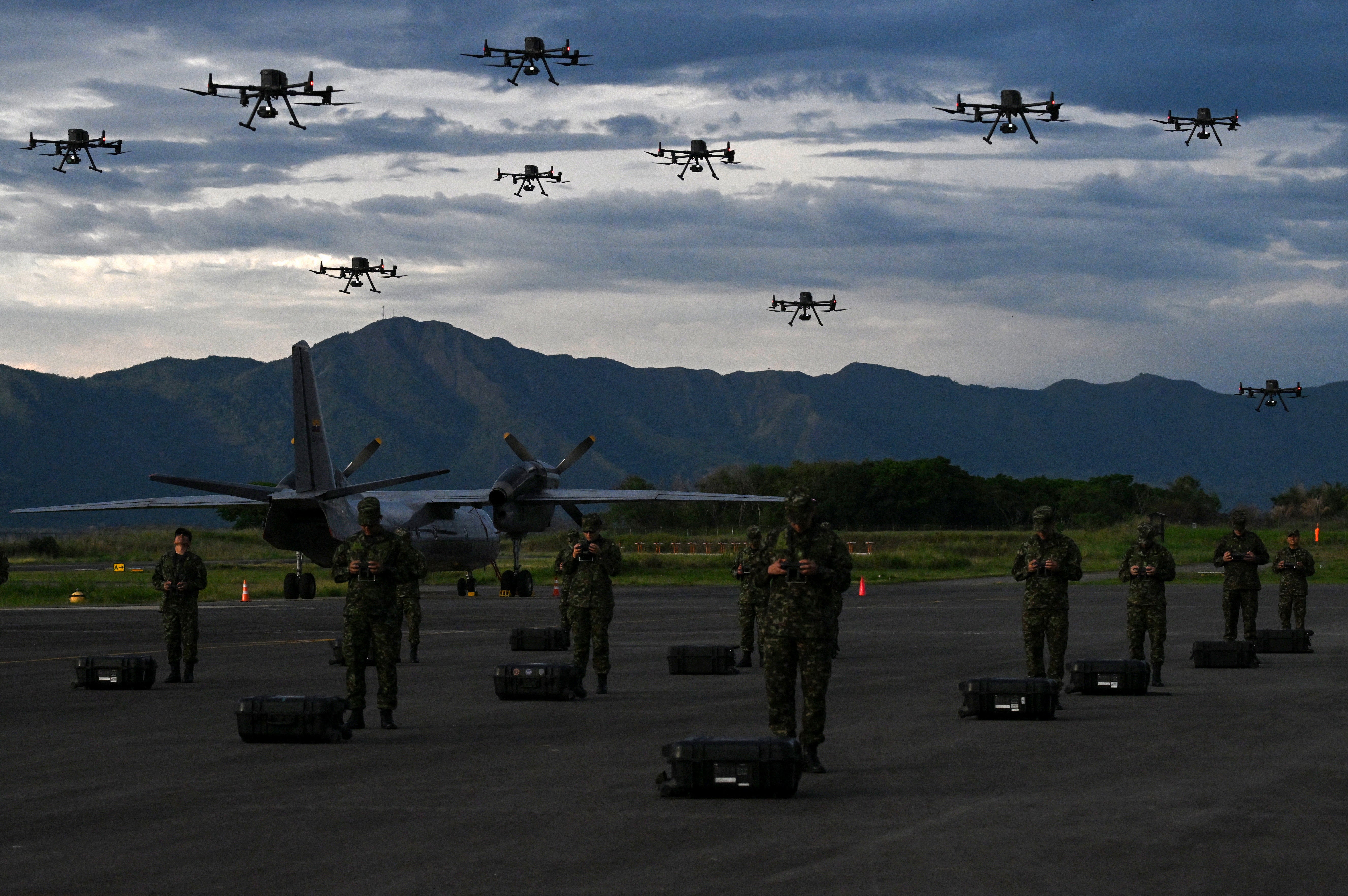 The Colombian army has also boosted its use of drones in the country (AFP/Getty)
AFP/Getty
The Colombian army has also boosted its use of drones in the country (AFP/Getty)
AFP/Getty
 Colombia's President Abelardo de la Espriella, who has launched an all-out war on the armed groups, met US Secretary of State Marco Rubio (right) during a bilateral agreements signing ceremony in Barranquilla, Colombia on September 8 (AFP/Getty)
AFP/Getty
Colombia's President Abelardo de la Espriella, who has launched an all-out war on the armed groups, met US Secretary of State Marco Rubio (right) during a bilateral agreements signing ceremony in Barranquilla, Colombia on September 8 (AFP/Getty)
AFP/Getty
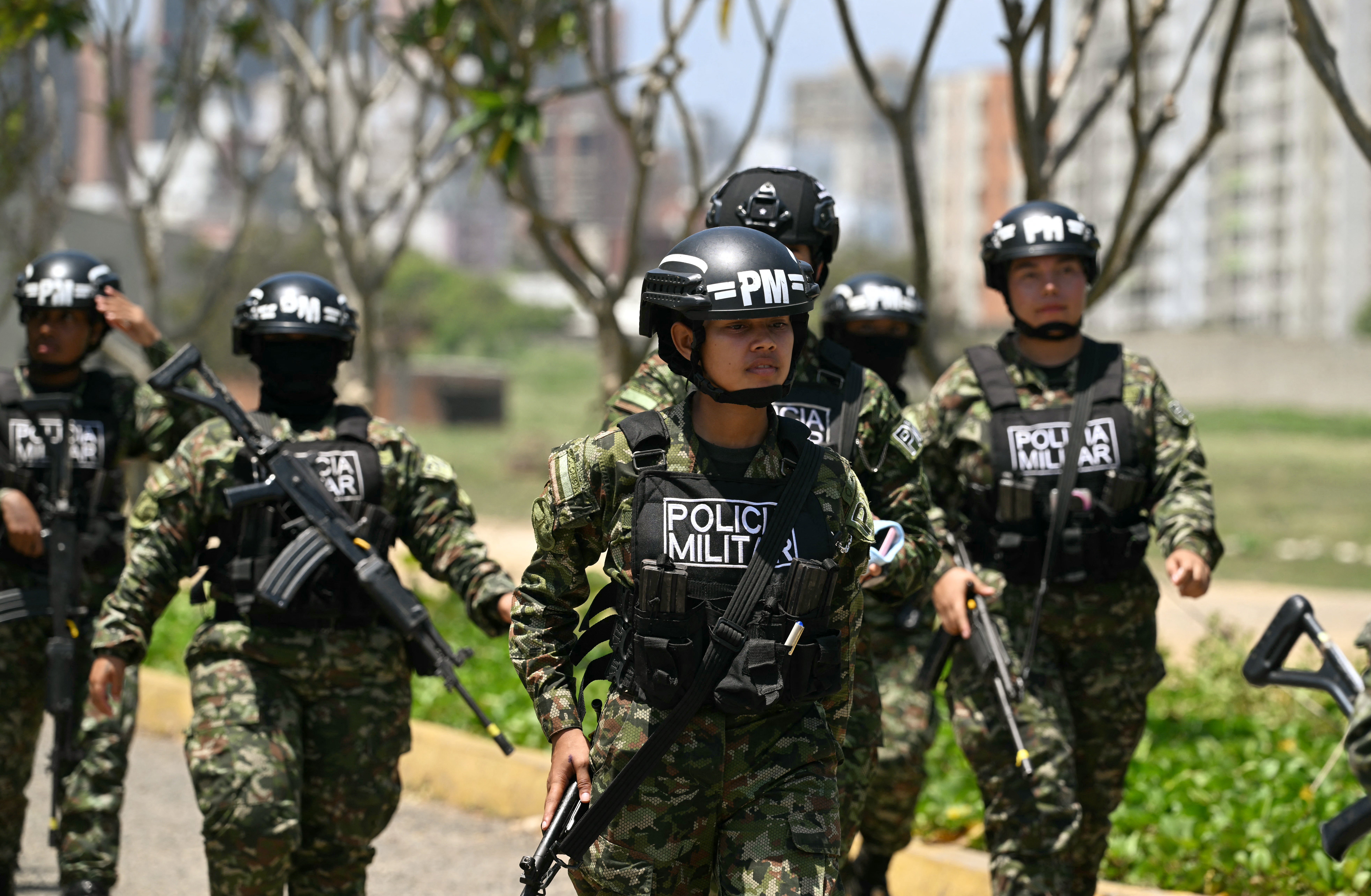 At least 84 people have been killed in clashes between security forces and armed groups since De la Espriella took power on 7 August (AFP/Getty)
AFP/Getty
At least 84 people have been killed in clashes between security forces and armed groups since De la Espriella took power on 7 August (AFP/Getty)
AFP/Getty
Colombia’s armed groups are turning the hum of cheap drones into a new kind of territorial control, as the country’s security forces widen operations in areas that double as drug-trafficking corridors. The Independent reports that unmanned drones are being used to terrorise civilians and government units near routes that move cocaine worth billions of dollars, with the psychological effect of the buzzing itself becoming part of the violence.
The shift is visible in the numbers tracked by ACLED, a conflict-monitoring group cited by the newspaper. It recorded a single “weaponised drone event” in Colombia in 2023, roughly 150 in 2025, and nearly 200 so far in 2026. The incidents are not evenly distributed: Colombia accounts for 97 of 182 municipalities in Latin America where weaponised drone events have been recorded, making it the region’s epicentre. The pattern follows money. Areas with high drug trafficking are where armed drones are most common, and groups with larger war chests are described as modernising quickly and copying each other’s tactics.
Politics has supplied the backdrop rather than the solution. The Independent describes President Abelardo de la Espriella—who replaced Gustavo Petro after Petro’s “Total Peace” strategy—launching an “all-out war” against guerrilla and militia groups. In the first three weeks of the new government, the paper says around 30 drone attacks on security forces were recorded, mostly in Cauca and Norte de Santander, about four times the number in the previous three weeks. August 2023 became the deadliest month for clashes since ACLED began collecting data in 2018, with 84 deaths, according to the same reporting. When the state signals escalation, armed groups respond by pushing risk onto the cheapest platforms they can scale.
The drone arms race also blurs ideological labels that once organised Colombia’s conflict. The Independent notes how the ELN began using drones after a clash with the 33rd Front, a dissident FARC faction, while the 33rd Front used drones against the Gulf Clan, and the Gulf Clan used them against another paramilitary group. That is less a left-right battlefield than a set of competing protection rackets with overlapping supply chains. Once a tactic works—dropping explosives, filming intimidation, forcing an evacuation—rivals adopt it, and the civilian population becomes the fixed asset everyone is fighting over.
ACLED’s dataset shows the direction of travel: drones are no longer a novelty but a standard tool for groups that can afford them. In Colombia’s drug corridors, the air above the jungle is becoming as contested as the roads below it.