
King Oyo successor installed at burial in Uganda
Tooro kingdom hands crown to state broadcaster anchor after family dispute, central authorities facilitate a traditional transfer
Images
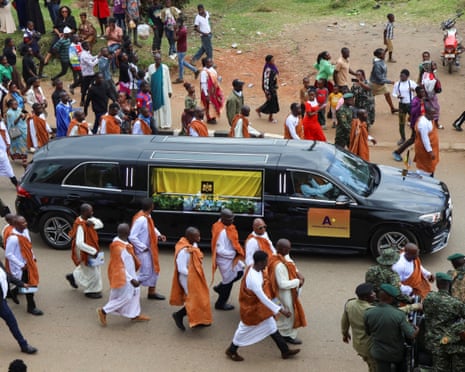 Royal guards escort the body of the late King Oyo for his burial at the Karambi Royal Tombs, in Fort Portal. Photograph: Michael Muhati/Reuters
theguardian.com
Royal guards escort the body of the late King Oyo for his burial at the Karambi Royal Tombs, in Fort Portal. Photograph: Michael Muhati/Reuters
theguardian.com
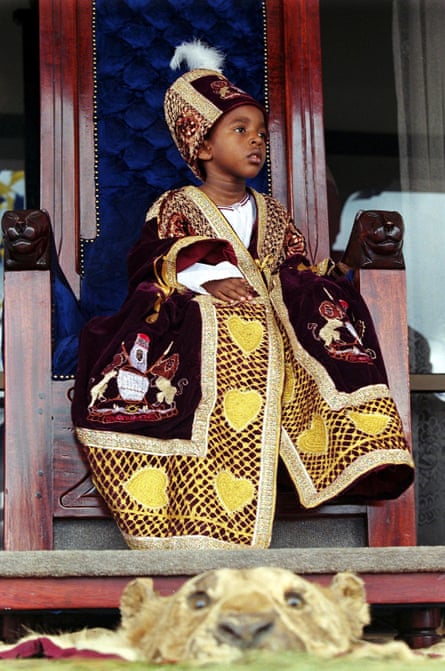 King Oyo of the Toro kingdom was for a long time the world’s youngest monarch. Photograph: Sipa/Shutterstock
theguardian.com
King Oyo of the Toro kingdom was for a long time the world’s youngest monarch. Photograph: Sipa/Shutterstock
theguardian.com
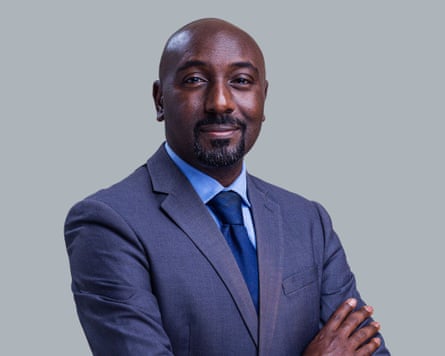 UBC news anchor Edward Rukidi Kijanangoma. Photograph: UBC Uganda
theguardian.com
UBC news anchor Edward Rukidi Kijanangoma. Photograph: UBC Uganda
theguardian.com
King Oyo burial triggers Tooro succession handover, Uganda’s traditional kingdoms persist inside a republic, a state broadcaster anchor inherits royal assets amid family dispute
Royal guards escorted the body of King Oyo Nyimba Kabamba Iguru Rukidi IV to the Karambi Royal Tombs in Fort Portal in western Uganda, where he was buried after dying last month in the United States while receiving cancer treatment, according to Reuters. At the graveside, Edward Rukidi Kijanangoma, a news anchor and editor at Uganda Broadcasting Corporation, cast nine coffee berries into the grave in a ritual marking the transfer of power to the next monarch of the Tooro kingdom.
Oyo’s life was a modern case study in how inherited authority survives inside a constitutional state. Uganda is a republic with an elected head of state, yet several traditional kingdoms remain, with cultural legitimacy, land, and institutions that can outlast electoral cycles. Oyo became king at age three in 1995 after a previous succession battle that ended up in court, and he later served as a UN goodwill ambassador focused on HIV and AIDS awareness. The same blend of ceremony, law, and outside patronage followed him into adulthood: Reuters notes he cultivated close ties with Muammar Gaddafi, who was named a special adviser and helped fund palace refurbishment.
His death reopened the question the state cannot fully avoid: who gets to control the kingdom’s assets and the access that comes with them. A royal clan committee announced Kijanangoma as the new king, but Oyo’s immediate family has argued that a previously unknown son should succeed him, citing a will. Supporters of Kijanangoma counter that the family has not provided enough information about the purported son, turning a private claim into a public test of proof.
Reuters reports that Ugandan authorities facilitated Kijanangoma’s succession, while a government spokesperson was not available for comment. That detail matters less for what it confirms than for what it implies: in a dispute that could otherwise fracture a region’s local power structure, the central state still has the practical ability to decide which claimant can take the oath, access the grounds, and perform the rites. At a church service before the burial, the archbishop of the Church of Uganda urged unity and warned against divisive speech, an appeal that often appears when institutions expect that words can translate into mobilised factions.
The new king is not a military figure or a businessman but a familiar television face, described by Ugandan journalists as quiet and humble. He now inherits responsibilities and assets “beyond the throne,” Reuters writes, in a kingdom where legitimacy is performed in public and contested in committees.
At the Karambi Royal Tombs, the handover hinged on nine coffee berries dropped into a grave, while the unresolved question of a son’s claim remained outside the ritual.