
BRICS adopts New Delhi Declaration, Modi hosts Xi Jinping and Putin as bloc calls for restraint in Middle East
Consensus text avoids naming members involved in wars
Images
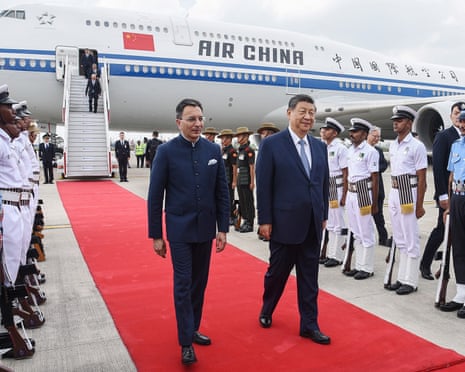 Xi Jinping, right, is visiting India for the first time in seven years to attend the Brics summit. Photograph: Indian ministry of foreign affairs/EPA
theguardian.com
Xi Jinping, right, is visiting India for the first time in seven years to attend the Brics summit. Photograph: Indian ministry of foreign affairs/EPA
theguardian.com
 Who Was ‘El Piturris’? Mexican Influencer Killed In Sonora Shooting
timesnownews.com
Who Was ‘El Piturris’? Mexican Influencer Killed In Sonora Shooting
timesnownews.com
Xi Jinping arrived in India for the Brics summit and was met with an honour guard and traditional dancers, according to the Guardian. By the end of the opening day, the expanded bloc adopted a joint statement — the “New Delhi Declaration” — after leaders including India’s Narendra Modi, Xi, Russia’s Vladimir Putin and Iran’s Masoud Pezeshkian gathered in New Delhi.
The declaration’s most immediate foreign-policy message is what it does not do. Both the Guardian and Times Now note that the text calls for “maximum restraint” in the Middle East while avoiding direct attribution of blame — language designed to survive a group that now includes states on opposing sides of regional conflicts. That unanimity matters because Brics operates by consensus, meaning any single member can block a final document; the Guardian describes the agreement as unusually closely watched after earlier signs of disunity, including a foreign ministers’ meeting in Delhi that failed to produce a joint statement.
The summit also served as a stage for a cautious thaw between Asia’s two largest powers. The Guardian frames Xi’s visit — his first to India in seven years — as the biggest public step toward reconciliation since a deadly 2020 clash along the disputed Himalayan border. It reports that flights and high-level contacts have been gradually restored, and that China’s foreign ministry said Beijing was willing to work with Delhi to “properly manage differences” and be “good neighbours and friends.” The optics in New Delhi were carefully managed: India rolled out a red-carpet welcome even as the underlying border dispute remains unresolved.
Beyond diplomacy, the declaration bundles together security language with economic positioning. Times Now says the 45-page document condemns terrorism and calls for action against terrorist financing, illegal financial flows, cyber fraud and cross-border scam networks — an agenda broad enough to satisfy members with different domestic priorities. On trade, it reports that Brics criticised unilateral tariffs and opposed carbon border adjustment mechanisms, arguing they risk becoming protectionist barriers that fall hardest on developing economies, while also discussing greater use of local currencies for settlements and investment.
Those themes reflect the bloc’s internal balancing act. The Guardian quotes a Chinese thinktank figure saying the enlarged membership cannot “speak with one voice on many issues,” and describes a basic divergence: Beijing pushing Brics as a counterweight to Washington, while Delhi positions it as a bridge between the west and the developing world. Modi, the Guardian reports, told the summit that Brics is “not against anyone.”
The declaration was adopted in a room that included leaders from countries that struggle to agree on who is responsible for the wars they are discussing. The compromise was a call for restraint that names no names.