
Trump says he would love to see a united Ireland
Comments made in Dublin meetings with Irish leaders during golf-linked visit, constitutional question gets a presidential soundbite without a policy process
Images
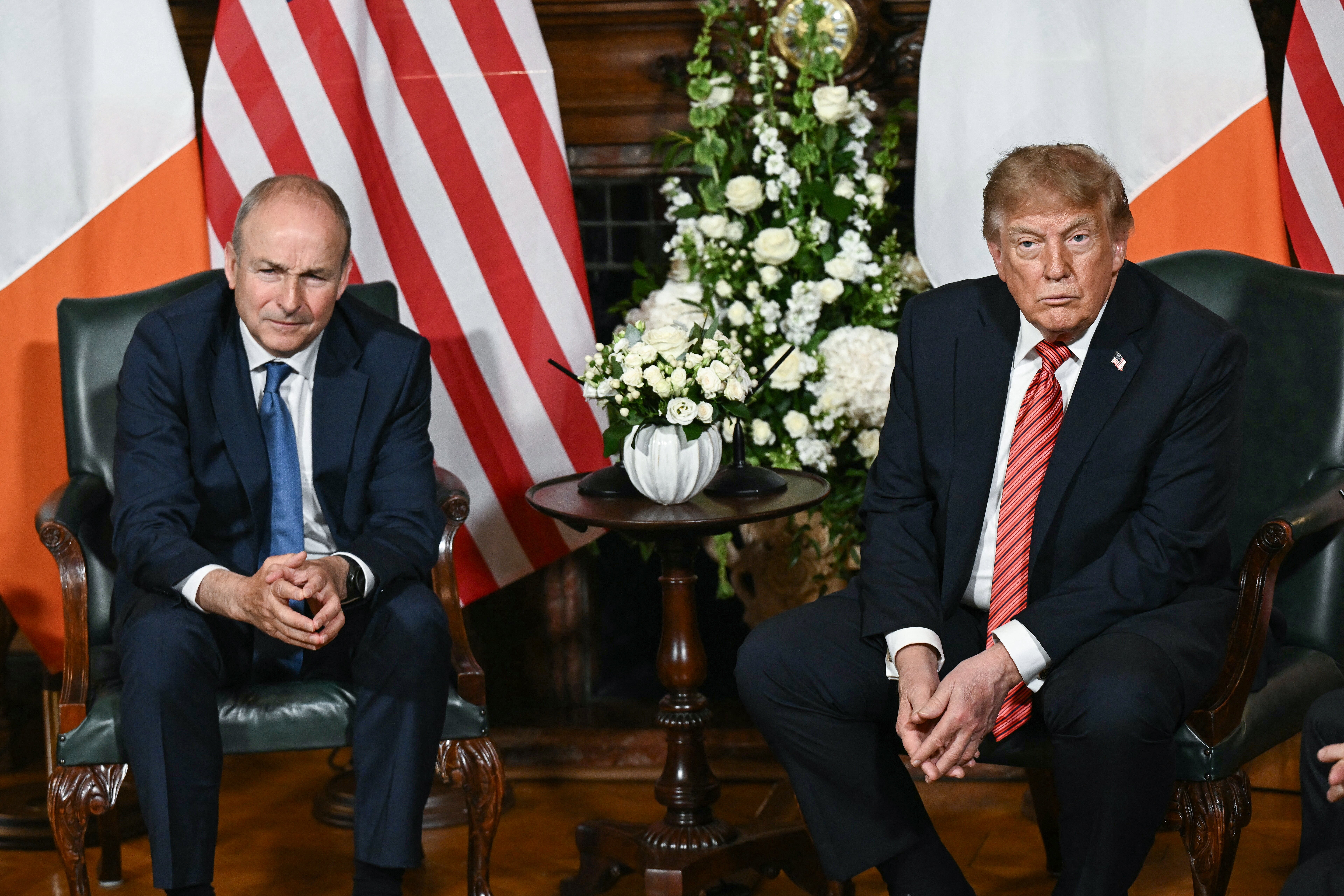 US President Donald Trump (R) and Ireland's Prime Minister Micheál Martin listen to a question from the media at Farmleigh House in Phoenix Park in the Irish capital Dublin on September 12, 2026 (AFP/Getty)
AFP/Getty
US President Donald Trump (R) and Ireland's Prime Minister Micheál Martin listen to a question from the media at Farmleigh House in Phoenix Park in the Irish capital Dublin on September 12, 2026 (AFP/Getty)
AFP/Getty
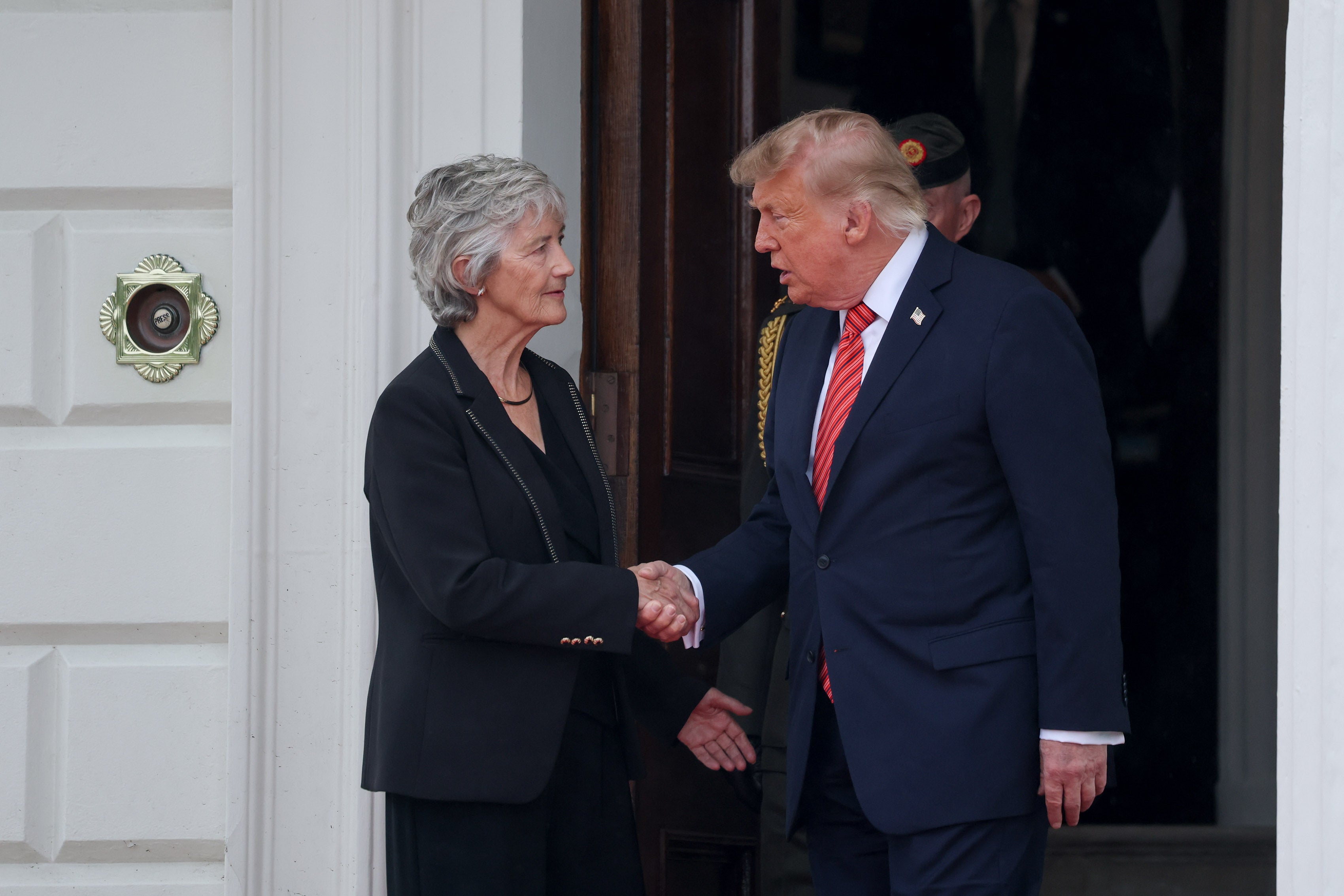 President Connolly and President Donald Trump at Aras an Uachtarain, her official residence in Phoenix Park (PA)
independent.co.uk
President Connolly and President Donald Trump at Aras an Uachtarain, her official residence in Phoenix Park (PA)
independent.co.uk
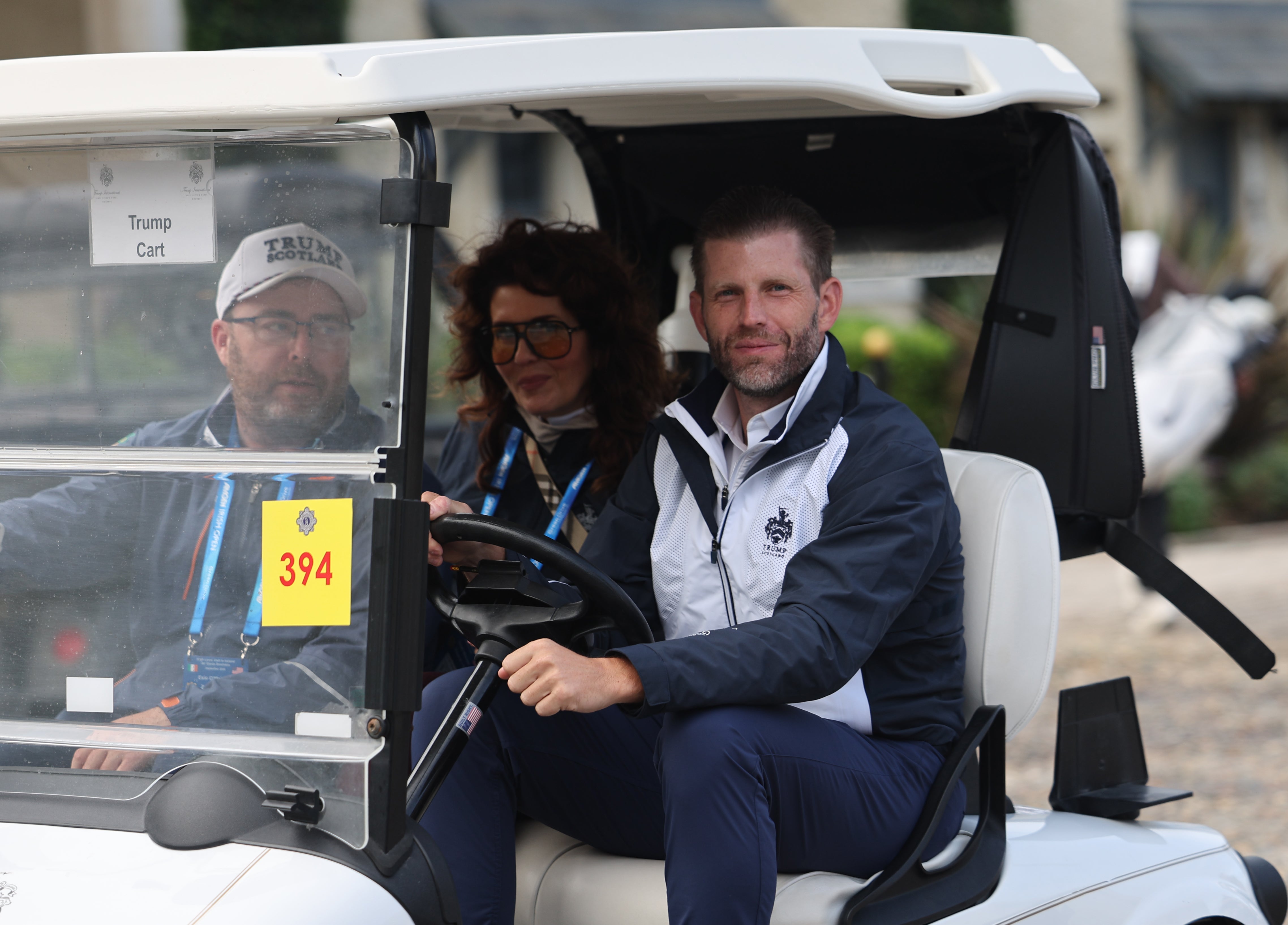 Eric Trump outside the Trump International Golf Links & Hotel in Doonbeg, Co Clare, ahead of the visit by US President Donald Trump for the Irish Open during his trip to the Republic of Ireland. Picture date: Saturday September 12, 2026. (PA)
independent.co.uk
Eric Trump outside the Trump International Golf Links & Hotel in Doonbeg, Co Clare, ahead of the visit by US President Donald Trump for the Irish Open during his trip to the Republic of Ireland. Picture date: Saturday September 12, 2026. (PA)
independent.co.uk
 Donald Trump during a meeting with Micheal Martin at Farmleigh House. Photograph: Ben Birchall/PA
theguardian.com
Donald Trump during a meeting with Micheal Martin at Farmleigh House. Photograph: Ben Birchall/PA
theguardian.com
Donald Trump told Irish leaders in Dublin that he would “love” to see a united Ireland and suggested it “may as well happen now,” according to The Independent and a live Guardian blog. The remarks came during meetings with Irish political figures at official venues in Phoenix Park, alongside a visit tied to a golf tournament at a Trump-owned course.
For Ireland, the president’s comments land in a political environment where constitutional change is discussed in public but proceeds through tightly specified steps, including referendums north and south. For the United Kingdom, the same words touch a question that London treats as a matter of domestic sovereignty and legal process rather than foreign encouragement. For Washington, they illustrate a recurring feature of Trump’s diplomacy: headline statements delivered in front of cameras during trips that mix state protocol with private business branding.
The Independent reports Trump acknowledged that the UK “would have something to say” about Irish unity, while still calling the prospect “fantastic.” He also appeared to point to Irish Prime Minister Micheál Martin as someone who could help make it happen. Those are the kinds of lines that can be read as casual flattery in the room and as a signal outside it, particularly in Northern Ireland where parties calibrate every phrase for its effect on identity and security.
The visit itself underscored how modern politics blends public authority with private logistics. Police cordons and ceremonial honors were required for meetings at Áras an Uachtaráin and Farmleigh House, while the trip’s broader itinerary centered on a tournament at a property carrying the president’s name, The Independent reports. In practice, the same motorcades, security perimeters and diplomatic schedules that exist for statecraft also create the conditions for a political message to be packaged as a travel headline and then redistributed globally.
Trump’s Dublin remarks did not announce a US policy shift, a mediation initiative, or any new diplomatic process. They were, instead, a presidential opinion offered on a constitutional question belonging to two European polities—one of them a close US ally—during a weekend stop where local residents complained of disruption and supporters touted the economic footprint of the Trump resort.
At Farmleigh House, the president said Irish unity would be “a great feather in everybody’s cap.” The UK, he added, would still have its say.