
Scientists test yeast-based biomaterials for 3D-printed Mars habitats
HKUST mixes gelatine and engineered microbes with regolith in simulated conditions, in-situ building still starts with Earth-supplied biology
Images
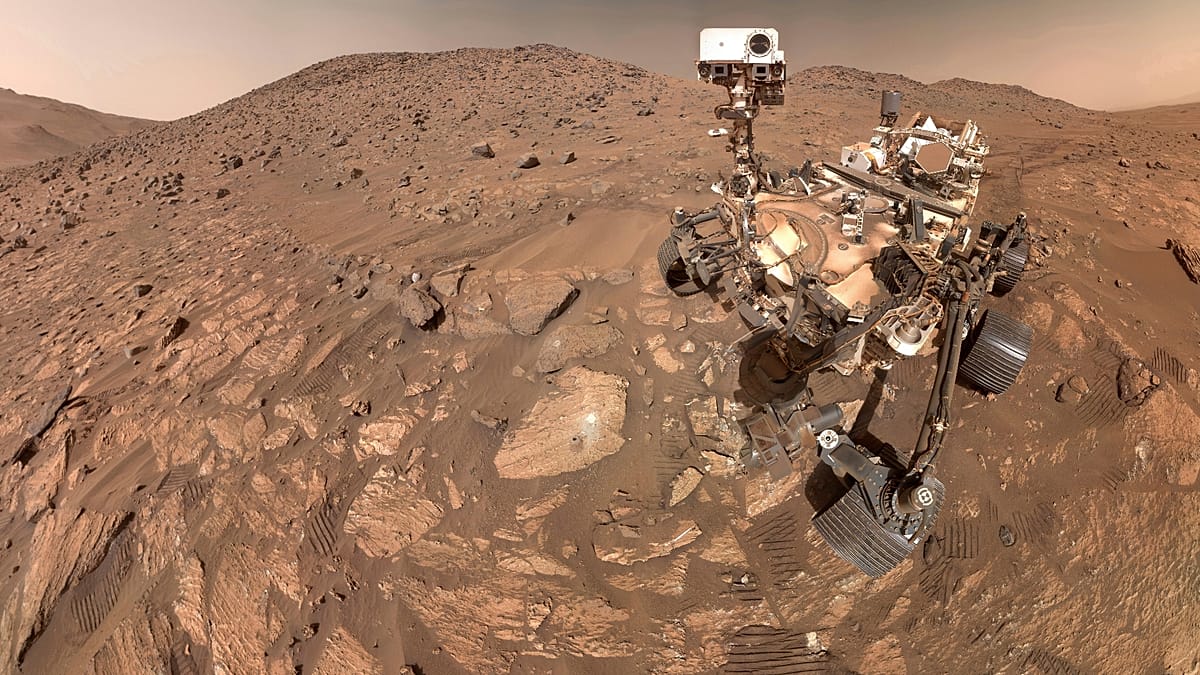 3D printing to colonise Mars after the Moon: the biomaterials tested by scientists
euronews.com
3D printing to colonise Mars after the Moon: the biomaterials tested by scientists
euronews.com
NASA’s long-running push to build with local materials is colliding with a more biological idea: printing habitats from mixtures that include living microbes.
According to Euronews, researchers at the Hong Kong University of Science and Technology have developed a recipe intended for 3D printing structures on Mars by combining gelatine, yeast and Martian regolith — the dusty layer of sand, pebbles and rock fragments that covers the planet. The yeast is engineered to produce adhesive proteins inspired by mussel glue, while the gelatine serves as both binder and nutrient. In simulated Martian conditions, the team reports the printed material resists compression at levels comparable to lightweight concrete.
The work sits inside a wider effort to make “in-situ resource utilisation” more than a slogan. Every kilogram not launched from Earth reduces mission cost and complexity, but it also shifts risk: the supply chain becomes whatever can be extracted, processed and assembled by machines that cannot be repaired easily. Euronews describes how the Hong Kong team leans on Mars’s cold as an energy-saving tool, using low temperatures and reduced pressure to drive sublimation — ice turning directly into vapour — which leaves behind a solid foam without needing high-heat curing that could melt or alter minerals.
That approach highlights a recurring tension in off-Earth construction: the most “local” methods often still depend on Earth-supplied inputs. Gelatine and engineered yeast do not exist on Mars, at least not at the start, and the article notes open questions about microorganism survival and continued dependence on shipped resources. Even when the regolith provides most of the bulk, the binding chemistry can become the true bottleneck.
Europe’s own research is being pulled into the same orbit. Euronews reports that Chalmers University of Technology in Sweden has developed a hydrogel made from yeast and cellulose aimed at biodegradable architectural components — a line of work framed as circular design on Earth that could also translate to space missions. On the US side, NASA is cited as allocating roughly 57.2 million dollars to the Olympus Project for permanent Moon and Mars infrastructure, while the agency’s Mars Dune Alpha habitat in Houston is already being used in analogue missions to test how people live in a 3D-printed structure.
For now, the most concrete result is still laboratory performance under “simulated” conditions, plus a growing list of prototypes designed to prove that habitats can be manufactured rather than shipped.
The proposed Mars material is described as fully recyclable and suitable for multi-storey structures — but its key ingredients, like the yeast, remain items that would have to arrive from Earth before any printer starts.