
Weapons depot explosion kills at least 14 near Idlib
Temporary munitions storage highlights Syria’s post-war ordnance burden, rescue teams search rubble as secondary blasts ripple
Images
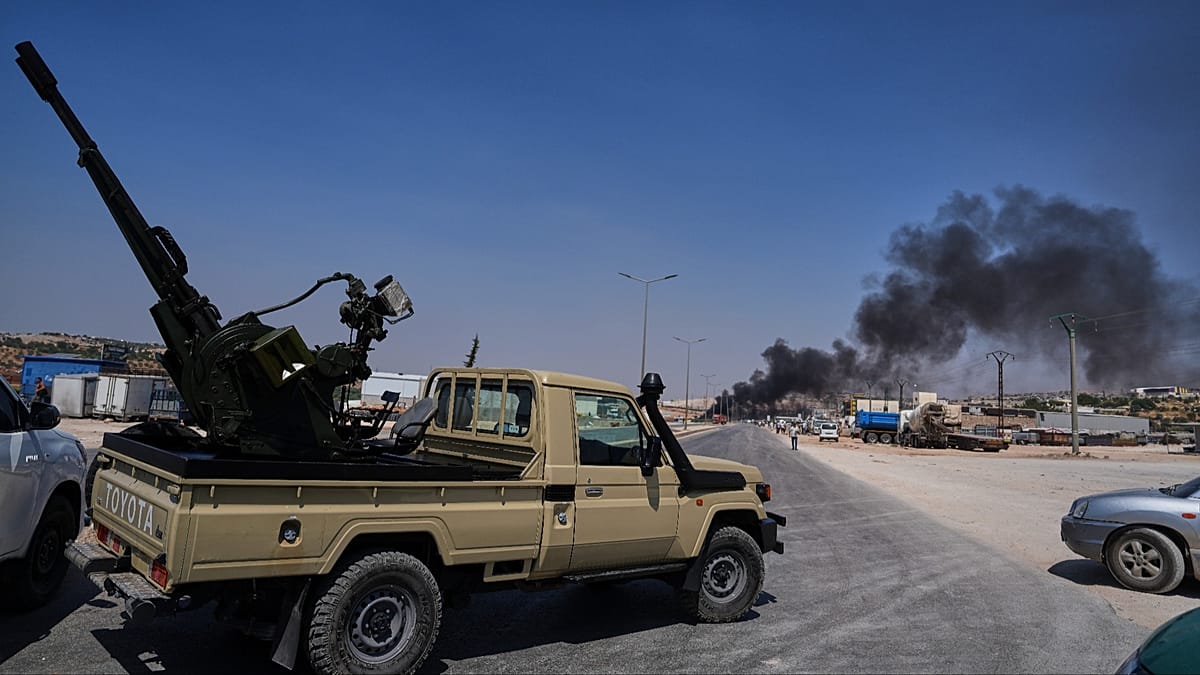 Wartime weapons depot explosion kills 14 outside Syria's Idlib
euronews.com
Wartime weapons depot explosion kills 14 outside Syria's Idlib
euronews.com
An explosion at a temporary storage site for wartime munitions near Sarmada outside Syria’s Idlib killed at least 14 people and injured 11, according to Syria’s Health Ministry and the Idlib health department. Euronews reported that rescue teams were still searching for survivors, while roads to the Burj al-Nimra area were cordoned off. Video from the scene showed a thick plume of black smoke followed by smaller secondary blasts, a pattern consistent with stored ammunition cooking off.
The depot was described as a place where weapons and munitions left over from Syria’s civil war were kept, a reminder that the end of front-line fighting does not end the hazards of war. Idlib was a former front-line province where multiple armed factions stored arms over years, leaving a landscape dotted with improvised caches, warehouses, and vehicles that can turn into bombs when mishandled, hit, or simply degraded by heat and time. The cause of Wednesday’s blast was not immediately clear, but Walid Aslan, head of emergency operations for Idlib’s disaster management directorate, said initial assessments pointed to munitions as the trigger.
The incident also fits a grim pattern of post-war risk being shifted onto civilians and underfunded responders. Euronews noted this was the second deadly blast in Idlib in September, after a car carrying ammunition exploded in Binnish and killed five; authorities did not announce a cause in that case either. Humanitarian organisations used the latest explosion to renew calls for intensified clearance of mines and war remnants across Idlib province, where unexploded ordnance is pervasive.
The UK mine-clearance charity HALO Trust estimates that in 2026 unexploded ordnance was killing or wounding one person in Syria every six hours on average, Euronews reported. By August, around 700 casualties from explosive accidents had been recorded, with one-third fatal and one-third children. HALO’s Syria programme manager Simon Jackson said accidents spiked in 2025 as people returned to their communities after the fall of al-Assad in December 2024, putting families back onto land that had been fought over, mined, and used as storage.
Security forces can block roads after a blast, but clearing a province requires years of mapping, trained teams, and steady funding. Near Sarmada on Wednesday, that gap was measured in rubble, smoke, and a search that was still underway.