
Colombia revives interoceanic corridor plan in Chocó
De la Espriella pitches canal or railway to business leaders, a century of studies still outruns construction
Images
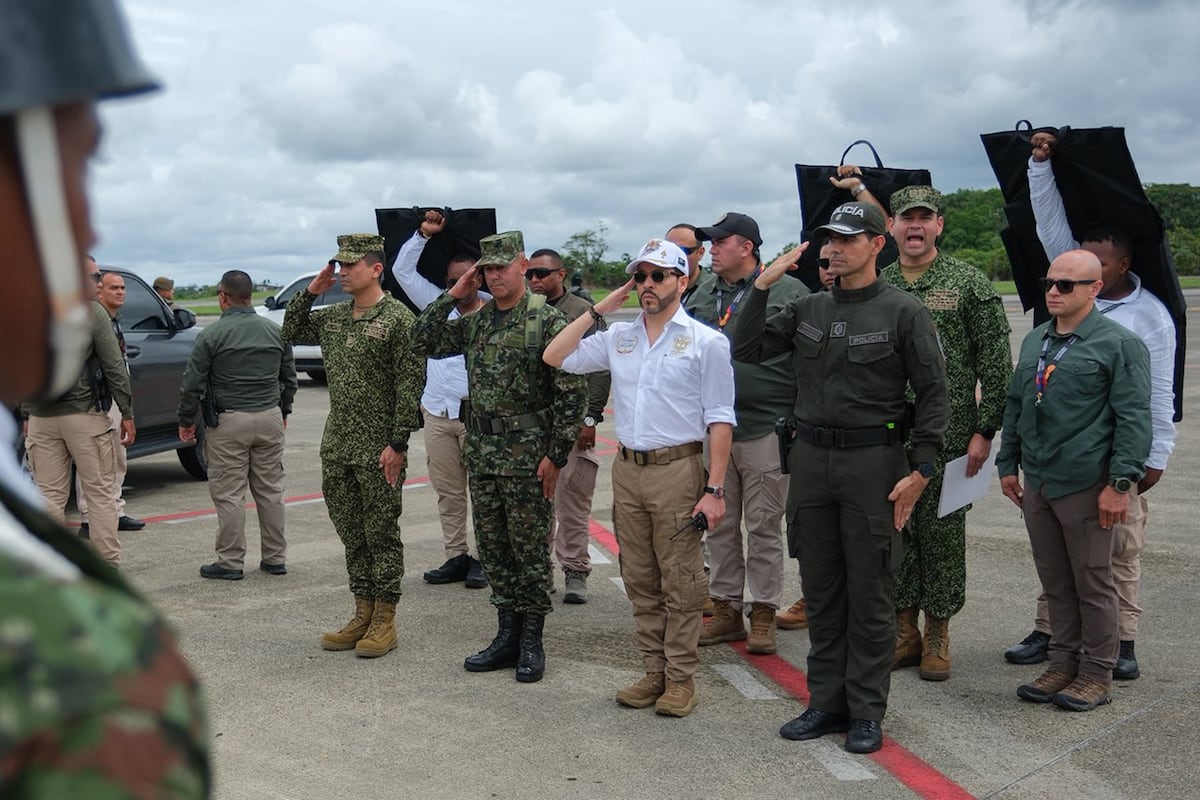 Colombia revives its century-old dream of linking the Atlantic and the Pacific
english.elpais.com
Colombia revives its century-old dream of linking the Atlantic and the Pacific
english.elpais.com
Colombian President Abelardo de la Espriella has revived a century-old plan to link the Atlantic and Pacific through the department of Chocó, unveiling a proposed corridor from the Urabá region of Antioquia to a deep-water port on the Pacific coast. According to El País, the government has not decided whether the connection would be a canal or a railway. The announcement was made to business leaders representing more than 10% of Colombia’s GDP, a signal that the pitch is aimed as much at capital and logistics as at national symbolism.
The idea has returned repeatedly, often as studies that do not reach construction. El País traces the project’s roots to the period around the Panama Canal and to the national trauma of losing Panama in 1903, with formal canal studies dating back to 1964. Under former president Gustavo Petro, the concept resurfaced as an interoceanic railway in late 2023, then shifted toward a canal; in 2024 Petro posted a hand-drawn route map on X that drew public mockery. De la Espriella’s version is more stage-managed: a formal unveiling, a business audience, and an open question about the engineering.
What is new is the political détente around the concept. Petro, now out of office, responded within hours on X backing a modern railway “open to the world,” paired with fiber-optic infrastructure and publicly owned megadata centers at both terminal ports. Despite a long rivalry in which the two men accused each other of authoritarianism and incompetence, Petro did not attack the new president’s announcement, and El País suggests both appear willing to share credit if a project finally materializes.
The corridor’s economics will turn on what Colombia can credibly finance and regulate in a region where the state’s reach has often been thin. A canal or railway would require land acquisition, security, environmental permissions and long-term maintenance, and the payoff depends on whether global shipping and supply chains value an alternative route enough to justify the cost. Chocó’s geography and ecology raise the stakes: the faster the project is sold as a national shortcut, the more the bill will be paid in local disruption.
De la Espriella has put a spotlight on the map; the next test is whether the government can move beyond another round of unfinished studies. For now, Colombia has announced a corridor whose basic form—canal or railway—remains undecided.