
Germany reopens AfD ban debate after Saxony-Anhalt vote
CDU’s Hendrik Wüst urges expert review as legal dossier circulates, constitutional court math raises stakes of a failed case
Images
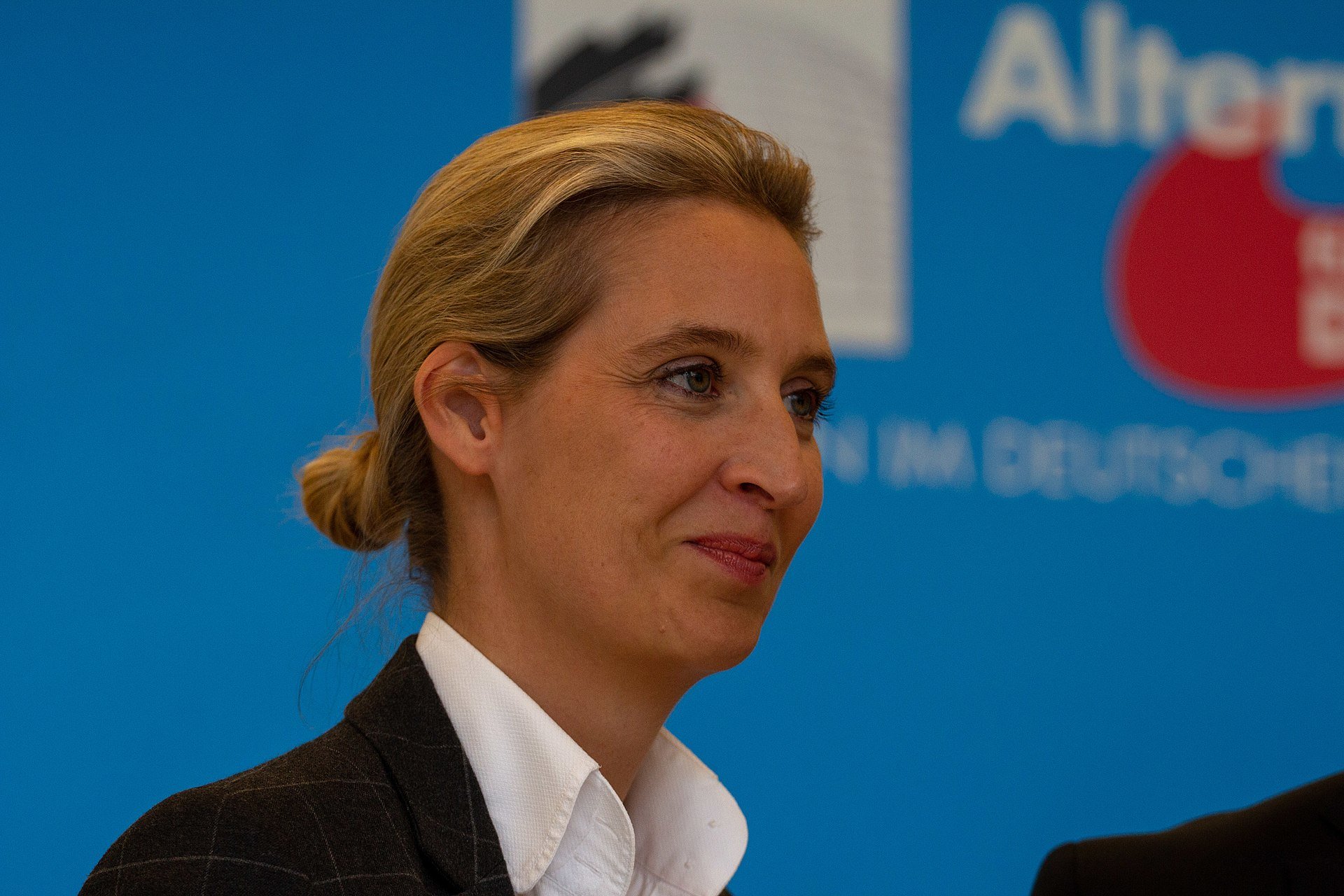 The AfD's Alice Weidel — who lives in Switzerland, with a Sri Lankan woman, and worked for Goldman Sachs — yet portrays herself as the voice of Germany's white underclass <a target="_blank" href="https://en.wikipedia.org/wiki/Alice_Weidel#/media/File:2019-04-11_Pressekonferenz_der_AfD_by_Olaf_Kosinsky-8134.jpg">(Photo: Wikimedia)</a>
euobserver.com
The AfD's Alice Weidel — who lives in Switzerland, with a Sri Lankan woman, and worked for Goldman Sachs — yet portrays herself as the voice of Germany's white underclass <a target="_blank" href="https://en.wikipedia.org/wiki/Alice_Weidel#/media/File:2019-04-11_Pressekonferenz_der_AfD_by_Olaf_Kosinsky-8134.jpg">(Photo: Wikimedia)</a>
euobserver.com
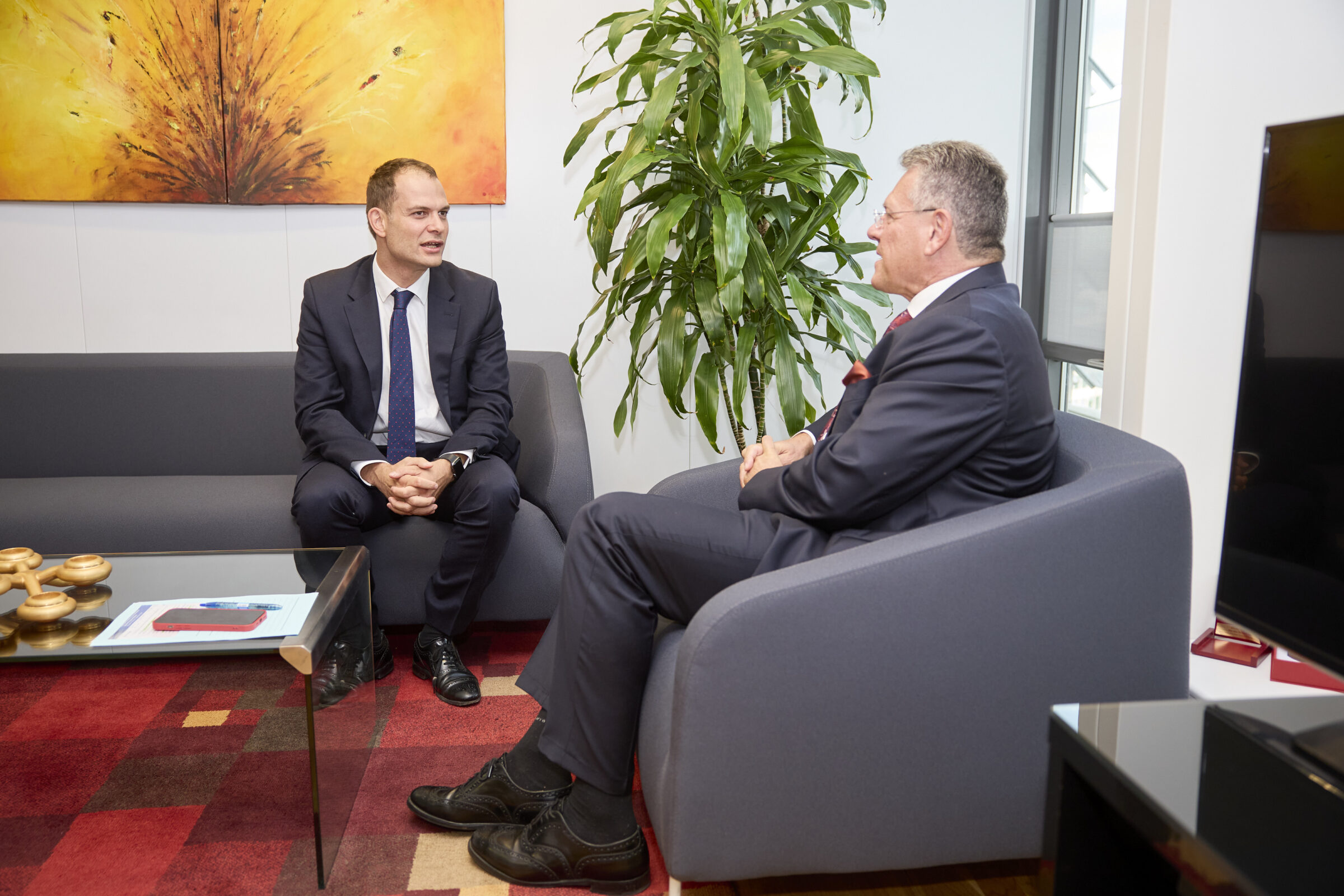 Britain's new Europe minister, Hamish Falconer, on the left, with the EU's Maroš Šefčovič this week
euobserver.com
Britain's new Europe minister, Hamish Falconer, on the left, with the EU's Maroš Šefčovič this week
euobserver.com
 English manners say you should not talk about politics, sex, or religion with strangers
euobserver.com
English manners say you should not talk about politics, sex, or religion with strangers
euobserver.com
 AfD becomes mainstream. Ulrich Siegmund celebrating victory in Saxony-Anhalt. Source: Instagram/Ulrich Siegmund.
euobserver.com
AfD becomes mainstream. Ulrich Siegmund celebrating victory in Saxony-Anhalt. Source: Instagram/Ulrich Siegmund.
euobserver.com
 If he takes leadership of the state government after September 6, a new era for post-war Germany will begin. (Lead candidate Ulrich Siegmund – with microphone – and party ideologist Hans-Thomas Tillschneider – in a white shirt – in Querfurt)
Source: Matěj Stránský
euobserver.com
If he takes leadership of the state government after September 6, a new era for post-war Germany will begin. (Lead candidate Ulrich Siegmund – with microphone – and party ideologist Hans-Thomas Tillschneider – in a white shirt – in Querfurt)
Source: Matěj Stránský
euobserver.com
Germany reopens AfD ban debate after Saxony-Anhalt vote, CDU figures float constitutional-court route as firewall politics strain, party growth meets legal hurdles
Germany’s debate over banning Alternative für Deutschland returned to the mainstream after the party’s election breakthrough in Saxony-Anhalt, according to EUobserver. The discussion sharpened after Chancellor Friedrich Merz faced questions in Berlin and senior Christian Democrats began publicly urging a formal review of whether a ban is viable under Germany’s constitution.
The immediate trigger is arithmetic. A party that other factions have treated as untouchable can be blocked in parliament only as long as it needs partners; a big enough result in a state parliament turns the “firewall” from a moral stance into a procedural problem. State governments also sit in the Bundesrat, giving them leverage over education, culture and domestic security—areas where the AfD has been explicit about using budget and curriculum power to signal who belongs.
EUobserver reports that several state intelligence agencies already label the AfD extremist and a danger to democracy, while the party has tried to shed some liabilities by disbanding its youth wing after activists called for Jews to be rounded up in ghettos. The article also cites recordings of AfD activists seeking volunteers willing “to shoot women and children,” and notes a state-level AfD leader was fined for using a slogan historically associated with SA stormtroopers. These are not abstract concerns for Germany’s security bureaucracy; they are the kind of evidentiary trail a ban case would need, assembled into documentation rather than campaign rhetoric.
But the bar is high and the downside is asymmetric. A ban can be imposed only by the Federal Constitutional Court in Karlsruhe and would require a supermajority among judges in its Second Senate, EUobserver notes. Political scientist Wolfgang Merkel warns that a failed motion would carry a cost of its own—handing the party a court-certified claim of vindication. Even supporters of exploring a ban, such as North Rhine-Westphalia minister-president Hendrik Wüst, are described as urging an expert working group rather than a quick filing.
The pressure on Merz comes from both directions. EUobserver says he has vowed to press ahead with an economic reform programme that includes welfare cuts and harsher migration policies—terrain where the AfD campaigns as the more credible enforcer. At the same time, Merz is reported to have equated the AfD with Die Linke, a comparison that blurs the line between a security argument and a partisan one, and makes any court strategy look like politics by other means.
A 1,675-page legal opinion compiled by the Society for Civil Rights is now circulating as a ready-made dossier, alongside another large tranche of documentation. The question for Berlin is whether it wants to test the constitutional court with a file that thick—or keep relying on a firewall that only works as long as voters leave the party short of power.
In Karlsruhe, the judges do not count rallies or coalition taboos. They count evidence, and they count votes—six of eight, according to EUobserver.