
Anak Krakatau ash shuts Indonesian airports
Flight cancellations strand travellers across Java and Sumatra, schools move online as closures extend without end date
Images
 Volcanic eruption in Indonesia causes widespread travel disruption – video
theguardian.com
Volcanic eruption in Indonesia causes widespread travel disruption – video
theguardian.com
 Passengers queue at check-in desks as flights are cancelled at Jakarta’s Soekarno-Hatta International Airport because of ash from the Anak Krakatau volcano. Photograph: Faisal Ramadhan/EPA
theguardian.com
Passengers queue at check-in desks as flights are cancelled at Jakarta’s Soekarno-Hatta International Airport because of ash from the Anak Krakatau volcano. Photograph: Faisal Ramadhan/EPA
theguardian.com
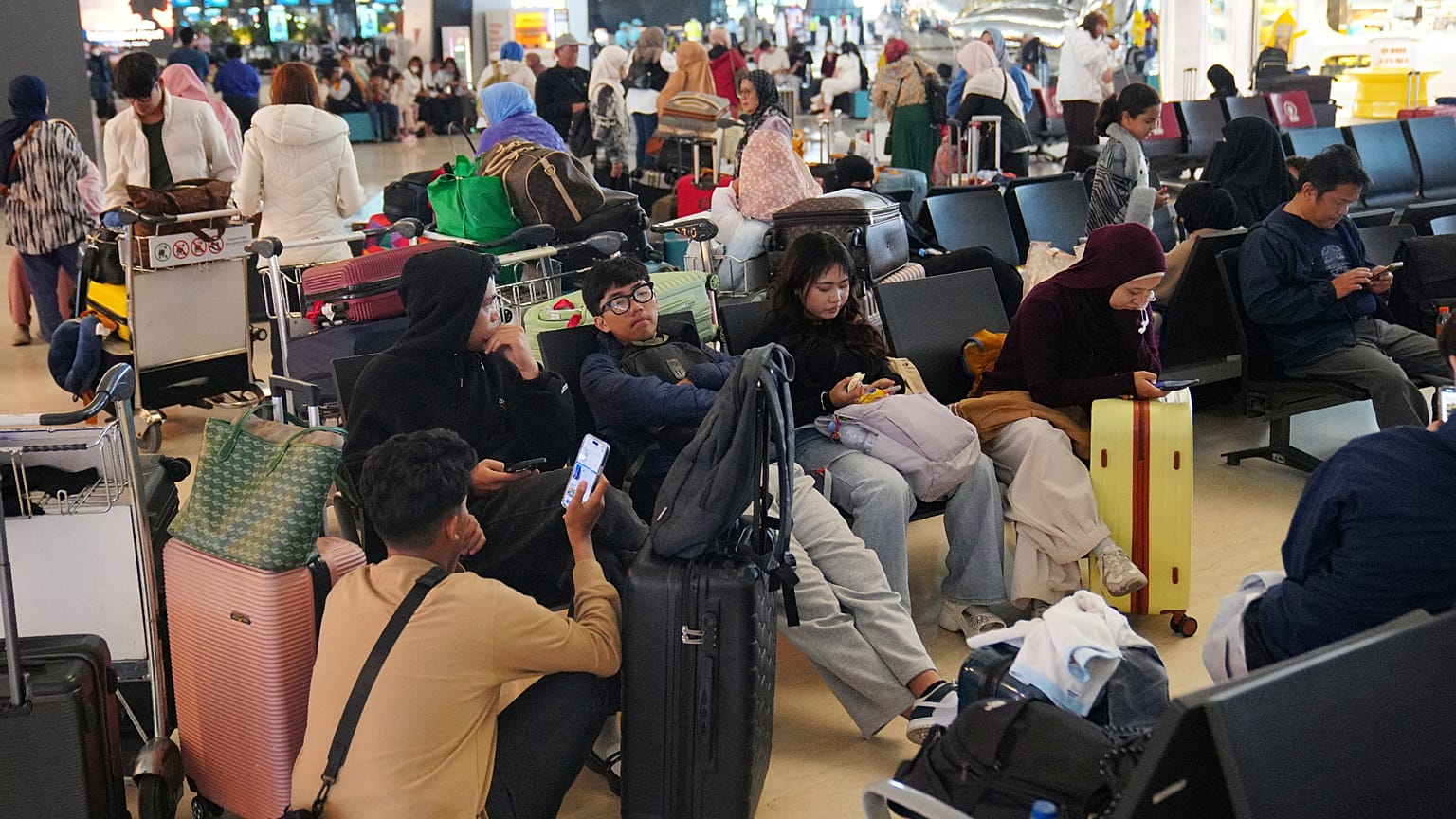 People wait as flights are disrupted due to the eruption of Mount Anak Krakatau, at Soekarno-Hatta International Airport in Tangerang, Indonesia, Monday, Sept. 7, 2026.
euronews.com
People wait as flights are disrupted due to the eruption of Mount Anak Krakatau, at Soekarno-Hatta International Airport in Tangerang, Indonesia, Monday, Sept. 7, 2026.
euronews.com
Volcanic ash from Mount Anak Krakatau forced Indonesia to keep multiple airports closed into Monday, stranding large numbers of travellers and disrupting flight schedules across Java and Sumatra. Agence France-Presse, via The Guardian, reported seven airports closed on Monday morning, including two serving Jakarta, after eruptions that began late Friday. Euronews, reporting from 7 September, described crowds at refund counters and said eight airports were shut amid continuing ash emissions.
The scale of the disruption is less about the volcano’s size than the network effects of air travel in an archipelago. The Guardian cited Indonesia’s transport ministry saying flight cancellations affected 170,000 people, with more than 1,500 flights delayed at eight airports as of Sunday, and more than 900 of those delays tied to Jakarta’s main hub. Euronews reported an even larger wave of cancellations and said hundreds of thousands of travellers were stranded, illustrating how quickly estimates move when airlines re-route aircraft and crews across a region.
Authorities framed the closures as routine safety management: ash was detected in the airspace around Jakarta, and operations at the main airport were suspended and then extended, according to the Guardian. Transport minister Dudy Purwagandhi said the end date could not be determined because weather conditions were “dynamic,” a reminder that the constraint is not just the volcano but wind direction and ash density—variables that make timetables hard to promise and easy to miss.
The disruption spread beyond terminals. The Guardian reported schools across Jakarta shifted to online classes as ash blanketed parts of the capital, with no clear duration. Shipping was also disrupted, and vessels were told to increase vigilance, while a three-kilometre exclusion zone remained in place around the volcano.
Anak Krakatau’s history hangs over every operational decision. The volcano emerged from the sea in the caldera left by the 1883 Krakatau eruption, which the Guardian noted killed an estimated 35,000 people. More recently, a 2018 tsunami caused by a partial collapse of Anak Krakatau killed hundreds, a reference point that makes officials keen to stress what they can and cannot rule out.
For travellers, the immediate reality was queues, rebookings and uncertain departure boards. On Monday, Indonesia’s aviation system was still waiting for the air to clear.