
Russia and North Korea open first road bridge
Tumen River crossing adds second land route beyond 1959 rail link, tourism talk accompanies logistics fears tied to Ukraine war
Images
 Trucks drive along a road during a ceremony for the opening the first road bridge between Russia and North Korea across the Tumen River. Photograph: Oleg Kozhemyako/Reuters
theguardian.com
Trucks drive along a road during a ceremony for the opening the first road bridge between Russia and North Korea across the Tumen River. Photograph: Oleg Kozhemyako/Reuters
theguardian.com
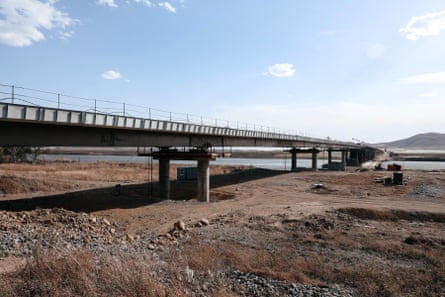 A newly built bridge connects Khasan in Russia’s far east and Tumangang in North Korea. Photograph: Ministry of Transport of the Russian Federation
theguardian.com
A newly built bridge connects Khasan in Russia’s far east and Tumangang in North Korea. Photograph: Ministry of Transport of the Russian Federation
theguardian.com
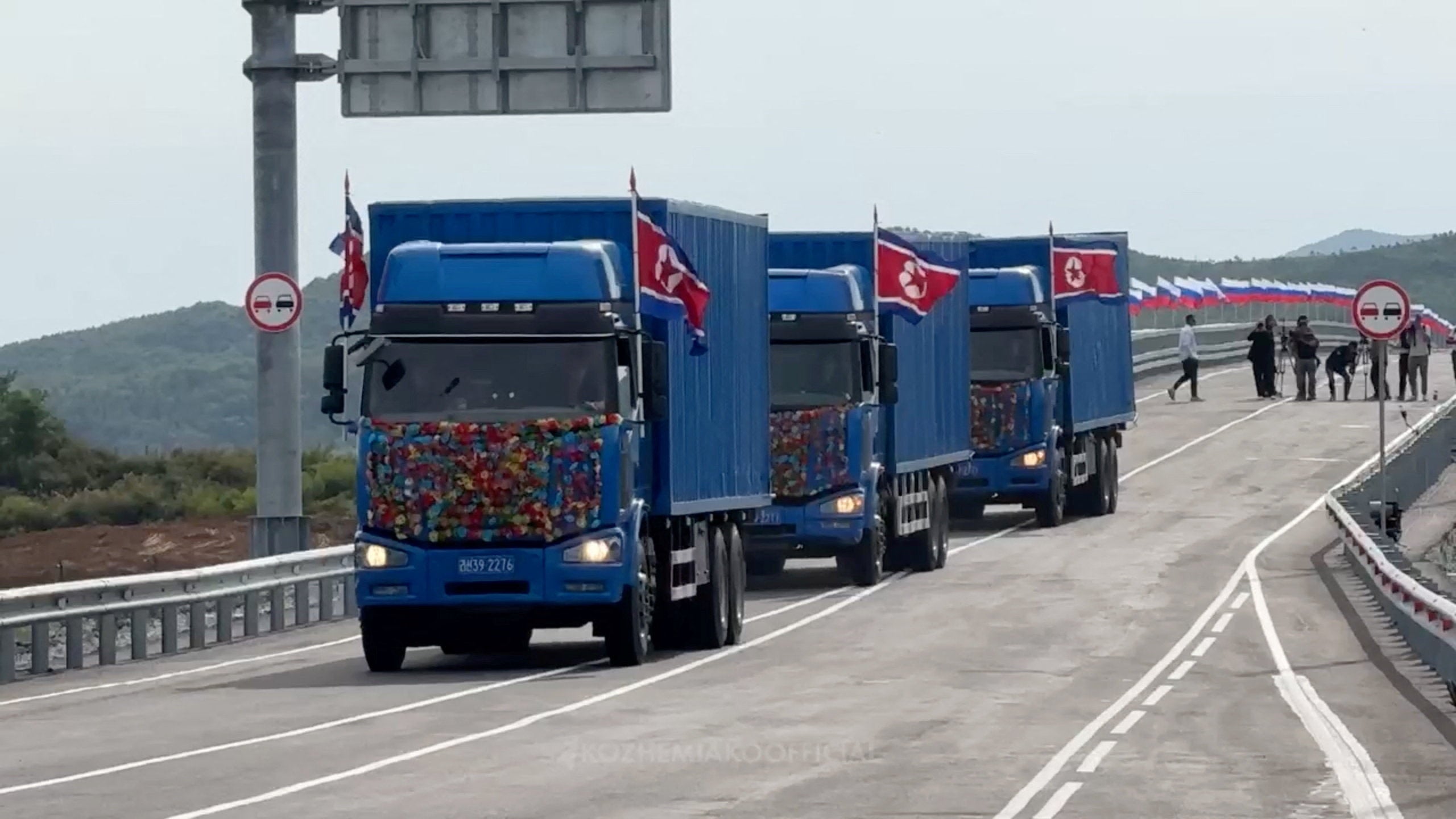 Trucks drive along a road during a ceremony opening the first road bridge between Russia and North Korea across the Tumen River (Reuters)
Reuters
Trucks drive along a road during a ceremony opening the first road bridge between Russia and North Korea across the Tumen River (Reuters)
Reuters
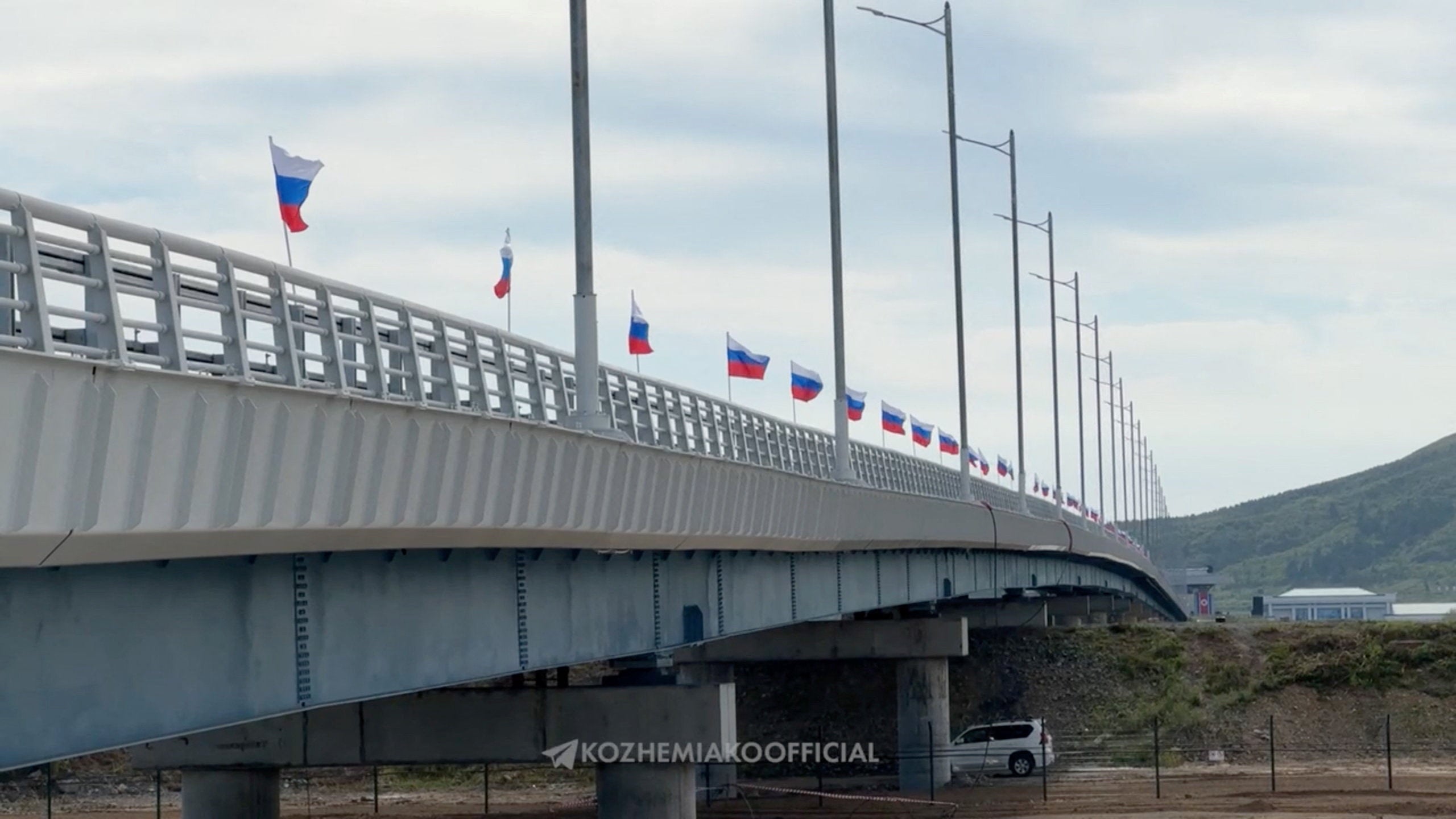 Ties between the two countries have grown stronger since the start of the war in Ukraine in 2022 (Reuters)
Reuters
Ties between the two countries have grown stronger since the start of the war in Ukraine in 2022 (Reuters)
Reuters
Russia and North Korea opened their first road bridge across the Tumen River on Monday, a kilometre-long crossing between Khasan in Russia’s far east and Tumangang in North Korea. According to The Guardian, Russia’s prime minister Mikhail Mishustin addressed the opening ceremony by video link as convoys of vehicles crossed from both sides. The Independent reports the two-lane bridge is expected to handle up to 300 vehicles a day, with trucks using it immediately.
The bridge arrives in a relationship that has shifted from diplomatic symbolism to practical exchange. Moscow and Pyongyang already had air links and a railway bridge, but road access changes what can be moved, how often, and how quietly. The Independent notes that before this project, vehicles sometimes crossed by planks placed on the rail bridge—an improvisation that limited routine logistics to what could be coordinated around trains and border controls designed for a single choke point.
Both governments sell the project as development. Mishustin said the crossing would spur tourism and jobs and expand “trade, economic, scientific, technological, and cultural cooperation,” according to both outlets. Russia has promoted North Korea as a holiday destination since it reopened to Russian tourists in 2024, and the Guardian reports thousands of Russians have visited new beach resorts and ski slopes. In a remote, sparsely populated border area, a ribbon-cutting can be cheaper than building a real local economy.
The harder question is what the bridge makes easier for the two states, not what it makes prettier. Ukrainian human rights groups cited by the Guardian warn the crossing could function as a discreet logistics corridor, moving North Korean troops, construction brigades, and military officials into Russia, while sending Russian technology and resources back with less scrutiny than air cargo or rail consignments that are easier to track. The Independent situates the bridge in ties that have “grown stronger” since Russia’s full-scale invasion of Ukraine, noting North Korean soldiers have fought alongside Russian forces and that the project was agreed after Vladimir Putin’s 2024 visit to North Korea.
Names matter in Pyongyang’s diplomacy, and this one is not subtle. The bridge is named after Yakov Novichenko, a Soviet officer credited by North Korea with saving Kim Il-sung from a grenade attack in 1946, a story that folds Soviet patronage into the country’s founding mythology. The Guardian notes Russia and North Korea already share a “Friendship Bridge” rail crossing commissioned in 1959; the new structure adds a second monument to a partnership that now serves a different war.
The two governments say the bridge is about tourism and trade, and the first vehicles to cross were filmed doing exactly that. The bridge’s first day also created a second land route between two sanctioned states that have learned to treat infrastructure as a form of foreign policy.