
Trump proposes renaming New Mexico as New America
Democrats and GOP nominee reject social media push, constitutional text blocks executive-style rebranding
Images
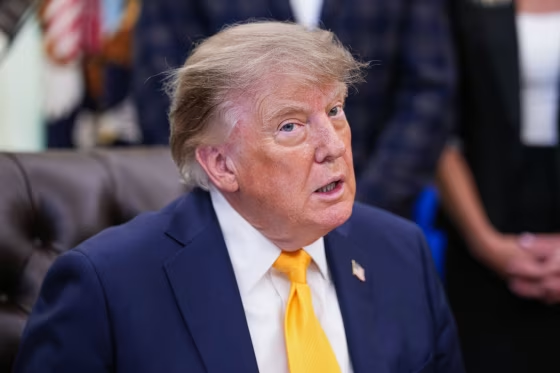 U.S. President Donald Trump in the Oval Office of the White House.
nbcnews.com
U.S. President Donald Trump in the Oval Office of the White House.
nbcnews.com
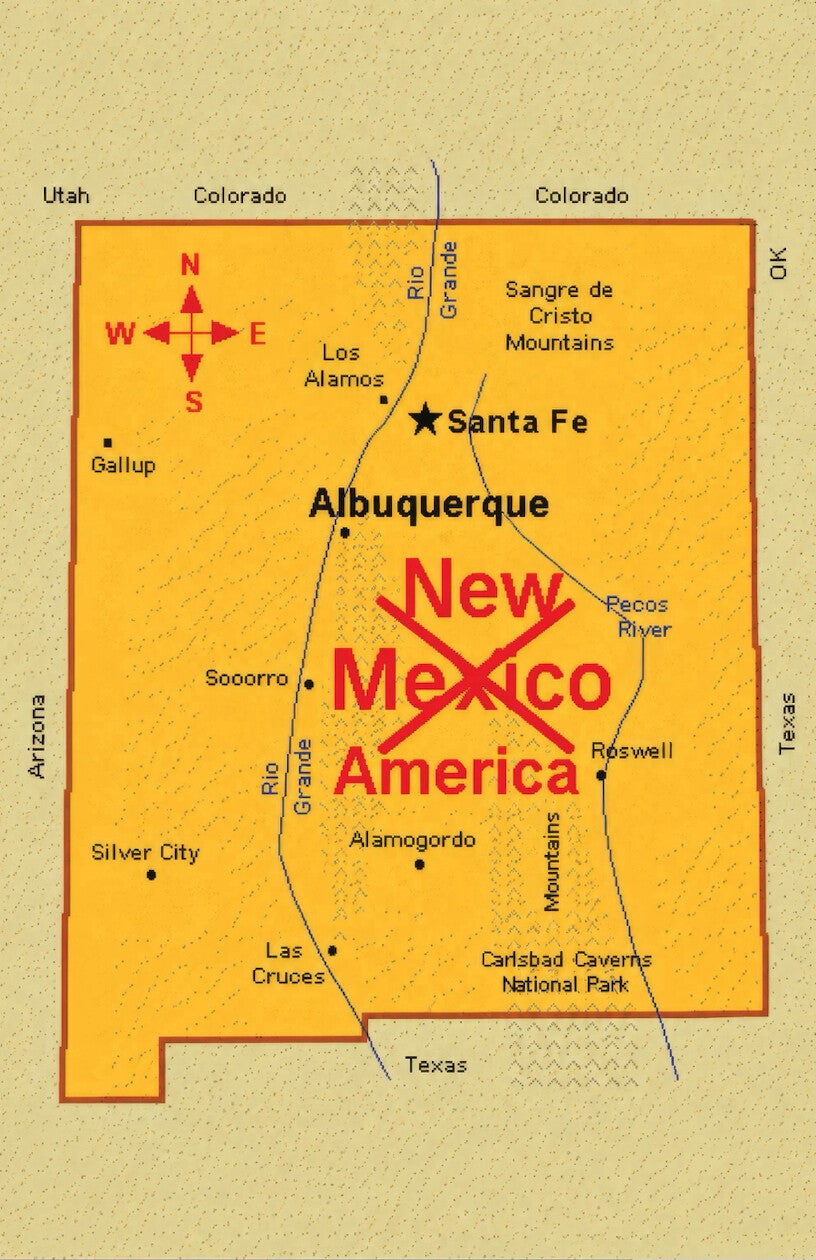 The president posted an image of a map of the state in which “Mexico” had been crossed out and replaced with “America” (Truth Social)
Truth Social
The president posted an image of a map of the state in which “Mexico” had been crossed out and replaced with “America” (Truth Social)
Truth Social
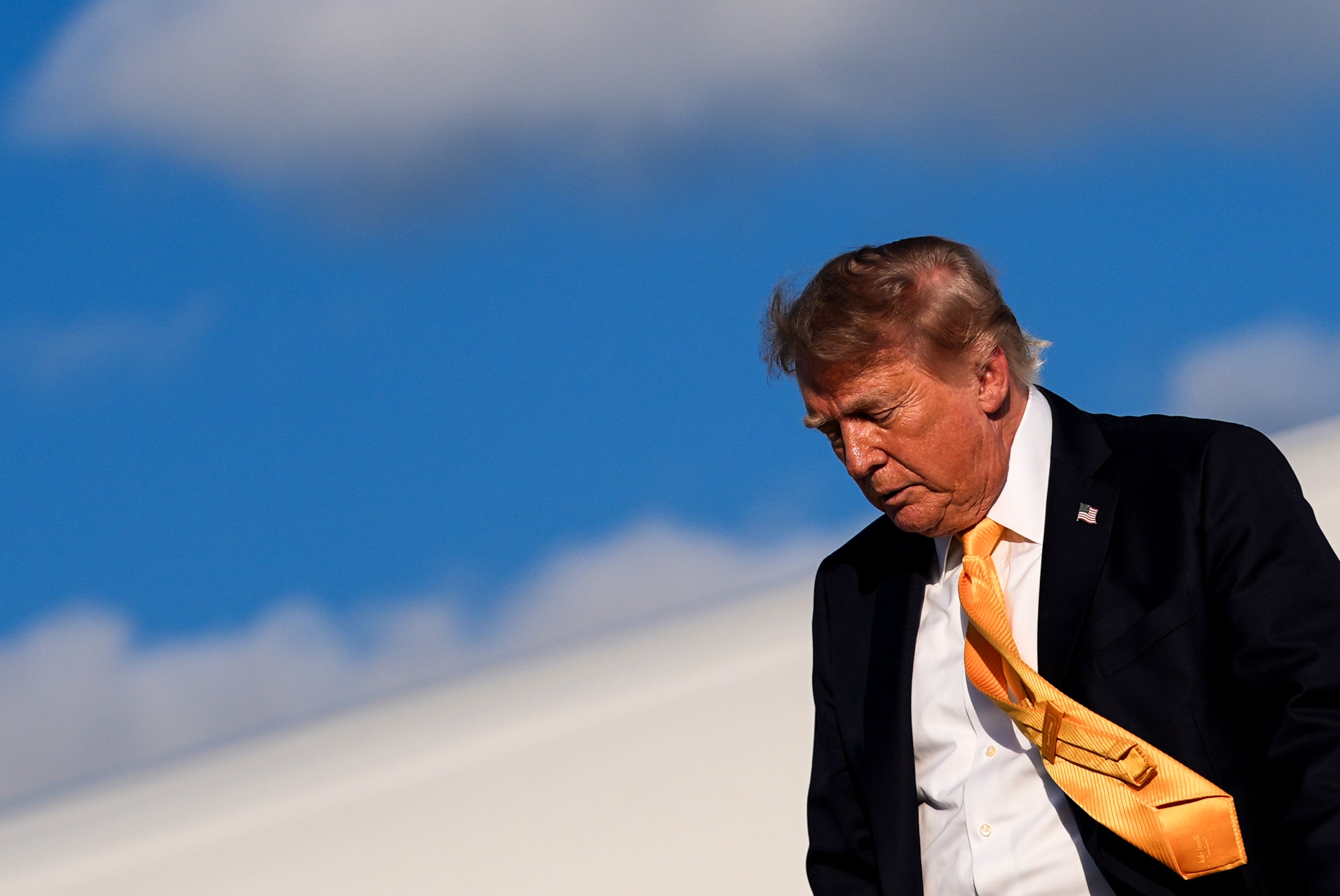 Trump floated changing the name of the 47th state during a posting spree amid his latest weekend at a golf club he owns (AP)
independent.co.uk
Trump floated changing the name of the 47th state during a posting spree amid his latest weekend at a golf club he owns (AP)
independent.co.uk
President Donald Trump used social media over the weekend to float renaming New Mexico as “New America”, posting AI-generated images and video on Truth Social depicting him replacing a “Welcome to New Mexico” sign and relabeling maps. New Mexico’s Democratic governor, Michelle Lujan Grisham, responded on X that the state’s name is “not up for debate” and predates the United States. The state’s Democratic congressional delegation echoed the rejection, while even the Republican gubernatorial nominee told the Albuquerque Journal the identity is not negotiable.
The proposal is not a policy instrument so much as a test of how far presidential messaging can travel without touching the machinery of law. According to NBC News, Trump paired the renaming pitch with an allegation that New Mexico is “one of the great vote cheating states of all time,” turning a cultural label into an election-integrity taunt. But a state’s name is embedded in its constitution; as both NBC News and the Independent note, a change would require a constitutional amendment approved by voters, not a presidential order. That gap—viral executive-style imagery on one side, immovable state legal text on the other—creates a familiar pattern: attention concentrates on symbols because the underlying levers are harder to move.
The episode also fits a running series of federally branded renames. NBC News reports Trump previously signed executive orders renaming the Gulf of Mexico as the “Gulf of America” and changing Denali back to “Mount McKinley,” a move that angered Alaska lawmakers including Republicans. The Independent adds that Trump recently ordered Lake Ontario renamed “Lake America” amid a trade dispute with Canada. Each renaming fight is cheap to launch, difficult to fully implement across maps and institutions, and useful as a loyalty signal—supporters can adopt the new label immediately, while opponents are forced into public correction.
For New Mexico Democrats, the response doubles as campaign framing. Lujan Grisham argued Trump was trying to distract from the war in Iran and rising prices, while listing state-level programs such as free childcare and college and investments in housing. Deb Haaland, the Democratic nominee for governor, released a video saying Trump’s posts reminded her that her Republican opponent is running for “New America,” while she is running for governor of New Mexico. The back-and-forth turns a constitutional impossibility into a ballot-line contrast: one side sells a rebrand, the other sells continuity.
Trump cannot rename the state by himself. New Mexico’s constitution already supplies the last word: “The name of this state is New Mexico.”