
Iran plans Hormuz exclusion zone
Shipping traffic drops to lowest since May as US and IRGC trade strikes, oil price rises alongside sanctions threats
Images
 independent.co.uk
 independent.co.uk
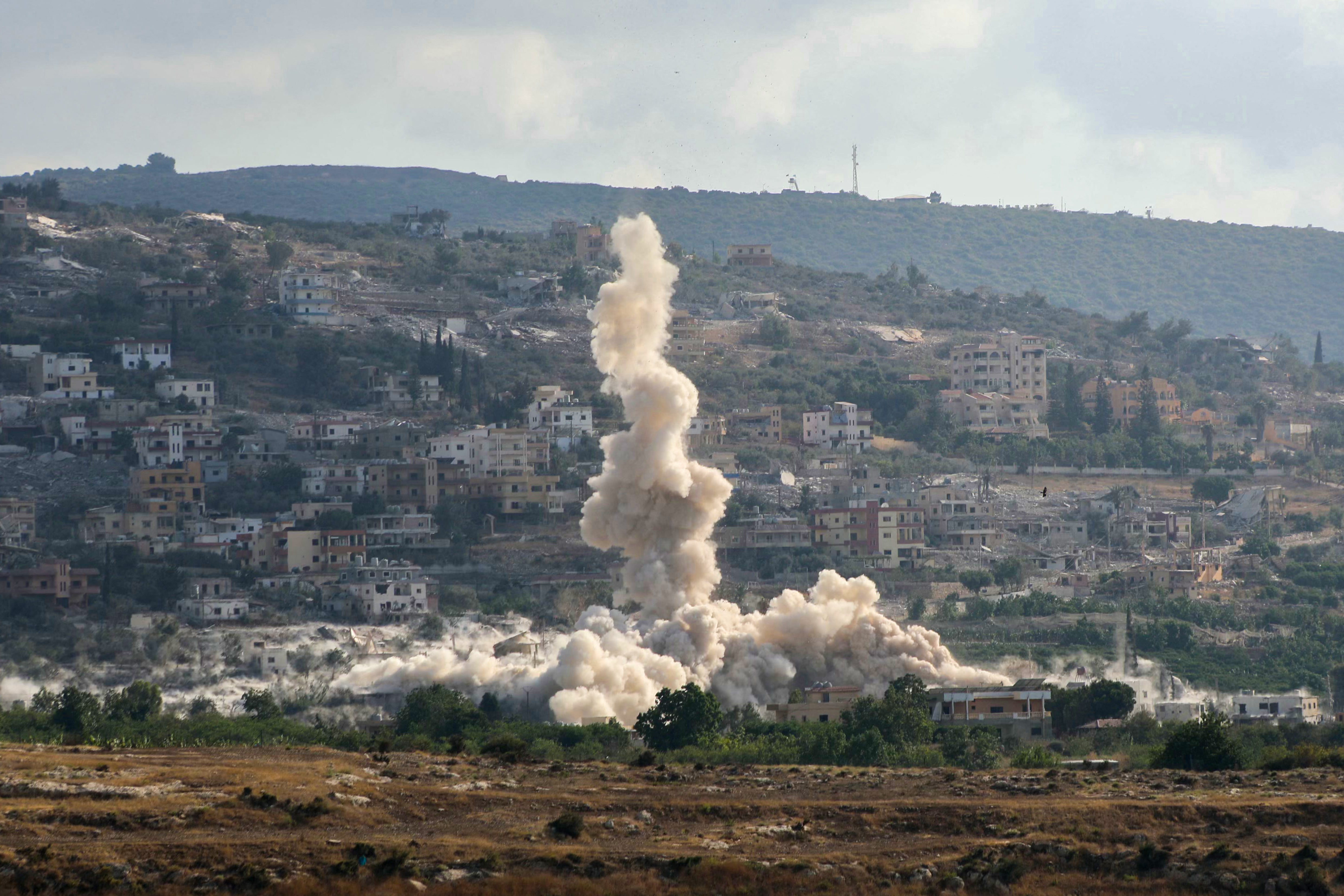 This photograph taken from the southern Lebanese village of al Hanniyeh shows smoke as it rises from the site of an Israeli-controlled explosion in the nearby village of Al-Mansouri (AFP/Getty)
AFP/Getty
This photograph taken from the southern Lebanese village of al Hanniyeh shows smoke as it rises from the site of an Israeli-controlled explosion in the nearby village of Al-Mansouri (AFP/Getty)
AFP/Getty
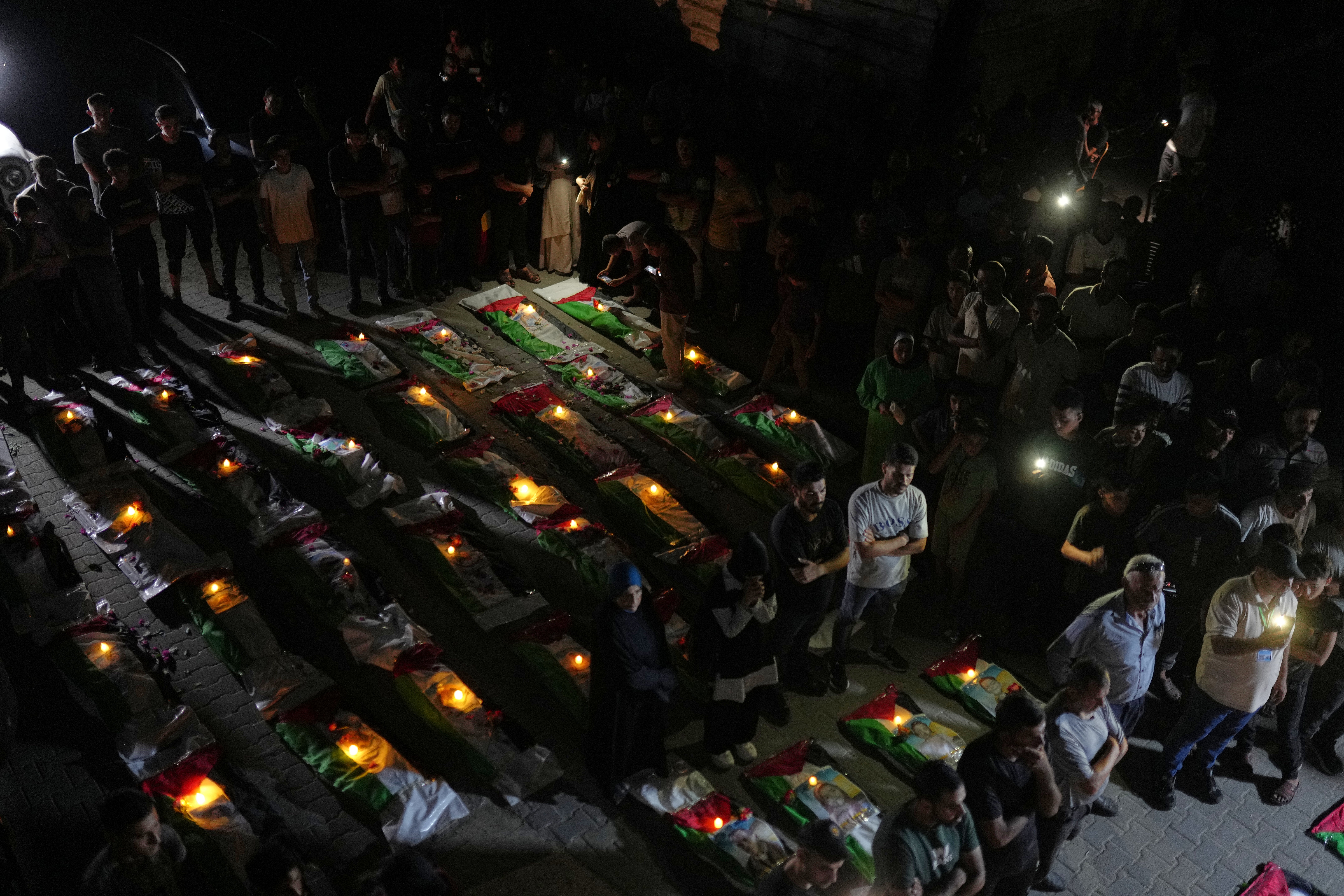 The top photos of the day by AP's photojournalists (Copyright 2026 The Associated Press. All rights reserved.)
independent.co.uk
The top photos of the day by AP's photojournalists (Copyright 2026 The Associated Press. All rights reserved.)
independent.co.uk
 People carry the remains of victims wrapped in Palestinian flags during a funeral procession in Zeitoun neighborhood of Gaza City, Gaza (AFP/Getty)
AFP/Getty
People carry the remains of victims wrapped in Palestinian flags during a funeral procession in Zeitoun neighborhood of Gaza City, Gaza (AFP/Getty)
AFP/Getty
Iran is preparing to declare a new “exclusion zone” outside the Strait of Hormuz, warning that ships entering the restricted area will be added to an Iranian sanctions list, according to The Independent’s live coverage citing Iranian statements. The announcement comes after a weekend of exchanges in which the US struck Iranian oil tankers and Iran’s Revolutionary Guard fired ballistic missiles at American naval vessels, pushing oil prices higher.
The immediate effect is visible in shipping data. Analytics firm Kpler recorded an average of about 10 commodity ships a day transiting the strait over the past 10 days—its lowest level since May—while weekend traffic fell to a handful of vessels, many using the Iranian route, The Independent reports. With fewer hulls moving through a narrow passage, the market response has been to price in disruption: the same coverage put oil at $93 a barrel after the latest round of fire.
Tehran’s stated logic is to convert passage into leverage. Iranian officials cited by The Independent link any “full” reopening of the strait to the US ending what Iran calls sabotage, threats and attacks. The threatened sanctions list, in this framing, is not merely punitive; it is a compliance mechanism meant to push shipowners, insurers and charterers to treat Iranian warnings as binding even without an international legal process.
Washington’s response has treated the waterway as a military problem. The Independent reports US strikes on three Iranian oil tankers and Iranian claims of attacks on additional vessels, turning commercial traffic into an extension of the battlefield. In that environment, even Gulf states that rely on outside protection are publicly adjusting their language. Qatar’s foreign ministry spokesperson Majed al-Ansari argued that regional countries should not depend exclusively on partnership with the US for security, stressing “self-sufficiency” alongside alliances.
The longer the strait remains constrained, the more the costs are shifted outward—from navies and governments onto freight rates, insurance premiums and fuel bills. The exclusion-zone threat formalises that shift by making private shipping firms the first audience for state-to-state escalation.
On the water, the metric that matters is not the number of statements issued but the number of ships that decide it is worth passing through. Over the weekend, The Independent reports, that number fell into the single digits.