
North Korea commissions second destroyer it calls nuclear-capable
KCNA links ship to counter-strike deterrence system, repaired hull enters service after earlier botched launch
Images
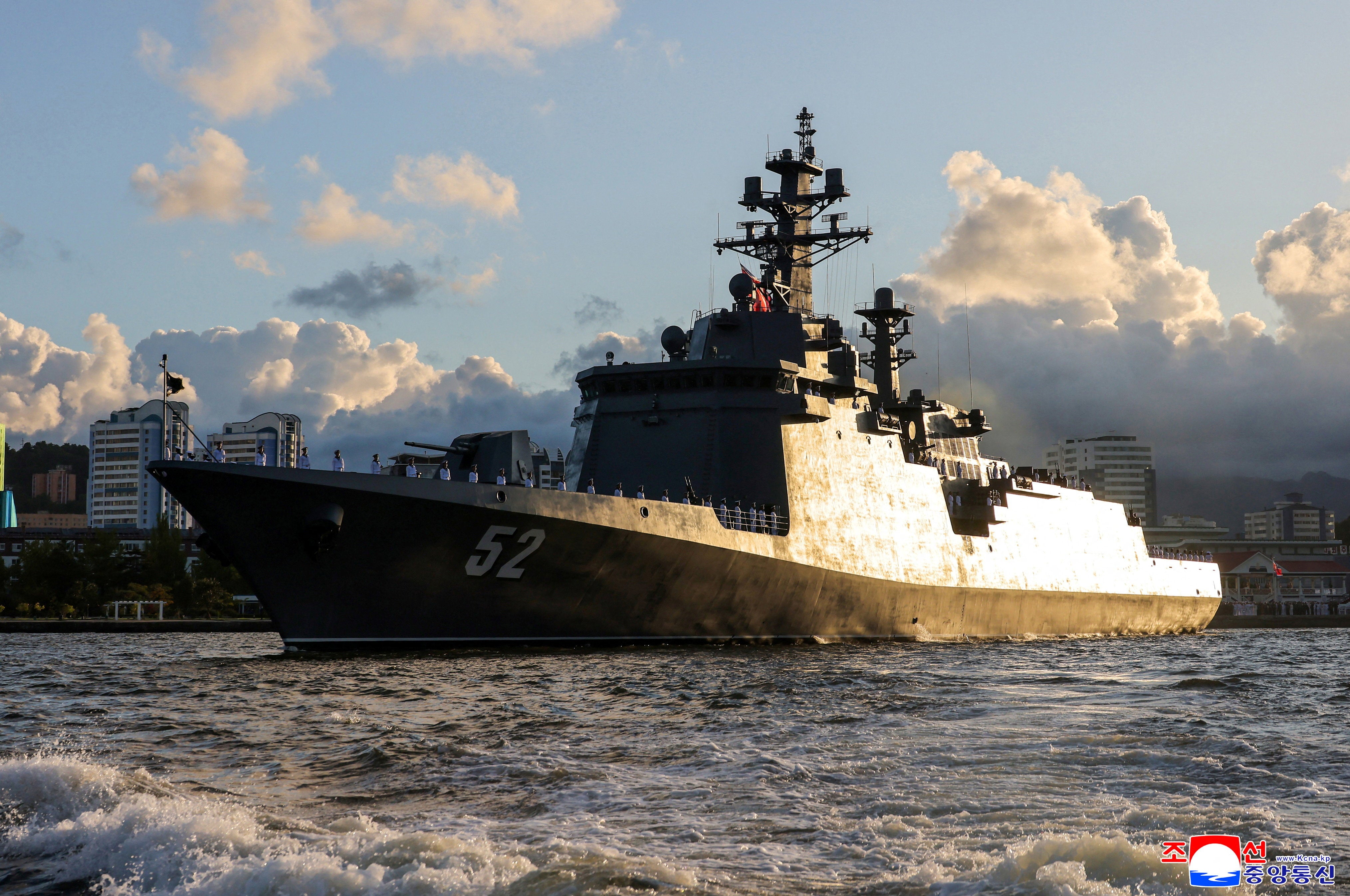 The destroyer ‘Kang Kon’, on the day of its commissioning ceremony, at Wonsan Port, North Korea, 6 September 2026, in this picture released by North Korea’s official Korean Central News Agency (Reuters)
Reuters
The destroyer ‘Kang Kon’, on the day of its commissioning ceremony, at Wonsan Port, North Korea, 6 September 2026, in this picture released by North Korea’s official Korean Central News Agency (Reuters)
Reuters
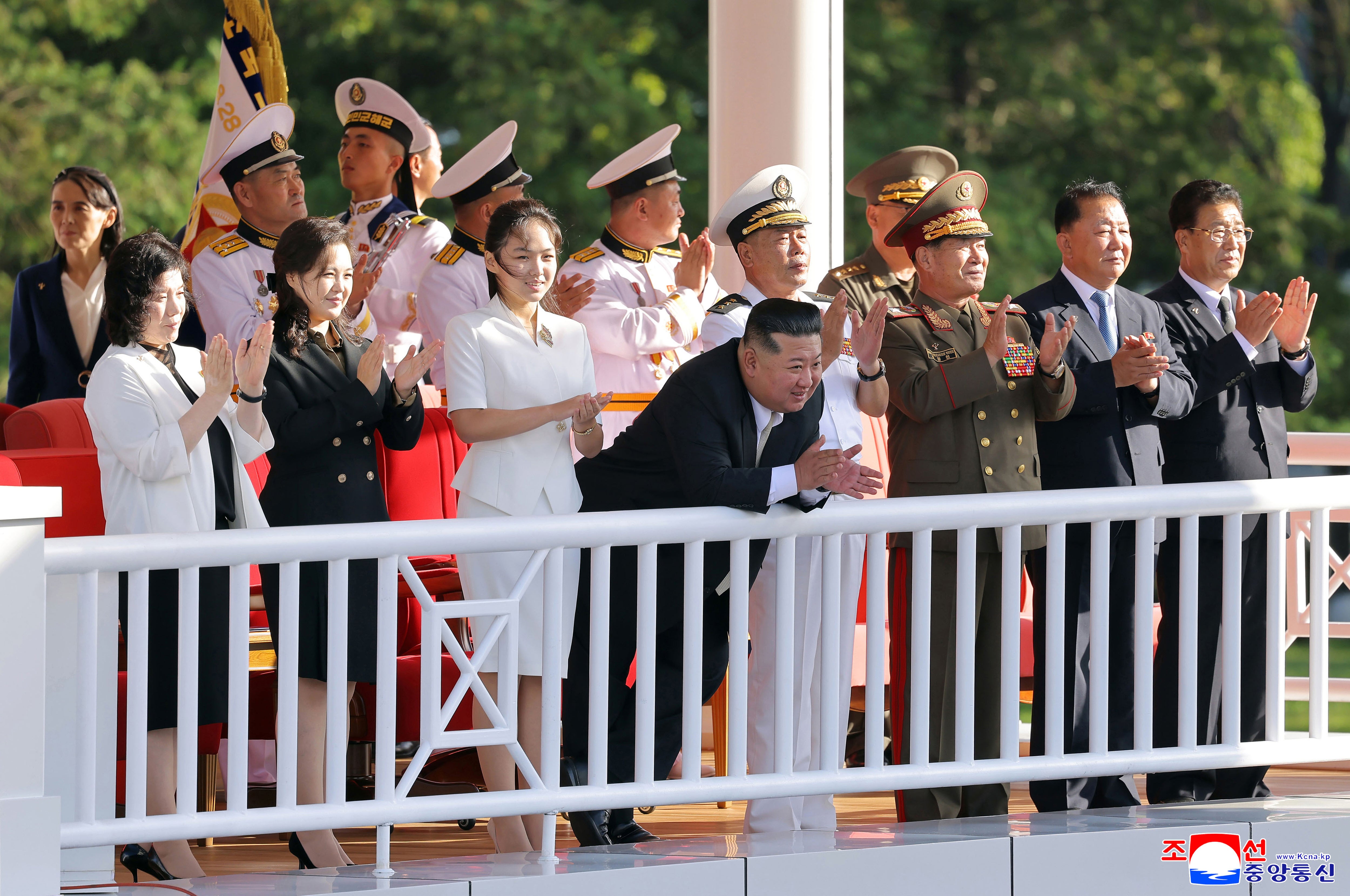 In this photo provided by the North Korean government, its leader Kim Jong Un, front centre, his daugther, third left in front, and his wife Ri Sol Ju, second left in front, attend a commissioning ceremony of a destroyer, Kang Kon at a port in Wonsan, North Korea Sunday, 6 September 2026 (AP)
independent.co.uk
In this photo provided by the North Korean government, its leader Kim Jong Un, front centre, his daugther, third left in front, and his wife Ri Sol Ju, second left in front, attend a commissioning ceremony of a destroyer, Kang Kon at a port in Wonsan, North Korea Sunday, 6 September 2026 (AP)
independent.co.uk
North Korea has commissioned what it describes as its second nuclear-capable destroyer, staging a ceremony overseen by Kim Jong Un and naming the ship Kang Kon, according to KCNA as reported by The Independent. The vessel was assigned to the East Sea Fleet, and Kim said it would be incorporated into the country’s nuclear deterrence system, capable of carrying out nuclear “counter-strike” missions. The announcement comes as Pyongyang continues to pair weapons development with intermittent signals that talks with Washington remain possible under different terms.
The ship’s backstory is part of the message. KCNA and The Independent said the destroyer had been damaged in a botched launch attempt at the northern port of Chongjin more than a year before commissioning, after it was first unveiled in 2025. It was later repaired and relaunched in 2026. A programme that can absorb a public failure, fix the hull, and still turn the relaunch into a political event is also a programme that expects outside observers to price in persistence rather than perfection.
KCNA framed the destroyer as an answer to “hostile” pressure and a tool to “maintain a balance of forces” in key waters. Kim said North Korea intends to develop its navy into a nuclear-armed force and keep deploying “powerful strategic assets”, language that treats platforms as mobile bargaining chips as much as military hardware. Earlier North Korean reporting, cited by The Independent, has said the Choe Hyon-class can carry a range of weapons including missiles that analysts believe could deliver nuclear payloads.
For neighbouring states, the practical question is less about the ship’s nameplate than about what it does to planning assumptions. Surface combatants expand the geography of risk: a deterrent posture that once sat mainly on land can be dispersed along coastlines and sea lanes, complicating surveillance and response. Even without a shot fired, that dispersion pulls resources into tracking and counter-tracking—more patrols, more exercises, more procurement—because nobody wants to be the one who assumed the new ship was mostly for show.
Kim’s public line kept the door to diplomacy open only on a narrow condition. The Independent reported that he has said Pyongyang could coexist with the US if Washington dropped its “hostile” policy and stopped demanding denuclearisation as a precondition for talks. That positions the destroyer not as a step toward disarmament but as a reason to accept a new baseline.
At Wonsan, KCNA published photos of the ship at port and of Kim attending the ceremony with his family. The destroyer entered service after a failed launch, a repair, and a relaunch—then a declaration that it belongs inside a nuclear counteraction system.