
US destroys three Iranian oil tankers
Iran claims retaliatory strikes in Strait of Hormuz, maritime choke point becomes a scorecard
Images
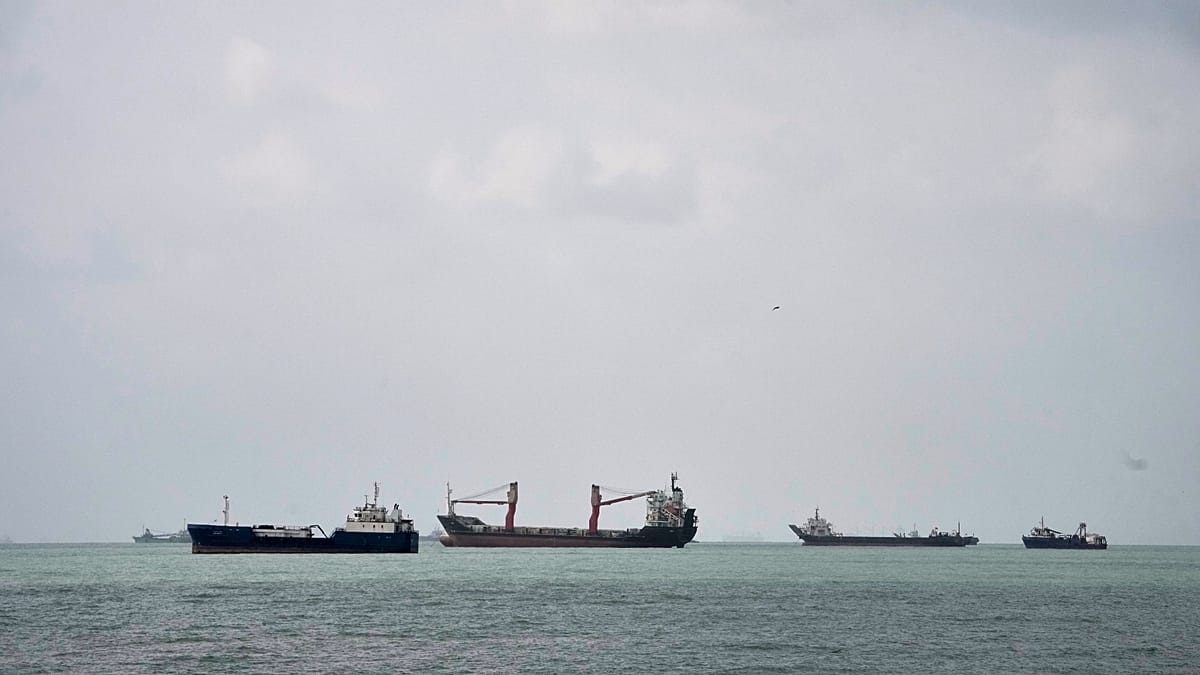 Iran says it attacked tankers, US-linked vessels in Hormuz escalation
euronews.com
Iran says it attacked tankers, US-linked vessels in Hormuz escalation
euronews.com
 independent.co.uk
 independent.co.uk
 independent.co.uk
 independent.co.uk
US forces say they destroyed three Iranian oil tankers over the weekend after Iran’s Revolutionary Guard fired ballistic missiles toward two US Navy warships enforcing a blockade of Iranian ports, according to Euronews. Iranian state media, cited by Euronews, said one of the tankers was hit near Kharg Island, a key node in Iran’s oil export system, before Tehran announced retaliatory strikes on shipping in the Strait of Hormuz.
Iran’s Islamic Revolutionary Guard Corps (IRGC) claimed it targeted three oil tankers it said were using an “unauthorised route” through Hormuz, and also hit three US-affiliated vessels “in other areas”, without providing damage assessments. US Central Command said an aircraft carrier and a destroyer evaded multiple attacks and that no American personnel were injured, while describing the struck tankers as part of a “shadow” oil network funding the IRGC and allied armed groups. The exchange adds a new layer to a conflict that has already turned the region’s chokepoints into instruments of policy: a blockade at the ports, missile launches at the patrol line, and now ship losses framed as “economic cost” rather than battlefield gain.
Admiral Brad Cooper, cited by both Euronews and The Independent, cast the logic in transactional terms: if Iran shoots at two US ships, the US will “take out” three Iranian ships. That arithmetic matters because tankers are not just floating barrels; they are also the export capacity that pays for the state and its security apparatus, and the insurance-risk premium that gets passed through to every importer. Iran, for its part, paired its operational claims with a warning to other vessels not to use routes Tehran does not “authorise”, a reminder that control of passage can be asserted even without formal sovereignty over the waterway.
The Independent, in a live report on the conflict, linked the maritime escalation to fuel-price pressure far from the Gulf, noting record diesel prices in the United States amid disrupted flows. OPEC+ was expected to keep its output policy unchanged, according to sources cited by The Independent, leaving markets to absorb the costs of uncertainty rather than being stabilised by new supply. In practice, the incentives now favour calibrated disruption: each side can signal resolve by degrading commerce while avoiding the political cost of a direct strike on population centres.
Euronews reported that Iranian media offered few details on the effects of the IRGC’s claimed strikes. The clearest verified change is physical and countable: three Iranian tankers are gone, and the Strait’s shipping lanes are being treated as a negotiable instrument rather than a neutral corridor.