
Wedding party fire kills at least 22 in Kinshasa
Local officials cite narrow hallways and rising toll risk, deadly city fires recur as urban growth outruns fire services
Images
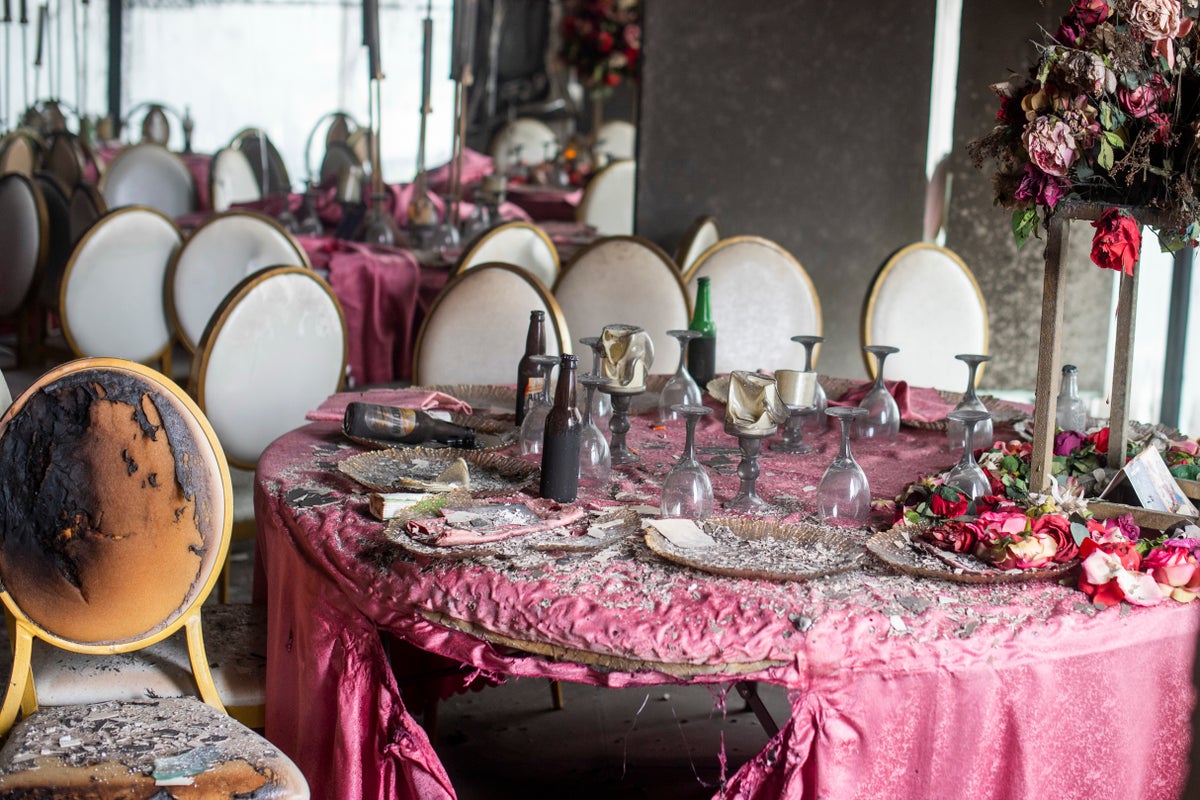 A wedding party fire in Congo's capital Kinshasa leaves at least 22 dead
independent.co.uk
A wedding party fire in Congo's capital Kinshasa leaves at least 22 dead
independent.co.uk
At least 22 people died after a fire broke out during a wedding party in Kinshasa, the Democratic Republic of Congo’s capital, according to the mayor of Lingwala commune. The blaze started on Friday night and burned into early Saturday in a building in the northern part of the city, the Independent reports. Several others were injured, and local officials said the death toll could rise.
Witness accounts described people trying to force their way through narrow hallways as the fire spread, leaving some victims and survivors laid along the roadside as others attempted to help. The cause had not been confirmed, and Congo’s deputy prime minister and interior minister, Jacquemin Shabani, visited the site on Saturday morning.
Kinshasa’s repeated fatal fires are usually reported as isolated tragedies, but the same details recur: dense neighbourhoods, improvised venues, and escape routes that turn into bottlenecks once panic sets in. Local media have reported several fires in the city this year, and officials acknowledge that urban development often proceeds without basic provisions such as fire services. In practice that means safety is treated as an optional add-on—until a crowded event tests the building’s layout and the city’s response capacity at the same time.
The costs then arrive in a familiar sequence. Families and neighbours become first responders, moving the injured outside while the situation is still unfolding. Authorities arrive later to count bodies, issue provisional figures, and promise investigations whose findings rarely change the underlying construction patterns. The risk does not stay confined to private celebrations either: in a city of millions, a single venue’s missing safeguards become a public problem as soon as ambulances, clinics, and local officials are pulled into the aftermath.
The dry season adds another layer of predictability, with higher fire incidence colliding with crowded indoor gatherings and strained municipal services. When a city grows faster than its enforcement and emergency infrastructure, the visible part of the system becomes the condolence visit, not the inspection regime.
The mayor of Lingwala, Norbert Mushinga, called the death toll provisional and said it could rise further. The fire’s cause was still unconfirmed as officials toured the burned-out building on Saturday morning.