
Nearly 2000 fall ill after Indonesia school meals
Free-meals program expands nationwide via thousands of providers, fictitious kitchens surface in the audit trail
Images
 (AFP/Getty)
AFP/Getty
(AFP/Getty)
AFP/Getty
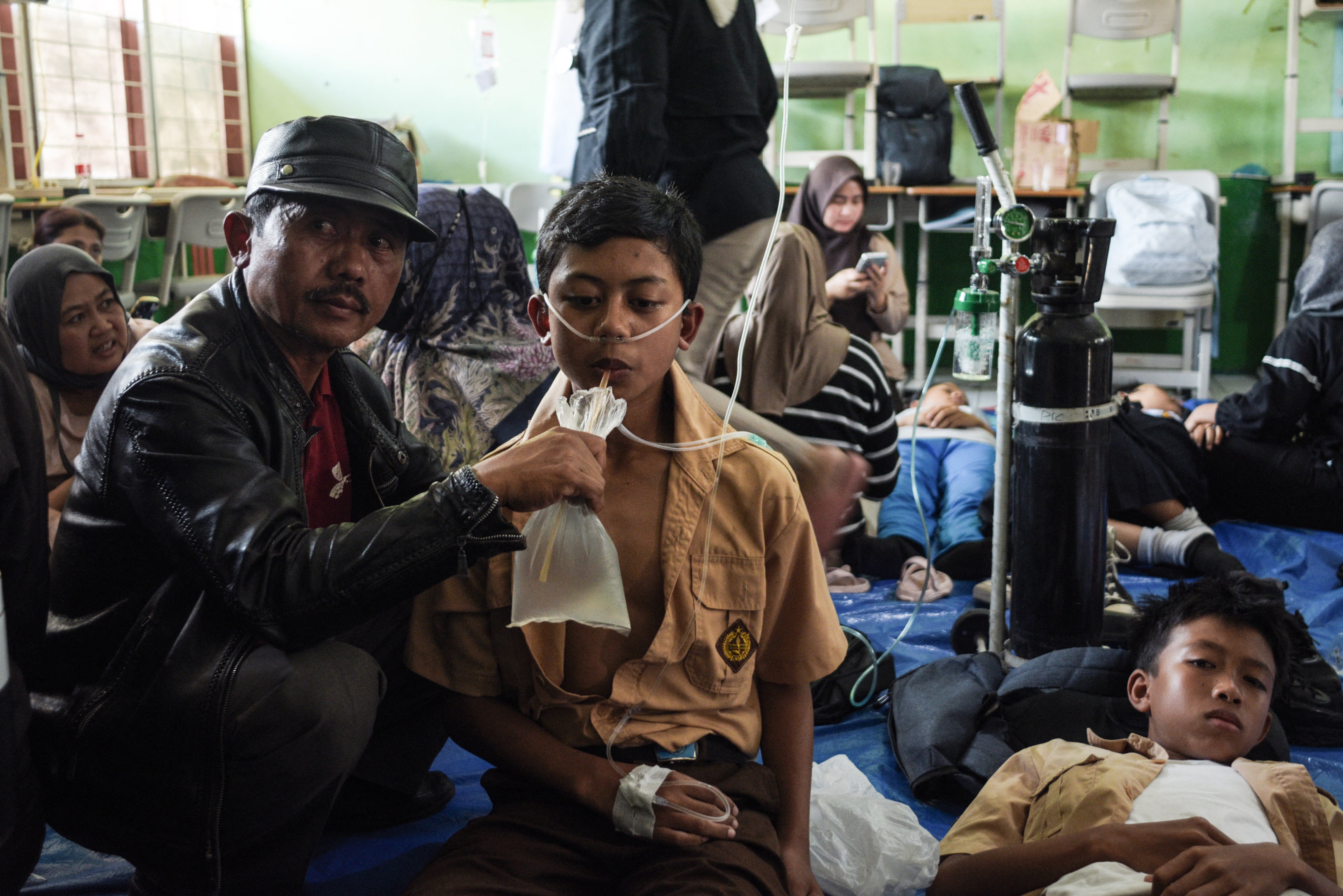
Nearly 2,000 students and teachers across several Indonesian provinces fell ill this week after eating meals from the government’s free school-meals programme, according to The Independent. Officials described symptoms consistent with food poisoning and said no deaths had been reported.
The largest cluster was reported in Central Java’s Rembang regency, where hundreds of students and teachers at a state high school became sick with diarrhoea, nausea and vomiting. Other outbreaks were reported from East Java, West Sumatra, Aceh and South Sulawesi, with local authorities suspending distribution in at least one area while investigators test food samples and review preparation sites.
The episode lands on top of a larger paper trail. The programme, known as MBG, began in January 2025 and is designed to provide meals to a vast target population that includes schoolchildren as well as toddlers and pregnant women. The Independent cites official figures saying food-poisoning incidents linked to the programme have affected tens of thousands of people across hundreds of cases in districts and cities nationwide.
Indonesia’s National Nutrition Agency has attributed most previous cases to basic process failures: storage, receipt of ingredients, temperature control and time limits for consumption. Those are not exotic problems; they are the predictable weak points when a policy relies on thousands of semi-decentralised kitchens and contractors to deliver a uniform product on a daily schedule.
The agency says it is tightening oversight of meal providers and reviewing roughly 27,000 distribution centres. Inspectors have already found “hundreds” of allegedly fictitious facilities, according to The Independent, and at least 833 kitchens have been shut down for failing to meet hygiene and sanitation standards.
The programme is a cornerstone of President Prabowo Subianto’s administration and a key campaign promise, with an expected cost running into the tens of billions of dollars over the coming years. That scale makes the system hard to pause, but it also makes each lapse hard to contain: when procurement, preparation and delivery are replicated across thousands of sites, a weak checklist becomes a national exposure.
In South Sulawesi, local officials ordered hospitals and health centres to prioritise treatment as students arrived for care. Meanwhile, the national audit continues to look for kitchens that exist on paper but not in streets or schoolyards.