
European fuel prices stay near record highs
Refinery bottlenecks widen gap between crude and pump costs, diesel premiums ripple into food and freight inflation
Images
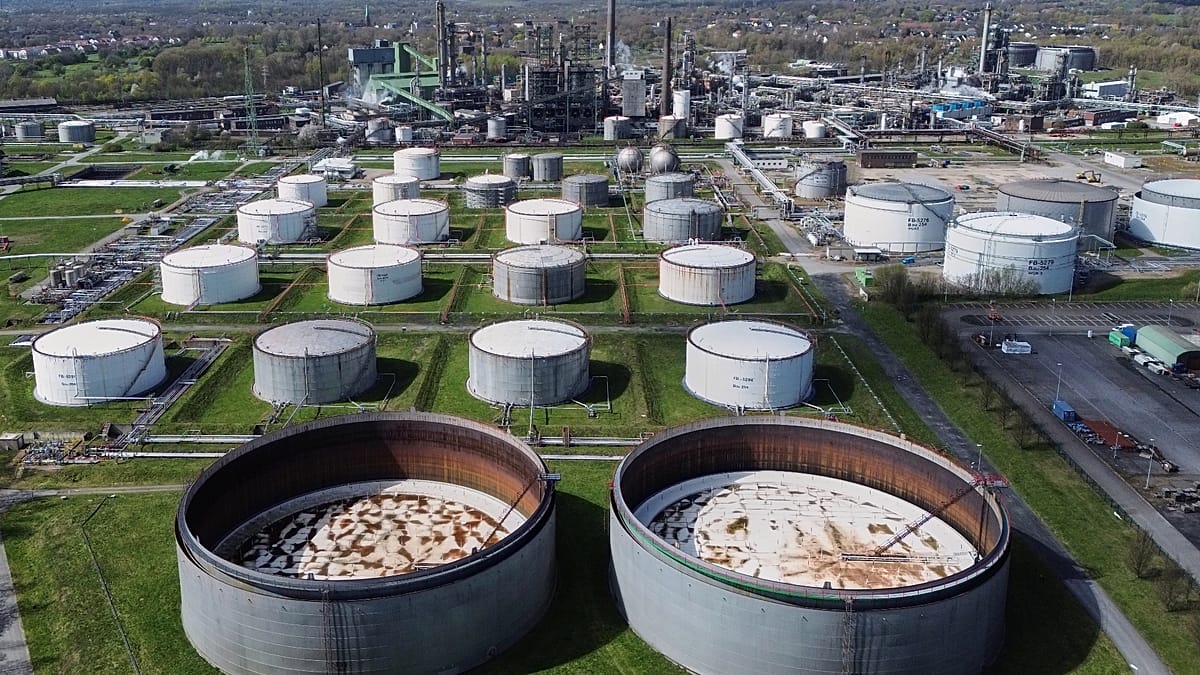 Why is fuel expensive when crude oil hasn't hit record highs?
euronews.com
Why is fuel expensive when crude oil hasn't hit record highs?
euronews.com
European petrol and diesel prices stay near record highs even when crude eases, according to Euronews, as the limiting factor shifts from oil supply to the ability to turn crude into usable fuel.
In the week beginning 31 August, petrol averaged €1.95 per litre across the EU and diesel €2.04, the European Commission’s Weekly Oil Bulletin shows—both only a few cents below their respective peaks in the Commission’s series going back to 2005. The same period saw Brent trading around the mid-$90s per barrel, after months of sharp swings as markets reacted to Middle East diplomacy and fighting. The gap between crude and pump prices has widened enough that analysts now point less to oilfields and more to refineries.
Kpler’s refining analyst Sumit Ritolia tells Euronews that crude may be available, but capacity to convert it into the right products—particularly diesel—has tightened. Europe is structurally short of diesel and jet fuel, Wood Mackenzie’s Alan Gelder says, which makes the continent a price-setter in global markets for those products: when Europe needs barrels, it bids them away from other buyers. Since Russia’s full-scale invasion of Ukraine, Europe has shifted much of its diesel and jet-fuel sourcing toward the US, India and the Middle East, while conflicts in the Middle East and attacks on Russian refineries have disrupted supplies of refined products and pushed inventories lower.
That re-routing has second-order effects. Traditional buyers of Russian diesel, including Turkey and Brazil, are increasingly competing with European importers for alternative supplies, tightening the market even when global crude production is not the immediate constraint. Diesel’s role as the workhorse fuel for freight, agriculture and construction means the cost hits households that do not own a diesel car, through higher transport and food prices. Euronews notes eurozone inflation has risen to 3.3%, with energy a main driver.
The price mechanics show up in refining margins—the premium that petrol and diesel command over the crude used to make them. Euronews cites Reuters reporting that Eurobob E5 petrol barges traded at a premium of $62.07 a barrel over Brent futures, close to a June 2022 record, while European diesel futures reached a record premium of $78.91 before easing slightly. Those are wholesale signals that the bottleneck sits in processing and product logistics, not merely in the upstream commodity.
Europe’s car fleet still runs overwhelmingly on liquid fuels—ACEA data cited by Euronews puts petrol at 49.2% and diesel at 38.4% of passenger cars—so the refining constraint translates quickly into broad consumer prices. Even where governments have temporarily reduced fuel taxes or offered support, the bill reappears in the supply chain.
In the Commission’s own weekly bulletin, the numbers at the pump remain close to their records while the market price of crude keeps moving underneath them.