
AfD nears majority in Saxony-Anhalt election
Germany’s firewall policy meets a state it cannot coalition-block, school flags and broadcaster budgets become first-day targets
Images
 AfD supporters at a campaign for Ulrich Siegmund, leader of the party in Saxony-Anhalt. ‘Das Land Retten’ is German for ‘Save the Country’. Photograph: Annegret Hilse/Reuters
theguardian.com
AfD supporters at a campaign for Ulrich Siegmund, leader of the party in Saxony-Anhalt. ‘Das Land Retten’ is German for ‘Save the Country’. Photograph: Annegret Hilse/Reuters
theguardian.com
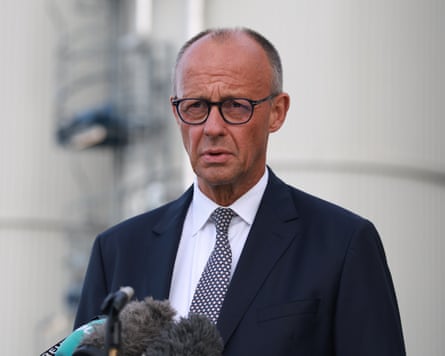 An AfD win in Saxony-Anhalt would be disastrous for Friedrich Merz. Photograph: Clemens Bilan/EPA
theguardian.com
An AfD win in Saxony-Anhalt would be disastrous for Friedrich Merz. Photograph: Clemens Bilan/EPA
theguardian.com
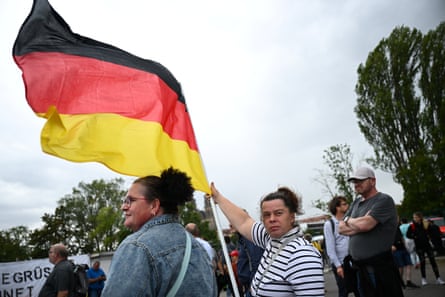 An AfD supporter holds a German flag at a campaign event for the party in Magdeburg on Friday. Photograph: Annegret Hilse/Reuters
theguardian.com
An AfD supporter holds a German flag at a campaign event for the party in Magdeburg on Friday. Photograph: Annegret Hilse/Reuters
theguardian.com
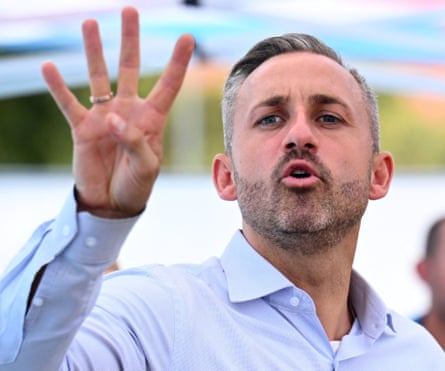 Ulrich Siegmund, pictured at his campaign in Magdeburg on Friday, was dubbed Germany’s most dangerous man by Der Spiegel. Photograph: Annegret Hilse/Reuters
theguardian.com
Ulrich Siegmund, pictured at his campaign in Magdeburg on Friday, was dubbed Germany’s most dangerous man by Der Spiegel. Photograph: Annegret Hilse/Reuters
theguardian.com
German voters in Saxony-Anhalt go to the polls on Sunday in an election where the far-right Alternative für Deutschland (AfD) is polling around 40–42%, according to The Guardian. With roughly 1.7 million eligible voters, the state contest has become a national test of whether Germany’s long-running party boycott of the AfD can survive contact with an outright AfD victory. If the party wins an absolute majority, it would be the first far-right state government in Germany since the Nazi era, the paper reports.
The immediate political problem is arithmetic, not rhetoric. Germany’s mainstream parties have maintained a “Brandmauer” policy of refusing to cooperate with the AfD; that works when the AfD must be kept out of coalitions, but it offers no mechanism for governing if the party can rule alone. State governments also matter beyond their borders: they are represented in the Bundesrat, the upper house of parliament, which has influence over areas including education, culture and domestic security. A state-level majority therefore becomes a lever on national policy even without a change of government in Berlin.
The Guardian reports that the AfD leadership sees state power as a springboard to the 2029 federal election, where it aims to convert regional control into national credibility and administrative experience. The party is already the main opposition force in the Bundestag, meaning it can set the tempo of parliamentary confrontation while campaigning against the institutions it hopes to run. For Chancellor Friedrich Merz and the CDU, an AfD takeover in Saxony-Anhalt would land as a direct rebuke in a state where conservative parties have traditionally expected to govern.
The AfD’s stated agenda in Saxony-Anhalt is designed to turn cultural and administrative machinery into visible signals of control. The Guardian says the party has talked about deporting “irregular migrants” from the first minute in office, replacing the state’s “Think Modern” slogan with “Think German,” and clamping down on cultural offerings it deems “anti-German.” In schools, it proposes swapping rainbow flags for German flags, requiring pupils to sing the national anthem, and teaching children of asylum seekers in separate classes. It also wants to restore homeschooling—banned since the Nazi era—and to reduce the emphasis on the Nazi period in the history curriculum, while expanding Russian language teaching.
Budget lines are part of the same strategy. The party plans to cut funding for public broadcasters it describes as “leftwing propaganda lackeys,” and to axe programs focused on combating rightwing extremism, according to the report. In energy policy, it wants to ban wind farms, shifting the state’s climate and industrial planning toward a different set of winners and losers.
On campaign photos from Magdeburg carried by The Guardian, AfD supporters hold German flags beneath banners that read “Das Land Retten”—save the country. The election result will determine whether that slogan remains a rallying cry, or becomes the letterhead of a state government.