
Donald Trump calls Iran conflict small potatoes
White House avoids war label as US casualties mount, rhetoric collides with months-long deployments and rising global costs
Images
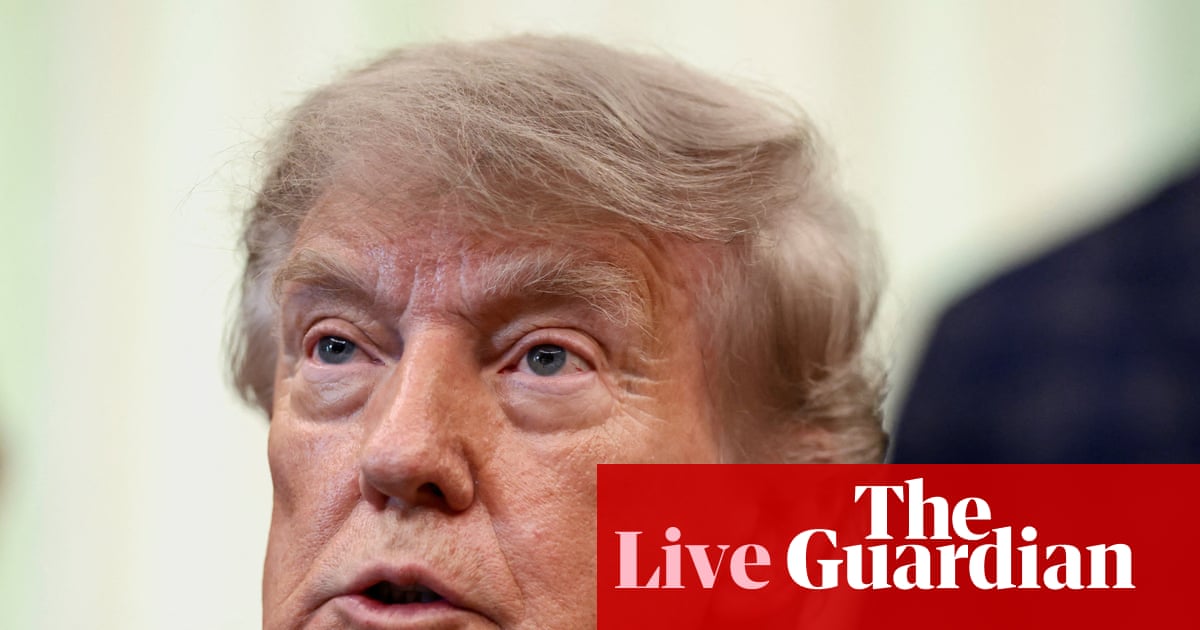 Trump downplays war with Iran, in which 18 US service members have been killed so far, as ‘small potatoes’ – live
theguardian.com
Trump downplays war with Iran, in which 18 US service members have been killed so far, as ‘small potatoes’ – live
theguardian.com
Eighteen US service members have died in the Iran conflict, President Donald Trump said in the Oval Office on Friday, dismissing the fighting as “small potatoes.” According to The Guardian’s live reporting, Trump argued that many people do not call it a war, describing it instead as a “military conflict,” even as he acknowledged months-long deployments and hundreds of wounded.
The language matters because it sets the threshold for accountability. Calling a campaign a “war” invites questions about objectives, timelines, and authorisation; calling it something smaller asks the public to treat it as background noise. In the same exchange, Trump compared the toll in Iran to far larger losses in Vietnam and other conflicts, a framing that shifts attention from whether the current operation is necessary to whether it is historically large. The Guardian report notes that the conflict began in late February, placing the administration’s “five months” description at odds with the calendar, and it describes a sharp escalation this week with US strikes on Iran.
The administration’s public minimisation also sits next to claims that are easier to say than to verify. Trump told reporters “there’s no fighting right now,” while simultaneously discussing potential future strikes, including a reference to Iran’s Pickaxe Mountain, where nuclear facilities are reportedly housed. He also said the US is “taking out a lot of oil” and that “we control the Hormuz Strait,” statements The Guardian characterised as inaccurate. The practical consequences of the campaign, however, are difficult to talk down: the report links the war to soaring global gas prices, disrupted food supply chains, and a blockade around the Strait of Hormuz that has stifled trade and oil supply.
For US domestic politics, a conflict that is expensive and prolonged but described as limited creates a particular kind of pressure. Casualties and injuries accumulate one news cycle at a time, while the decision-making stays concentrated in the executive branch and the costs spread through fuel, freight, and grocery prices. The result is a military operation that can be expanded in practice while being rhetorically kept below the level that typically triggers formal debate.
On Friday, the president’s own headline number was 18 dead. In the same breath, he insisted the conflict should not be treated as a war.