
BepiColombo jettisons transfer module on approach to Mercury
ESA mission sets up November orbit insertion after eight-year cruise, science instruments emerge from behind the propulsion stack
Images
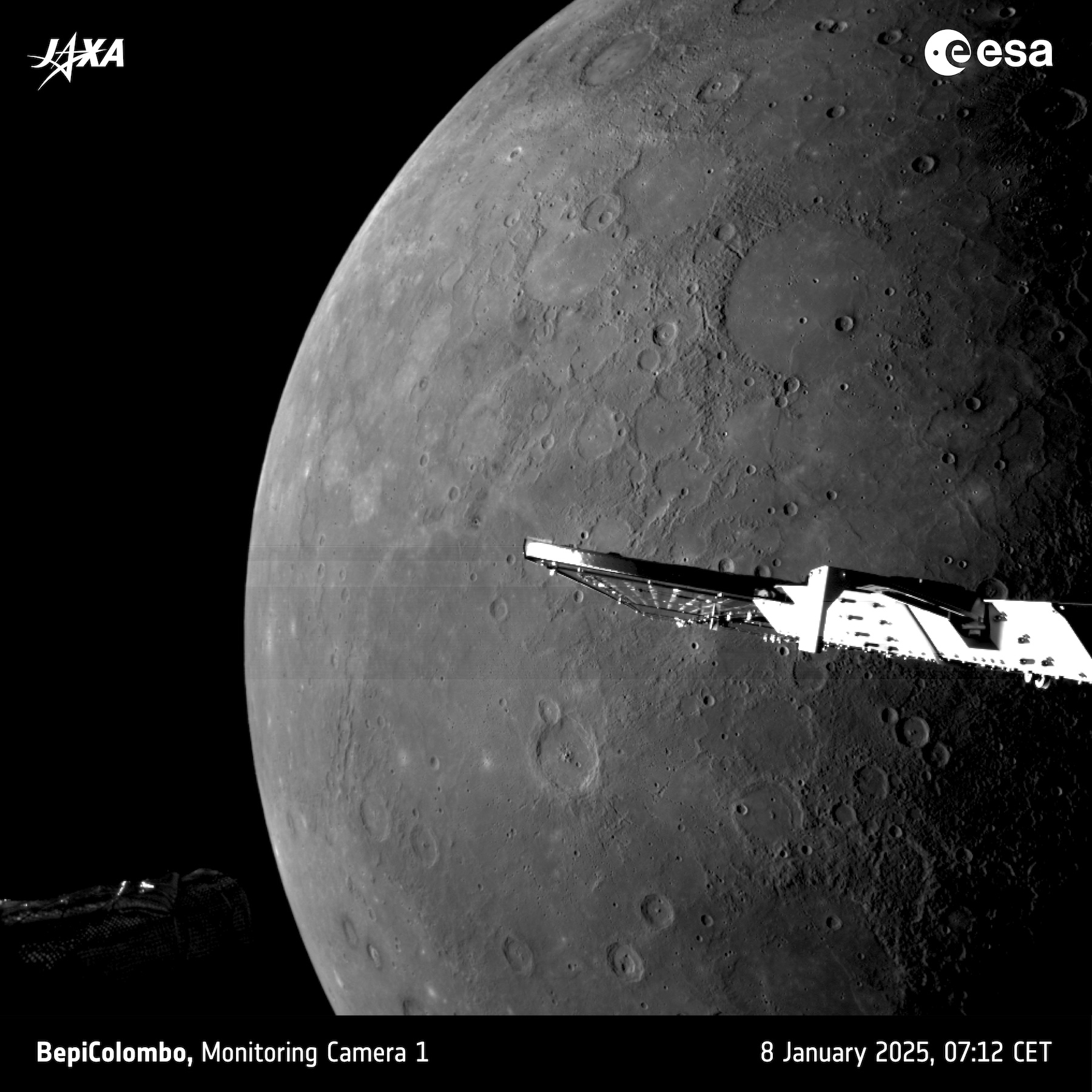 Credit:
ESA/BepiColombo/MTM
Credit:
ESA/BepiColombo/MTM
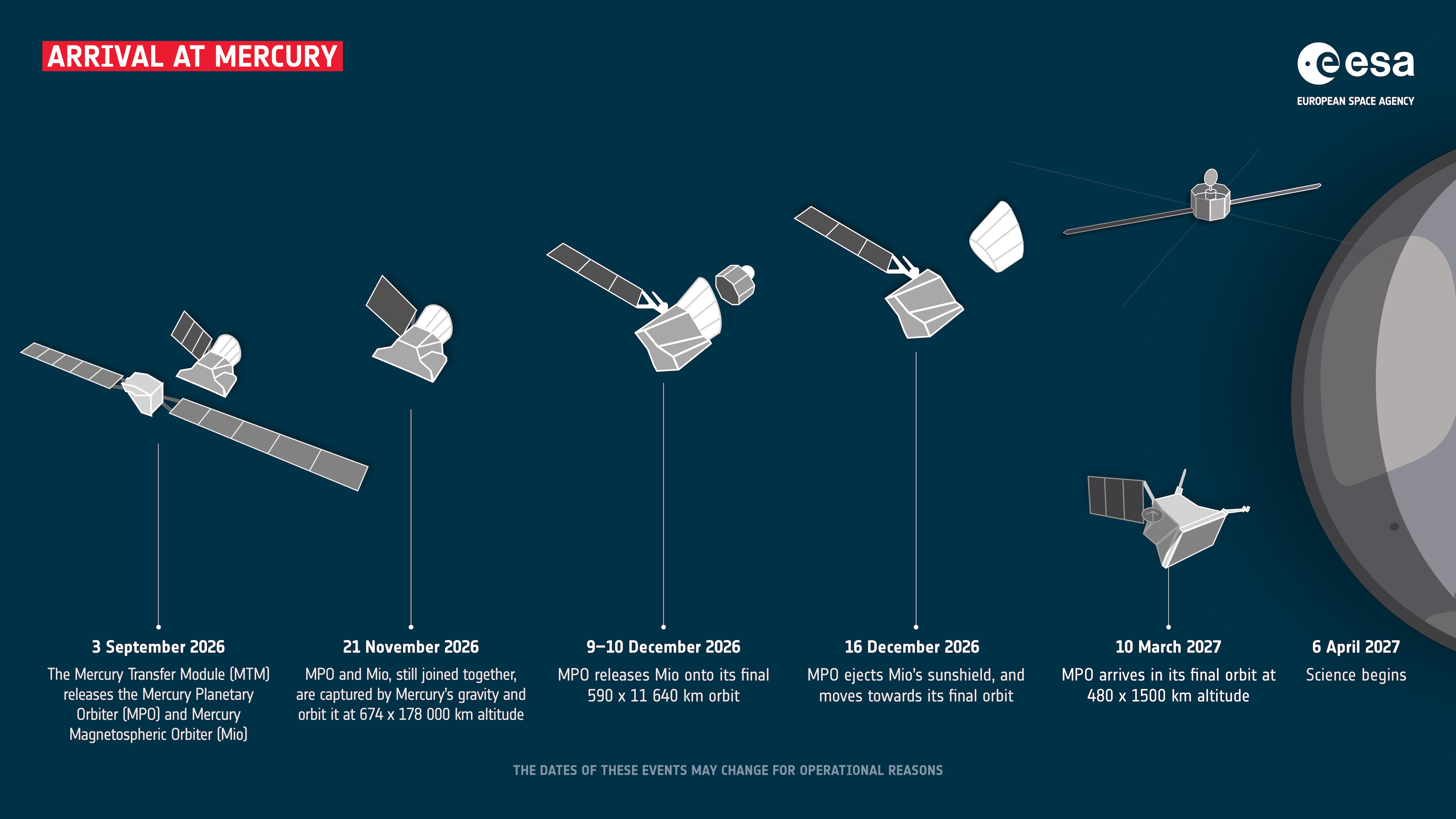 Credit:
European Space Agency
Credit:
European Space Agency
 Photo of Stephen Clark
arstechnica.com
Photo of Stephen Clark
arstechnica.com
BepiColombo sheds its cruise propulsion module as it nears Mercury, ESA mission prepares for November orbit insertion after eight-year gravity-assist trek, the cameras have been waiting for the hardware to get out of the way
BepiColombo, Europe’s long-running mission to Mercury, has jettisoned the Mercury Transfer Module that carried its ion thrusters and much of its cruise-era power system, according to Ars Technica. The separation comes as the spacecraft enters the final months before a planned orbit insertion around Mercury in November 2025, nearly eight years after launch in 2018.
The mission’s path to the innermost planet has been a study in constraints rather than ambition. Mercury sits deep in the Sun’s gravity well, and arriving there requires shedding enormous orbital energy; Ars Technica notes that the required delta-v is larger than what is needed to send a probe on a flyby to Pluto. Instead of brute-force propulsion, BepiColombo relied on a chain of gravity assists—Earth, Venus, and repeated Mercury flybys—combined with electric propulsion, accumulating nine planetary flybys in total. That architecture makes the cruise stage indispensable until the last possible moment, and then instantly unnecessary: once the transfer module becomes “dead mass,” it turns from enabling hardware into a liability.
Dropping the module also changes what the mission can see. Several of BepiColombo’s best cameras and instruments were obstructed during the cruise phase by the very structure that kept the spacecraft alive and on course. With the transfer module gone, the remaining stack—ESA’s Mercury Planetary Orbiter and Japan’s Mercury Magnetospheric Orbiter, known as Mio—can begin a different kind of work, shifting from navigation-first operations to sustained observation. The trade is operational risk: ESA’s Ignacio Tanco described the separation as equivalent to launching a new spacecraft, because the remaining vehicle must immediately take over power generation, pointing, propulsion functions, and thermal control in an environment of extreme heat and radiation.
The design also reflects how modern deep-space missions are financed and managed: expensive instruments sit idle for years because the cheapest way to reach the target is to accept long timelines and complex choreography. BepiColombo’s budget is cited by Ars Technica as nearly $2 billion, and it is an international effort led by ESA with contributions from Japan and the United States. After arrival, the two orbiters will separate in December 2025 and begin complementary surveys of Mercury’s surface, interior, and magnetic environment—science that cannot be done from flybys alone.
For now, the milestone is a clean mechanical separation tens of millions of miles from the Sun, with the spacecraft’s most capable sensors finally unobstructed. The mission’s next major test is more blunt: whether Mercury’s gravity captures the vehicle into orbit on schedule in November.