
Two workers rescued alive from Nepal hydropower tunnel
Voices heard after nine days trapped by flood debris, hundreds still missing as glacier-linked surge wrecks projects
Images
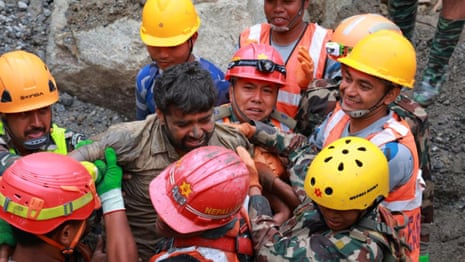 Workers pulled alive from hydropower tunnel nine days after Nepal flood disaster – video
theguardian.com
Workers pulled alive from hydropower tunnel nine days after Nepal flood disaster – video
theguardian.com
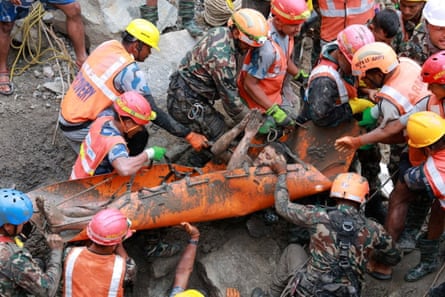 A survivor is carried out after being rescued from inside the tunnel. Photograph: Nepal Army/Reuters
theguardian.com
A survivor is carried out after being rescued from inside the tunnel. Photograph: Nepal Army/Reuters
theguardian.com
 Hirashova Maharjan, left, with a family member after visiting her husband in hospital in Kathmandu on Friday. Photograph: Arun Sankar/AFP/Getty Images
theguardian.com
Hirashova Maharjan, left, with a family member after visiting her husband in hospital in Kathmandu on Friday. Photograph: Arun Sankar/AFP/Getty Images
theguardian.com
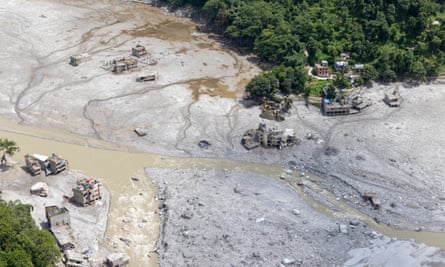 An aerial view of damage in a village in Rasuwa district following the flash floods. Photograph: Narendra Shrestha/EPA
theguardian.com
An aerial view of damage in a village in Rasuwa district following the flash floods. Photograph: Narendra Shrestha/EPA
theguardian.com
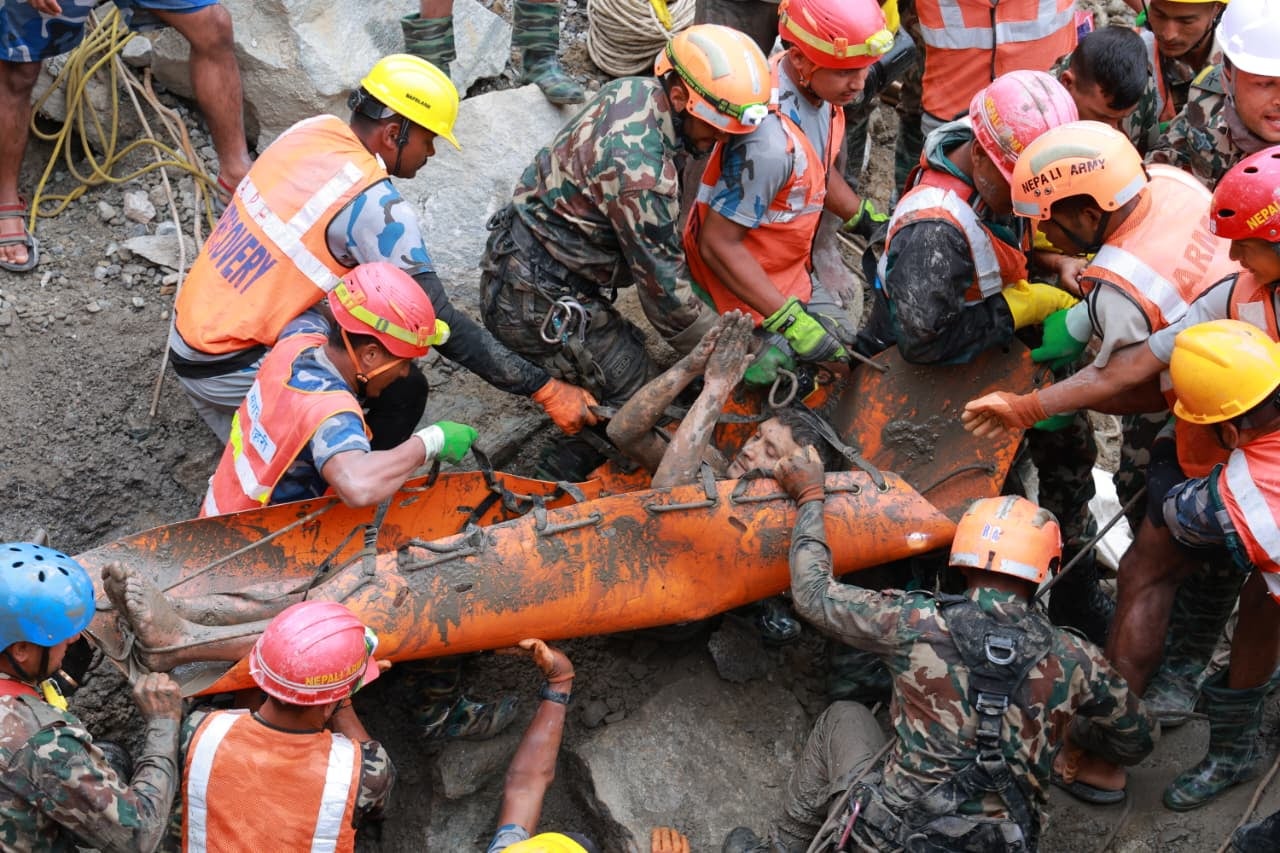 Soldiers rescue a worker alive from a tunnel at the Trishuli 3A hydropower project in Rasuwa, Nepal, on 4 September 2026 (AP)
independent.co.uk
Soldiers rescue a worker alive from a tunnel at the Trishuli 3A hydropower project in Rasuwa, Nepal, on 4 September 2026 (AP)
independent.co.uk
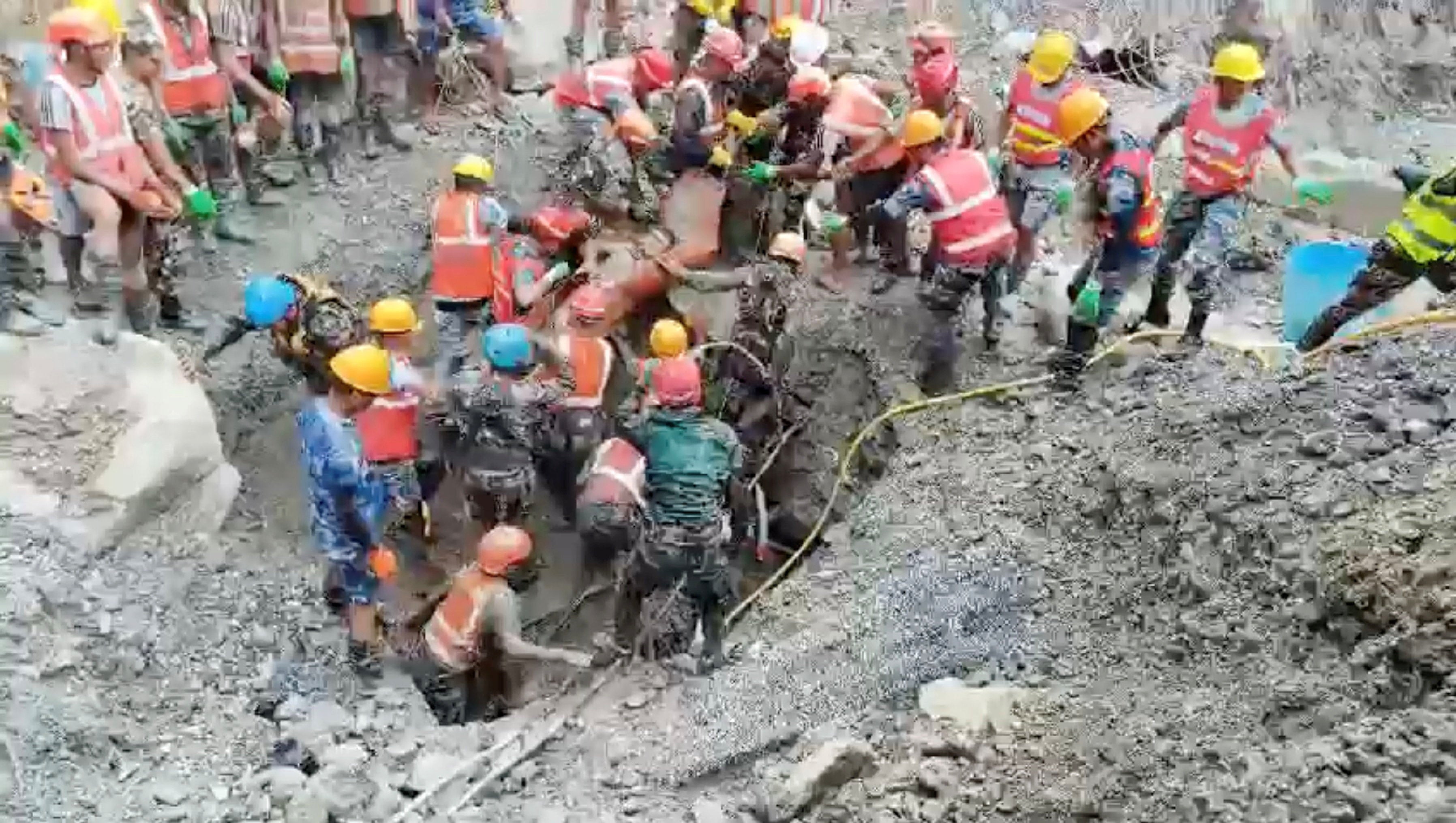 Rescuers carry a survivor from a tunnel linked to a hydropower station following deadly flash floods and mudslides, at a location given as Rasuwa district, Nepal (Reuters)
Reuters
Rescuers carry a survivor from a tunnel linked to a hydropower station following deadly flash floods and mudslides, at a location given as Rasuwa district, Nepal (Reuters)
Reuters
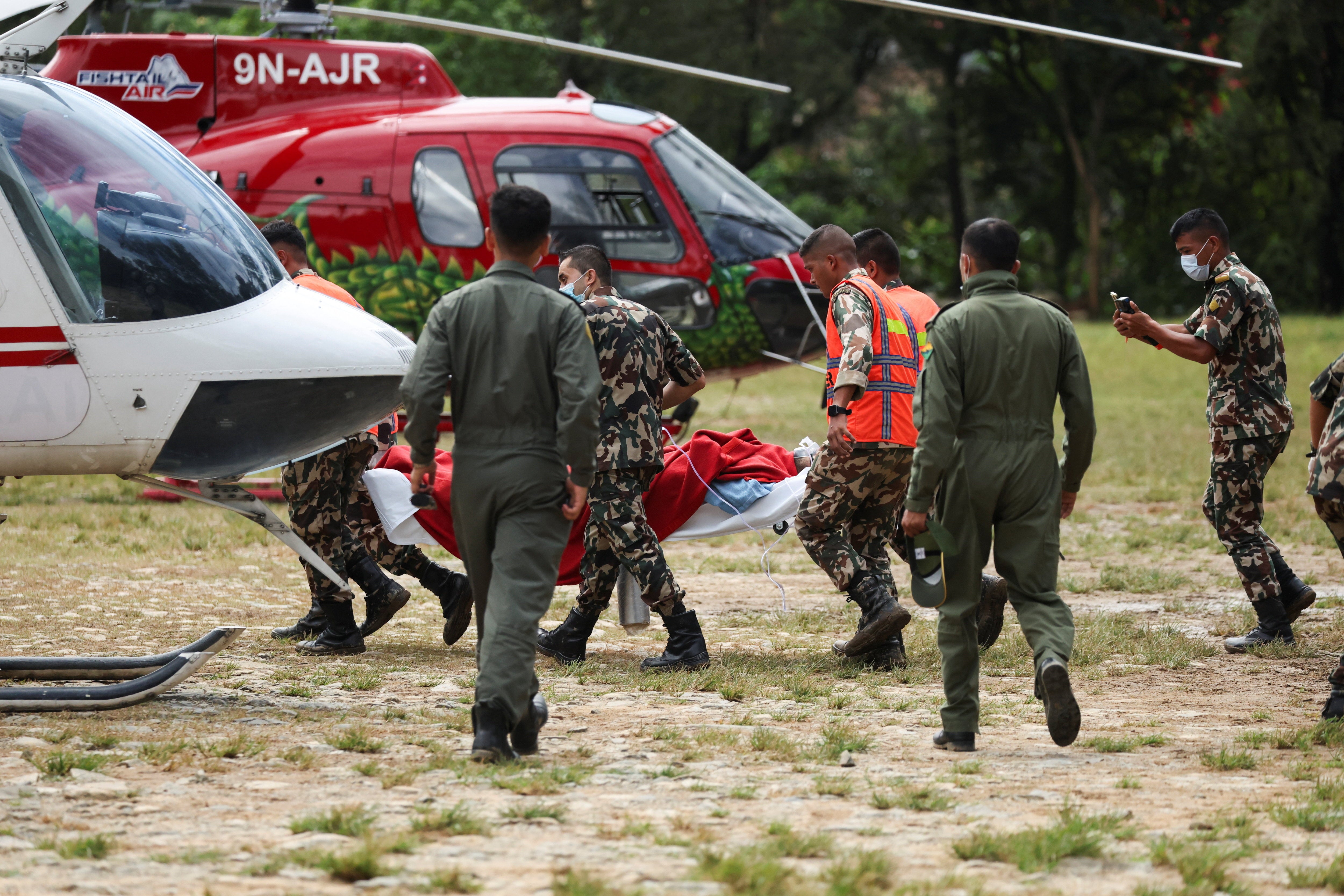 Anil shah, a survivor rescued from a tunnel of the Upper Trishuli 3A hydropower project nine days after the deadly flash floods and a mudslide, is carried to be air lifted to Kathmandu from an army base in Nuwakot, Nepal, September 4, 2026 (Reuters)
Reuters
Anil shah, a survivor rescued from a tunnel of the Upper Trishuli 3A hydropower project nine days after the deadly flash floods and a mudslide, is carried to be air lifted to Kathmandu from an army base in Nuwakot, Nepal, September 4, 2026 (Reuters)
Reuters
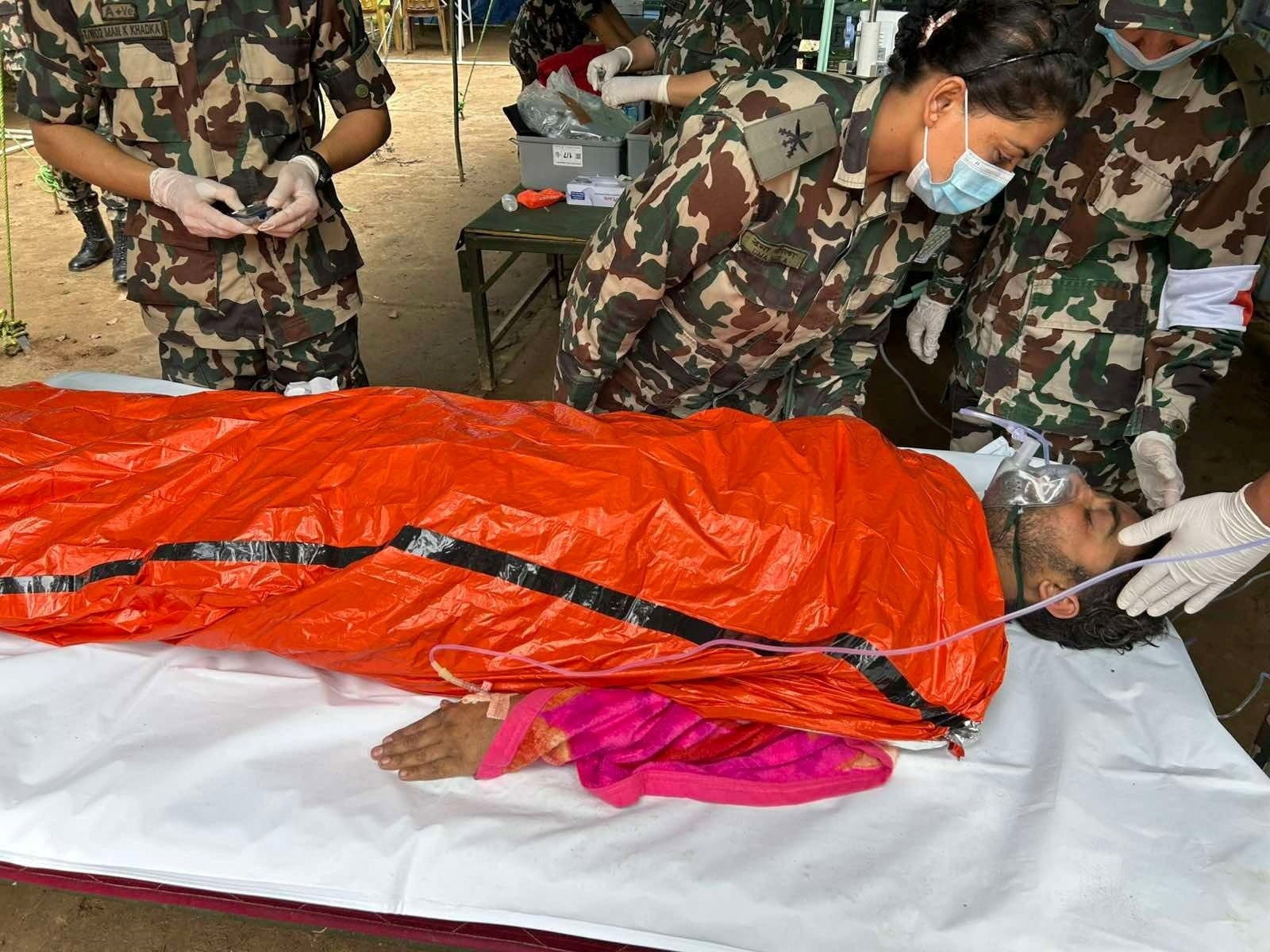 A survivor who was among two people rescued after being trapped inside a tunnel at the Trishuli-3A Hydropower Project following devastating floods and mudslides, receives medical attention (Reuters)
Reuters
A survivor who was among two people rescued after being trapped inside a tunnel at the Trishuli-3A Hydropower Project following devastating floods and mudslides, receives medical attention (Reuters)
Reuters
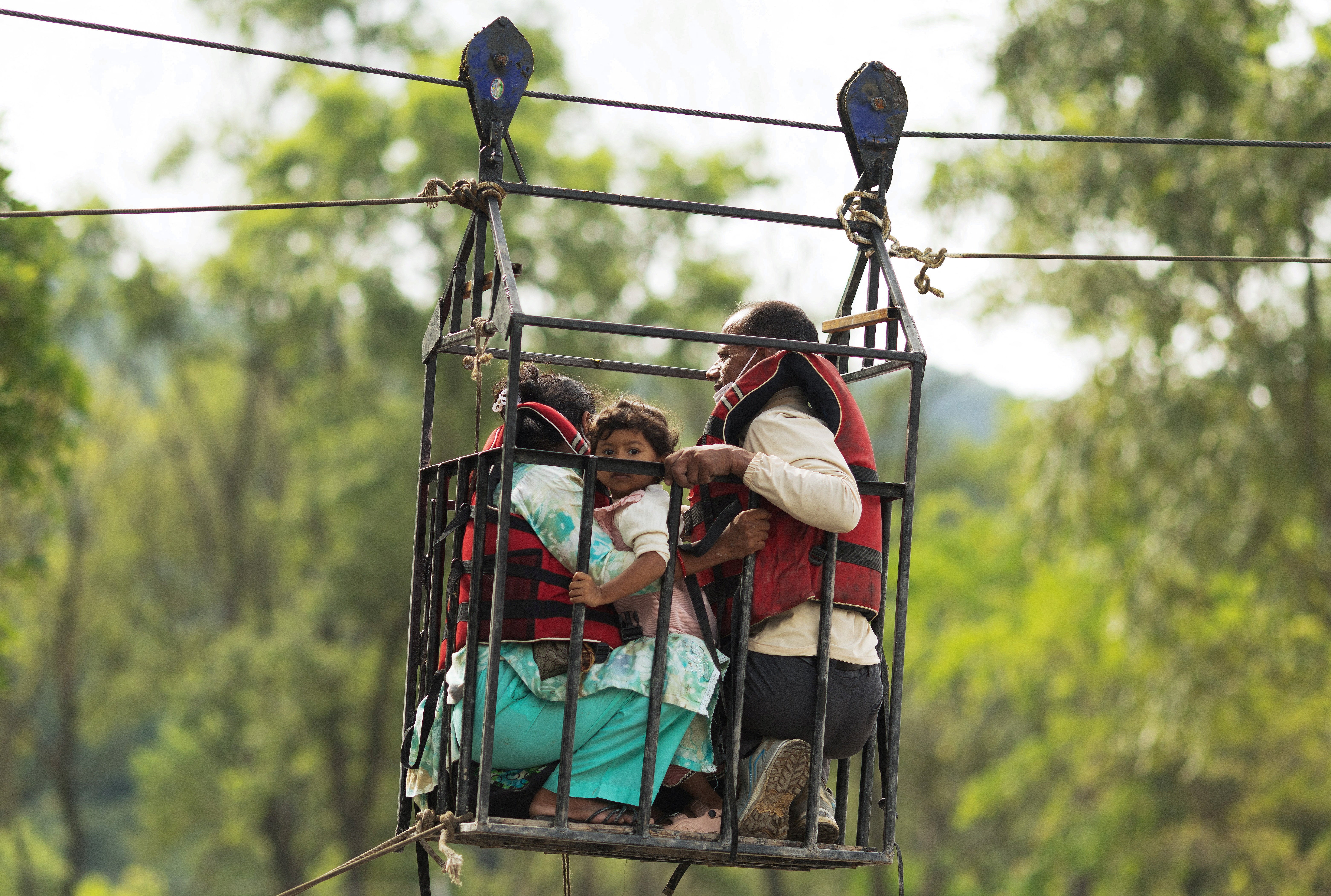 Madhu Sudan Sapkota, 50, Sangita Kunwar, 25, and her daughter Nekisha Rijal, 3, hold onto a cage on a makeshift zip line as they cross the Trishuli River from Koloni following deadly flash floods (Reuters)
Reuters
Madhu Sudan Sapkota, 50, Sangita Kunwar, 25, and her daughter Nekisha Rijal, 3, hold onto a cage on a makeshift zip line as they cross the Trishuli River from Koloni following deadly flash floods (Reuters)
Reuters
Two workers have been pulled alive from a hydropower tunnel in Nepal after spending more than nine days trapped by flash floods and mud, according to The Guardian and The Independent. The men were found inside a tunnel at the Upper Trishuli 3A project, near the Nepal–Tibet border, after rescuers heard faint voices from behind debris blocking the entrance. Nepal’s army released images showing one of the survivors being hauled out, coated in mud but conscious.
The rescue lands amid a disaster that has overwhelmed Nepal’s mountain districts and the infrastructure built into them. The same floods that sealed the tunnel also destroyed or heavily damaged hydropower facilities along the Trishuli and Bhotekoshi rivers, the Guardian reports, leaving projects buried in deep mud and debris. Officials and local reporting cited by the Independent describe hundreds of workers missing from the site, with some believed to be trapped deeper inside the mountain—an industrial workforce suddenly treated as part of the casualty count rather than a protected asset.
The flood itself is being linked to a surge of water, mud and debris triggered by a collapsing glacier on the Nepal–China (Tibet) border, according to the Guardian. That turns what might have been framed as an “accident” at a worksite into a reminder that Himalayan hydropower—sold as clean, domestic energy—sits downstream of unstable ice, steep valleys and limited evacuation routes. When these projects fail, they do not just lose generation capacity; they become additional obstacles for rescue teams, who must dig through tunnel blockages and unstable spoil while trying to locate people in darkness.
The human details underline how narrow the margin was. One survivor told reporters he kept calm by chanting mantras in the dark, and said he could hear other voices, suggesting more people may still have been trapped when the search was later paused, according to the Independent. The Guardian reports that one body was found during the operation but had not been identified.
Rescuers had to cut through tens of metres of debris to reach the men, and both were flown to hospital in Kathmandu, with one described as stable and the other in critical condition. By Friday afternoon, police had halted the search after reporting no further signs of life.