
Five EU countries plan migrant return hubs by 2027
Denmark Austria Germany Netherlands Greece seek non-EU partner deals, deportations outsourced while ministers say facilities are not detention
Images
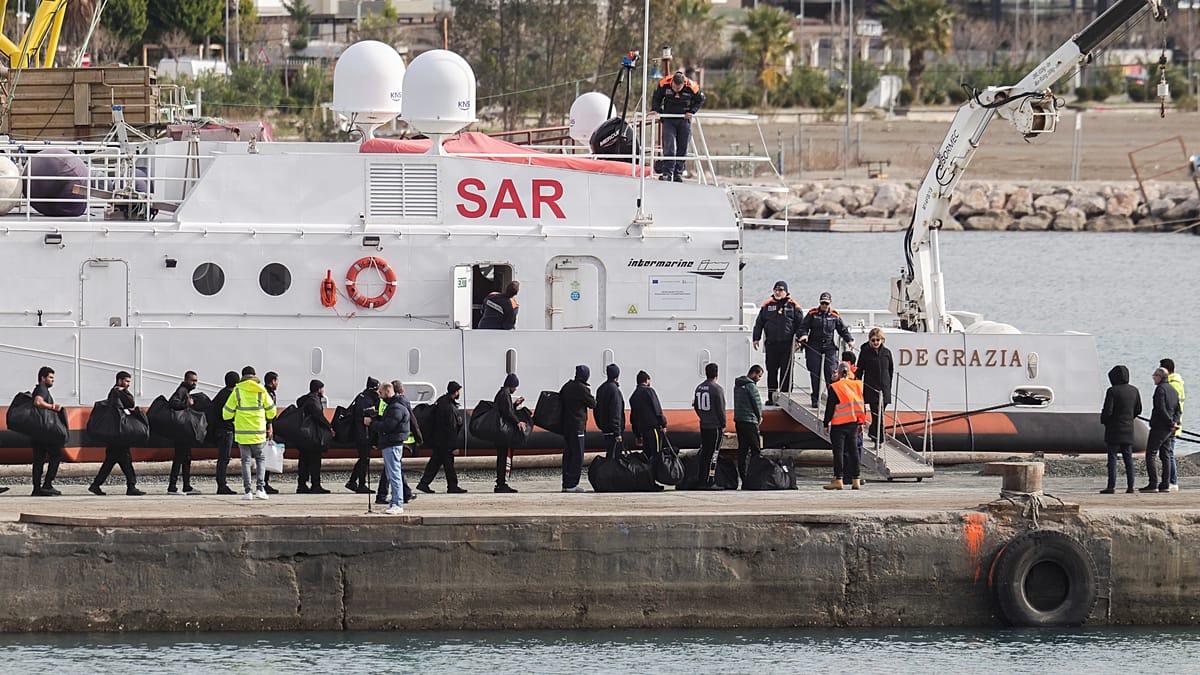 Five EU countries in talks to set up return hubs by 2027
euronews.com
Five EU countries in talks to set up return hubs by 2027
euronews.com
Interior ministers from Denmark, Austria, Germany, the Netherlands and Greece agreed in Copenhagen on a shared blueprint to move rejected asylum seekers to “return hubs” outside the EU, with the first transfers targeted for 2027, according to Euronews. The group says the centres would host people whose asylum applications have been rejected but who cannot be sent back to their countries of origin. Partner countries have not been named, though press reports cited by Euronews point to Uganda and Rwanda as likely candidates.
The pitch is deliberately technical: a “common model”, a “guiding principles” document, and repeated assurances that the hubs will be “open” facilities rather than prisons. But the underlying problem the ministers are trying to solve is operational, not rhetorical. EU states can issue removal decisions, yet many people remain for years when countries of origin refuse to cooperate, identities are disputed, or legal appeals drag on. A hub in a third country shifts that friction point away from domestic courts, housing systems and local politics, while keeping the legal status of the person unchanged: rejected, but still present.
The five countries say they would fully finance the hubs and may add other incentives—commercial partnerships or additional funding—to secure host-country cooperation. That creates a new bargaining market around migration management, where states with limited leverage over origin countries instead negotiate with transit or partner states willing to host the infrastructure. The details that would matter most to migrants—rules for movement, work, healthcare, family life, and the length of stay—are explicitly left to future agreements with the partner countries.
The plan also depends on EU law catching up to political demand. Euronews notes that the European Parliament approved a migration law in June 2026 allowing member states to set up return hubs via agreements with non-EU countries, with a “return regulation” expected to be finally adopted in autumn 2026. Italy already has a similar project with Albania, suggesting that once the legal pathway exists, more governments will treat offshore processing as a standard tool rather than an exception.
Civil society groups have attacked the idea as exporting detention and uprooting people from lives built in Europe. Ministers, by contrast, describe the hubs as a second chance in the host country—language that implies long-term settlement somewhere, just not in the EU state that rejected the claim.
The five ministers are due to meet again in Munich at the end of September. By their own timeline, the first people moved under the scheme would arrive in a country that has not yet been publicly identified.