
EU budget talks target critical minerals
Multiannual Financial Framework for 2028–2034 funds diversification from China, supply security hinges on midstream processing not mines
Images
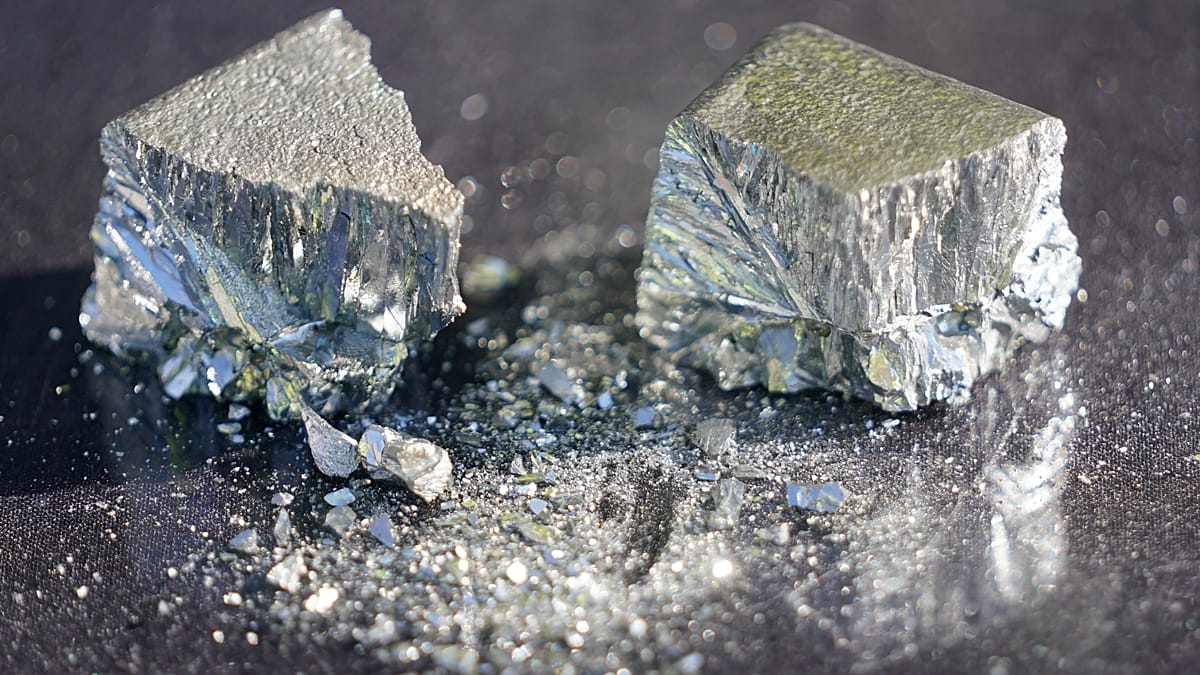 EU budget sees chance to loosen China’s grip on critical raw materials
euronews.com
EU budget sees chance to loosen China’s grip on critical raw materials
euronews.com
EU budget talks for 2028–2034 are turning into a supply-chain negotiation, as Brussels looks for money to reduce reliance on China for the processing and refining of critical raw materials. According to Euronews, the next Multiannual Financial Framework (MFF) is being framed inside EU institutions as a test of whether “sovereignty” on inputs such as rare earths, lithium and cobalt will be funded with the same seriousness as the green and digital targets that depend on them.
The immediate pressure point is not Europe’s lack of minerals in the ground, but the bottleneck between mine and factory. The Euronews piece notes that China dominates parts of the midstream: rare-earth separation, graphite processing, cobalt sulfate production and large segments of nickel refining. That concentration has already produced policy shocks, with Beijing introducing export restrictions and then temporarily suspending expanded controls that are now expected to come back into force in mid-November 2026. For European manufacturers, the vulnerability is structural: electrification, defence procurement and AI-heavy industrial investment all pull on the same constrained inputs, while any single-country choke point can turn a procurement plan into a stop-start exercise.
The budget debate also exposes how hard “diversification” is to purchase with grants alone. Resource-rich countries in Africa, Asia and Latin America are increasingly unwilling to remain low-margin suppliers of ore while most of the value is captured downstream. Euronews points to the gap between the relatively small value of globally traded cobalt ore and the far larger value created in batteries and electric vehicles. Governments that control deposits are asking for local processing, technology transfer and different risk-sharing terms, not just long-term offtake agreements. That pushes the EU toward a more complicated deal-making posture: financing refineries, backing stockpiles, and accepting that industrial policy abroad will shape what Europe can build at home.
Even the transatlantic fallback looks less certain than it did a few years ago. The Euronews analysis argues the United States is “no longer considered a fully reliable partner” on these supply chains, at a moment when Washington is also using tariffs and domestic-content rules to pull investment into North America. At the same time, Brussels and Beijing are aiming to conclude trade talks in late 2026 that cover critical raw materials alongside broader bilateral issues, effectively putting Europe’s industrial inputs on the same negotiating table as geopolitics.
EU leaders want an agreement on the seven-year budget before the end of 2026 so legislation can be adopted in 2027 and funding can start in January 2028. The calendar leaves only a few months for member states to decide what they are willing to pay for—and what they are willing to keep importing on someone else’s terms.