
US tightens economic squeeze on Iran
Reuters describes near-total oil export cutoff and attacks on sanctions evasion, gasoline reserves and rial slide sharpen domestic risk
Images
 Varias personas circulan en coche cerca de una valla publicitaria con la imagen del presidente estadounidense Donald Trump en un edificio de Teherán, Irán. 2 de septiembre de 2026. Majid Asgaripour/WANA (Agencia de Noticias de Asia Occidental) vía REUTERS
infobae.com
Varias personas circulan en coche cerca de una valla publicitaria con la imagen del presidente estadounidense Donald Trump en un edificio de Teherán, Irán. 2 de septiembre de 2026. Majid Asgaripour/WANA (Agencia de Noticias de Asia Occidental) vía REUTERS
infobae.com
 FOTO DE ARCHIVO: La gente pasa junto a un cartel en una oficina de cambio de divisas mientras el valor del rial iraní cae, en Teherán, Irán, 20 de diciembre de 2025
Majid Asgaripour/WANA (Agencia de Noticias de Asia Occidental) vía REUTERS
infobae.com
FOTO DE ARCHIVO: La gente pasa junto a un cartel en una oficina de cambio de divisas mientras el valor del rial iraní cae, en Teherán, Irán, 20 de diciembre de 2025
Majid Asgaripour/WANA (Agencia de Noticias de Asia Occidental) vía REUTERS
infobae.com
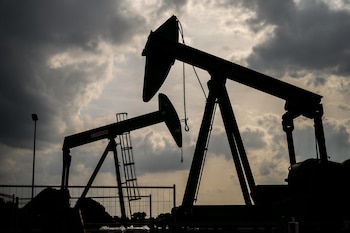 Irán dispone de reservas de gasolina para otros dos meses, mientras la limitada capacidad de refinado agrava la presión económica.
infobae.com
Irán dispone de reservas de gasolina para otros dos meses, mientras la limitada capacidad de refinado agrava la presión económica.
infobae.com
 FOTO DE ARCHIVO: Varias personas pasan junto a una valla publicitaria contra EEUU en una calle de Teherán, Irán, el 3 de agosto de 2026. Majid Asgaripour/WANA (West Asia News Agency) vía REUTERS
infobae.com
FOTO DE ARCHIVO: Varias personas pasan junto a una valla publicitaria contra EEUU en una calle de Teherán, Irán, el 3 de agosto de 2026. Majid Asgaripour/WANA (West Asia News Agency) vía REUTERS
infobae.com
 FOTO DE ARCHIVO: La gente pasa junto a una valla publicitaria en la que aparecen el difunto líder de la Revolución Islámica, el ayatolá Ruhollah Jomeini, y el difunto líder supremo de Irán, el ayatolá Ali Jamenei, en una calle de Teherán, Irán, el 6 de junio de 2026. Majid Asgaripour/WANA (Agencia de Noticias de Asia Occidental) vía REUTERS
infobae.com
FOTO DE ARCHIVO: La gente pasa junto a una valla publicitaria en la que aparecen el difunto líder de la Revolución Islámica, el ayatolá Ruhollah Jomeini, y el difunto líder supremo de Irán, el ayatolá Ali Jamenei, en una calle de Teherán, Irán, el 6 de junio de 2026. Majid Asgaripour/WANA (Agencia de Noticias de Asia Occidental) vía REUTERS
infobae.com
The United States has intensified its economic campaign against Iran to its most severe level since the war began, aiming to choke off oil export revenue and disrupt sanctions-evasion networks, according to a Reuters report published by Infobae. Three senior Iranian sources told Reuters the pressure is becoming harder to absorb, with fewer channels to obtain foreign currency or buy goods as Washington targets financing routes that have kept the economy functioning.
After months of conflict without negotiated concessions, the emphasis has shifted from battlefield strikes to cashflow. The Reuters account describes a US effort to block Iran’s oil exports entirely, cutting off what it calls Tehran’s main revenue stream, while also raising the cost and difficulty of the informal systems used to move money and procure imports. That matters because sanctions evasion is not a slogan but a business model: it depends on liquidity to pay premiums, intermediaries willing to take legal risk, and trade routes that can be rerouted when one corridor closes.
Iran’s ability to keep paying those premiums appears to be shrinking. Reuters cites deep pre-war economic fragility—high inflation and a collapsing currency—now compounded by the cost of repairing bombed industry and infrastructure. With less hard currency circulating, the report says there is less liquidity available to fund illicit workarounds, tightening the screws on everything from imports to domestic stability.
Fuel has become a particularly exposed point. Reuters reports Iran has gasoline reserves for only two more months and must import gasoline despite being an oil producer because its refining capacity is limited. That dependence turns ports, shipping insurance, and payment channels into strategic choke points, and it raises the domestic political risk of shortages in a country where price shocks have historically translated into street unrest.
The pressure campaign is unfolding alongside renewed open combat. Reuters reports US attacks along Iran’s Gulf coast and Iranian retaliation against US bases in Arab states, while noting that more energy is reaching international markets via the Strait of Hormuz despite Iranian efforts to obstruct it. Ali Ansari of the University of St Andrews told Reuters Iran is under very severe economic pressure and “losing control” of the strait, and that Tehran will have to decide whether to negotiate.
Iran has warned it could respond to economic pressure with military escalation. For now, Reuters’ description of the standoff is of two sides testing which breaks first: the one paying in foreign currency, or the one paying in munitions and political patience.