
Venezuelan gold stays frozen in Bank of England as talks explore release
US mediation would control spending and require Treasury approval, reconstruction need meets an asset that moves only by foreign consent
Images
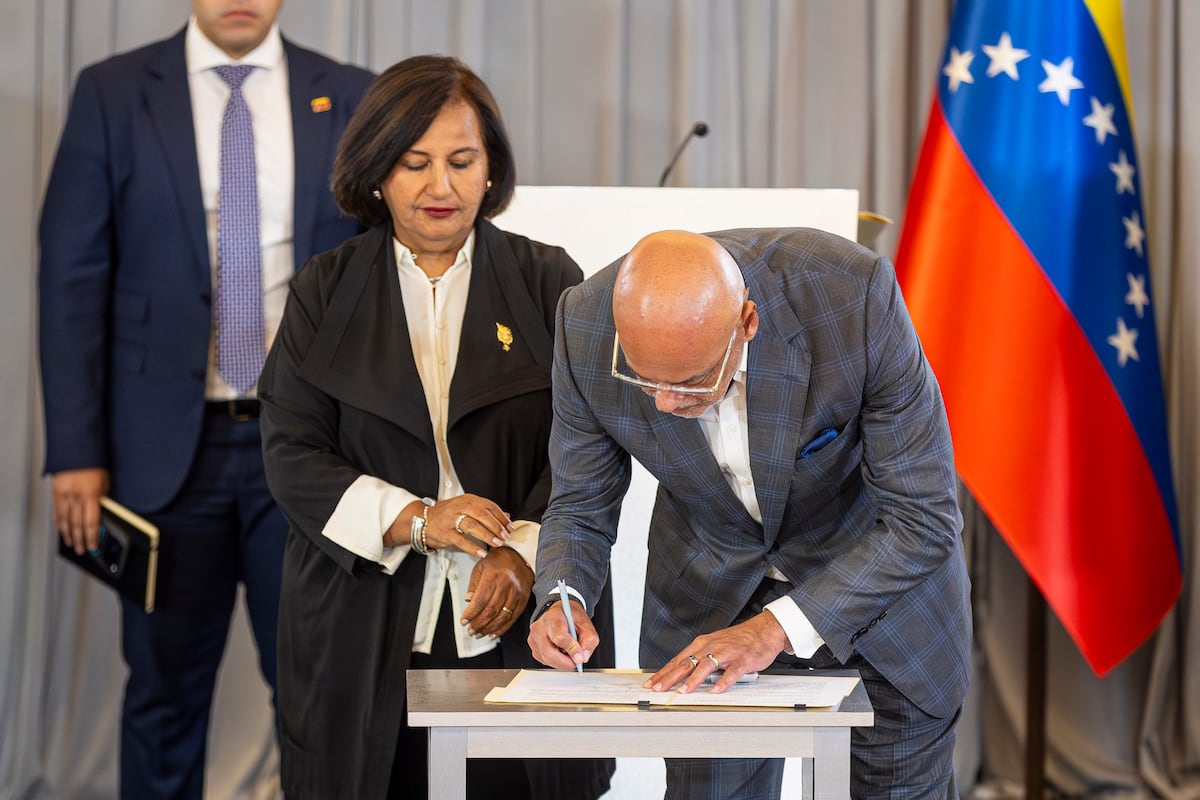 Thirty tons of Venezuelan gold, a bargaining chip between Chavismo and the opposition
english.elpais.com
Thirty tons of Venezuelan gold, a bargaining chip between Chavismo and the opposition
english.elpais.com
About 31 tons of Venezuelan gold bars—valued at roughly $4 billion—remain frozen at the Bank of England, and are now being discussed as a possible bargaining chip in talks between Nicolás Maduro’s government and the opposition, according to El País. The negotiations began earlier this month under U.S. mediation, with the prospect that frozen overseas assets could be unlocked and redirected toward Venezuela’s domestic crisis after the June earthquakes.
The gold has been stuck in legal limbo since 2019, when opposition leader Juan Guaidó declared himself interim president and claimed authority over Venezuelan assets abroad. The dispute ran through British courts for years, with judges effectively asked to decide which of two competing Venezuelan authorities could instruct the central bank and control state property. El País reports that the UK government’s position has shifted: it now recognizes the legitimacy of Delcy Rodríguez’s mandate, following earlier recognition by the United States, and British authorities have signaled willingness to release the gold if a political agreement is reached.
That conditionality is what turns bullion into leverage. The opposition has long argued that handing assets to the chavista state risks turning emergency funds into patronage, while the government argues the reserves belong to the country regardless of who holds power. El País says the U.S. mediation would “close the deal” and assume control of the funds to administer them, with any use requiring approval from the U.S. Treasury and State Department. In practice, the money does not move unless Washington signs off, even if the bars sit under British custody and the underlying claim is Venezuelan.
The gold is only one piece of a larger balance sheet. El País notes that Venezuela also owns the U.S. refiner Citgo, valued at $10 billion, but that asset is tied up in litigation that could ultimately strip it away. Other frozen holdings include PDVSA-linked assets and Special Drawing Rights at the International Monetary Fund, an institution Hugo Chávez formally quit in 2007. A Portuguese court has separately ordered the release of Venezuelan public funds held at Novo Banco, adding another jurisdiction to a problem already spread across London, Washington and Caracas.
For U.S. officials, El País reports, the attraction of the gold is that it allows reconstruction to be financed without writing American checks: Venezuela has resources, but cannot access them. For Venezuelans, the question is whether a deal that unlocks money also unlocks accountability, or simply changes which foreign desk has veto power over spending.
The bars have sat in the Bank of England for decades, and their next movement depends less on mining output than on signatures in three capitals.