
CDC links salmonella outbreak to jalapeños
More than 400 reported illnesses spread across 32 states, restaurant chains pull ingredient while produce supply chain stays opaque
Images
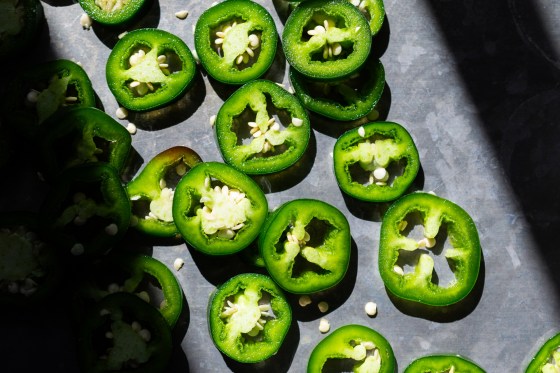 Fresh cut jalapeño slices laid on a gray surface
nbcnews.com
Fresh cut jalapeño slices laid on a gray surface
nbcnews.com
At least 431 people across 32 US states have fallen ill in a salmonella outbreak linked to fresh jalapeño peppers, according to a CDC update cited by NBC News. The agency said the illnesses are tied to Salmonella Javiana and that 57 people have been hospitalized, with no deaths reported. The jalapeños were likely grown in Mexico and distributed by Coast Citrus Distributors, which has recalled the product.
The outbreak has moved from a local restaurant problem to a national supply-chain event. NBC News reports that Chipotle and Qdoba pulled jalapeños from menus earlier in August, while retailers and prepared-food sellers issued recalls for salsas, dips and ready-to-eat items containing the peppers, including products sold under major grocery brands. The CDC warned that case counts typically lag by several weeks, meaning the official number often rises even after the contaminated product has been removed from shelves.
For restaurant chains, the immediate cost is operational: menu changes, substitute sourcing, and a public-facing food-safety response that must be executed across thousands of locations. The longer cost is reputational, even when the contamination originates upstream. Chipotle’s earlier statement, also reported by NBC, emphasized that the suspect peppers were distributed broadly across food service, a reminder that brand risk concentrates at the point of sale while the underlying agricultural and distribution network is shared.
The jalapeño outbreak is unfolding alongside a much larger summer wave of cyclosporiasis cases that public health officials have largely linked to contaminated lettuce, with thousands of confirmed infections and hundreds of hospitalizations, according to the same NBC report. Two different pathogens, two different ingredients, and a similar pattern: fresh produce routed through cross-border industrial agriculture, then dispersed into national retail and fast-casual systems that depend on uniform inputs and tight margins.
The incentives in that system are visible in the recall map. A single distributor’s product can end up in restaurant salsas, supermarket tubs and prepared-food counters, and the first entities forced to act are often the ones closest to consumers. Regulators can publish updates and tracebacks, but the practical containment work is done through private decisions to pull ingredients, switch suppliers and absorb the waste.
The CDC’s current tally is 431 reported cases. The peppers have been recalled, but the agency is still telling the public the outbreak is not over.