
RAIB says Lewes derailment track fault existed before crash
CCTV shows geometry irregularity on hottest day, passenger reports of rough riding preceded 30 injuries
Images
 The RAIB investigation published an image that appeared to show that the track near Lewes, East Sussex, had buckled – something that can happen in high temperatures. Photograph: James Manning/PA
theguardian.com
The RAIB investigation published an image that appeared to show that the track near Lewes, East Sussex, had buckled – something that can happen in high temperatures. Photograph: James Manning/PA
theguardian.com
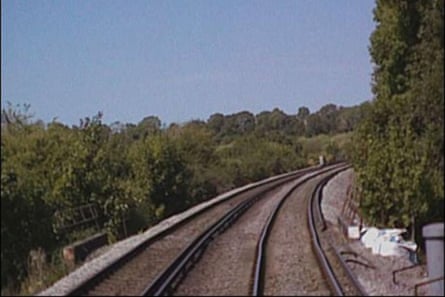 Rear-facing CCTV image from a train which passed the location of the accident at about 14:04 on 13 August 2026, shows the track irregularity visible near the white ballast bags. Photograph: courtesy of Greater Thameslink Railway
theguardian.com
Rear-facing CCTV image from a train which passed the location of the accident at about 14:04 on 13 August 2026, shows the track irregularity visible near the white ballast bags. Photograph: courtesy of Greater Thameslink Railway
theguardian.com
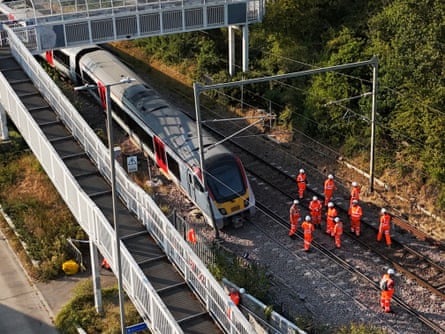 Rail workers pictured at the scene of a Greater Anglia train derailment, south of Wickford railway station in Essex. The accident happened a day after the Lewes incident. Photograph: Jonathan Brady/PA
theguardian.com
Rail workers pictured at the scene of a Greater Anglia train derailment, south of Wickford railway station in Essex. The accident happened a day after the Lewes incident. Photograph: Jonathan Brady/PA
theguardian.com
Rail investigators say CCTV showed a track fault on the approach to Lewes before a passenger train derailed on 13 August, injuring 30 people. The Rail Accident Investigation Branch (RAIB) described a “track geometry irregularity” and published an image that, according to The Guardian, appears to show buckling on the hottest day of the year so far.
The interim finding matters because it shifts attention from the moment of failure to the period when the fault existed but trains kept running. RAIB said it received several reports of rough riding from passengers on other trains at the same location, suggesting there were early warnings that did not translate into an immediate operational stop. Network Rail and GTR, the operator of Southern, issued a joint apology; the line between Lewes and Haywards Heath is closed until at least the end of service on 26 August while the derailed carriages are lifted by crane, a reminder that recovery capacity becomes part of system resilience once something goes wrong.
Heat is a convenient headline, but the facts in the report are more awkward. The nearest weather station recorded ambient air temperature of about 27°C at the time, according to the RAIB summary cited by The Guardian—warm, but not an obvious explanation for a failure that left three carriages on their side and trapped passengers. The embankment near the site is clay, a material sensitive to changes in water content; RAIB said it found no evidence of a significant embankment slip before the accident, while noting indications that some movement had previously occurred. That points toward a network problem that is harder to “weather-proof”: the interaction between maintenance standards, inspection routines, and how quickly operators act on ride-quality complaints.
Britain’s rail system is also discovering that extreme conditions do not arrive one at a time. The Lewes derailment occurred during the UK’s fifth heatwave of summer 2026, and a second derailment followed less than 24 hours later at Wickford in Essex, where rear carriages of a Greater Anglia train came off the track but remained upright; no injuries were reported there. Two events close together create pressure to reassure the public while investigators are still establishing basic sequences of cause and response.
At Lewes, the train was travelling at about 65 mph, within a 70 mph limit, with about 150 people onboard, The Guardian reports. The RAIB image suggests the track problem was visible before the derailment.
The line will remain shut into late August, and the interim report leaves one concrete question hanging: how long that irregularity was present while trains continued to pass over it.