
Unitree shares rocket in Shanghai IPO debut
Humanoid robotics boom meets US import ban on new foreign-made robots, investors price factory-scale deployment before it arrives
Images
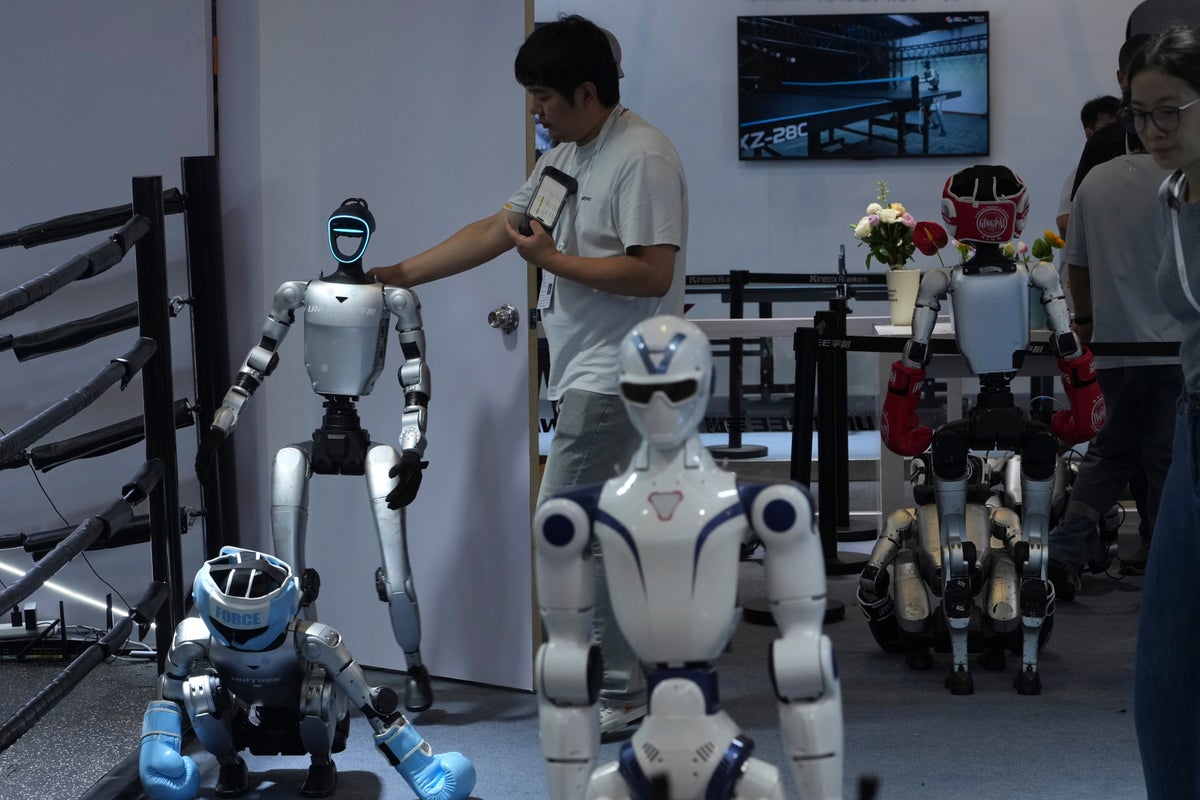 Shares in Chinese humanoid robot maker Unitree soar in Shanghai trading debut
independent.co.uk
Shares in Chinese humanoid robot maker Unitree soar in Shanghai trading debut
independent.co.uk
Chinese humanoid-robot maker Unitree surged in its Shanghai trading debut on Wednesday, with shares at one point up more than 600%, according to The Independent. The Hangzhou-based firm raised roughly 6.1 billion yuan in its listing on Shanghai’s STAR market, the report said. The jump came despite new US restrictions that the company has warned could hit future sales.
Unitree sits in a sector that has become a proxy battlefield: advanced robotics marketed as “embodied AI,” where the prize is not a chatbot but a machine that can move, lift and work in the real world. The Independent reports that around 15,000 humanoid robots were shipped globally last year, and that Unitree and another Chinese maker each shipped more than 5,000—outpacing US counterparts. Yet the same report notes that many humanoid robots still earn their keep in demonstrations, performances and research rather than routine industrial deployments. Unitree’s machines have performed backflips and martial arts on China’s Spring Festival gala; the harder problem is reliable, boring operation on factory floors where downtime is measured in money, not applause.
That gap between spectacle and utility is where investors are placing a bet—and where geopolitics can change the addressable market overnight. Unitree said more than 40% of its revenue came from overseas sales, with the US accounting for roughly 13% last year, The Independent reported. In July, the US Federal Communications Commission banned imports of new foreign-made humanoid and quadruped robots on national security grounds, a move that Unitree said applies to its new models while existing models can still be sold. A restriction written for “national security” becomes, in practice, a product-line filter: old inventory can move, but the next generation is kept out unless rules change.
For mainland Chinese investors, the IPO also offers something rare: direct exposure to a flagship robotics name on a domestic exchange. Analysts told The Independent that Unitree is the first publicly traded humanoid robotics maker in mainland China, and that its valuation could become a benchmark for other offerings.
Unitree plans to spend the proceeds on research and a manufacturing base. Its debut day price action suggests the market is already pricing in mass adoption that the robots have not yet had to prove on the night shift.