
Alejandro Betancourt returns to Caracas
El País links PDVSA-era billionaire to Delcy Rodríguez oil plans and Trump-era backchanneling, advisory role remains unofficial
Images
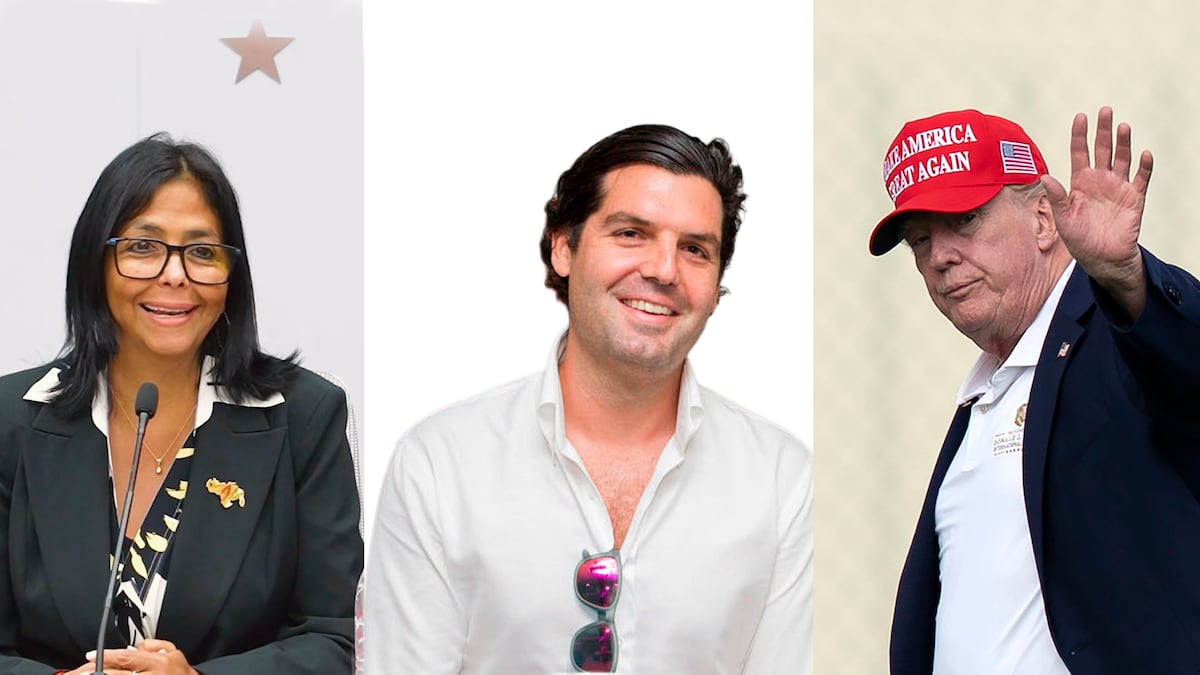 Alejandro Betancourt, the under-investigation billionaire linking Delcy Rodríguez to Trump
english.elpais.com
Alejandro Betancourt, the under-investigation billionaire linking Delcy Rodríguez to Trump
english.elpais.com
Venezuelan businessman Alejandro Betancourt returned to Caracas on a private flight from Palm Beach in late June, according to flight records reviewed by El País. Betancourt, who has been investigated abroad over alleged PDVSA-linked corruption and money laundering, is now described by sources close to Caracas power circles as advising President Delcy Rodríguez on reviving the oil industry, though no official confirmation has been made.
El País places Betancourt’s reappearance at the intersection of two systems that usually present themselves as enemies: the post-Maduro political reset in Caracas and the Trump-era—and now Trump-led—U.S. approach to Venezuela. Betancourt is under investigation in Spain and Switzerland, the paper reports, and had spent months effectively confined to two properties in England, moving between them by helicopter and without an electronic monitor. Yet he re-entered Venezuela days after earthquakes that, according to El País, killed more than 6,000 people, and he did so not as a fugitive but as a figure with access.
The story matters less as a personality profile than as a view into how cross-border enforcement and diplomacy actually function. A former informal envoy linked to U.S. Secretary of State Marco Rubio, Mauricio Claver-Carone, told Reuters that U.S. officials used Betancourt as an intermediary because he “understands the oil business in both Venezuela and the U.S.” El País also cites a diplomatic source describing Betancourt as a U.S. asset—language that sits awkwardly alongside claims that Rodríguez is cleaning up “excesses” from the Maduro era. When a government says it is breaking with past patronage while quietly relying on the same class of dealmakers, the distinction between reform and rebranding becomes difficult to verify from the outside.
Betancourt’s business footprint, as described by El País, is built for that ambiguity. He accumulated wealth during chavismo, later resurfaced in Spain with high-end property and investments, and built an empire spanning Venezuelan oil interests and Spanish startups, including involvement with the Hawkers eyewear brand. El País reports that he has significant control over private oil production in Venezuela, and that he travels with a rotating cast of partners, investors and figures from banking and mining—precisely the sectors that tend to benefit first when a sanctioned economy shifts toward partial normalization.
In practical terms, intermediaries like Betancourt are useful because they can price risk where ministries and embassies cannot. They can talk to U.S. officials without filing communiqués, and to Venezuelan leaders without leaving a paper trail. They can also collapse accountability: when negotiations are conducted through businessmen rather than institutions, the public learns about “bridges” after the contracts are signed.
El País reports that Betancourt is back in the presidential orbit. The government has not said what his mandate is, what he is paid, or what safeguards apply.