
European People’s Party builds working majorities with far right
Guardian columnist charts post-2024 coalition shift inside European Parliament, migration return rules pass as firewall turns optional
Images
 Jordan Bardella, president of the far-right Patriots for Europe group in the European parliament, and Roberta Metsola, the president of the European parliament and a member of the European People’s party. Composite: Getty
theguardian.com
Jordan Bardella, president of the far-right Patriots for Europe group in the European parliament, and Roberta Metsola, the president of the European parliament and a member of the European People’s party. Composite: Getty
theguardian.com
 Alberto Alemanno
theguardian.com
Alberto Alemanno
theguardian.com
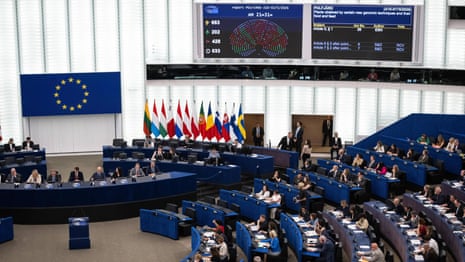 Rightwing MEPs chant ‘send them back’ after controversial deportation plans are passed – video
theguardian.com
Rightwing MEPs chant ‘send them back’ after controversial deportation plans are passed – video
theguardian.com
Alberto Alemanno points to a new voting math in the European Parliament: since 2024, the centre-right European People’s Party has repeatedly assembled majorities with hard-right groups it once treated as untouchable. In his account in the Guardian, the shift shows up in roll calls — more than 20 votes where the EPP aligned with the far right — and in a June 2024 migration package billed as the EU’s harshest to date, including a “return regulation” that can move deportees to detention centres outside EU territory.
The mechanics are procedural rather than theatrical. The parliament is directly elected and co-writes EU law, but its day-to-day power is exercised through shifting coalitions that decide which amendments live, which reports move, and which compromises reach the final vote. For decades, the chamber was run by a broad centrist bloc of centre-right, socialists, and later liberals and greens, with an informal cordon sanitaire against the far right. Alemanno argues that the EPP now operates with “two rival majorities”: one that looks like the old coalition when it needs to elect or protect the European Commission, and another that leans on Giorgia Meloni’s European Conservatives and Reformists, Marine Le Pen’s Patriots for Europe, and the Europe of Sovereign Nations group led by Germany’s AfD when centrists resist EPP terms.
The result, as described, is a set of incentives that reward flexibility and punish scruple. If socialists, liberals or greens refuse a compromise, the EPP can shop the same file to parties that will take a harder line on migration, climate or rule-of-law language, and still deliver a majority. When the EPP needs the centre to keep control of the parliament’s top jobs and the Commission’s leadership, it can return to those same parties — which, in Alemanno’s telling, continue to supply votes without extracting conditions that would make cross-bloc deals costly. The “firewall” becomes a slogan rather than a constraint.
Migration is the clearest test case because it combines public pressure with high-stakes implementation. Alemanno notes that the return regulation passed not as a right-wing coup but through an alignment of the EPP with far-right groups and a majority of MEPs from Renew, and he points to leaders calling for faster application after the Ceuta incident. Moving deportations to facilities beyond EU territory, he writes, places people further from courts, media scrutiny and public accountability — a policy choice that is easier to vote for than to administer when contracts, oversight and liability are assigned.
The European Parliament’s chamber has 360 million voters behind it, but the day’s majority can still hinge on who is willing to vote with whom on a Tuesday afternoon. On migration, Alemanno’s evidence is that the numbers now add up without the old promises being kept.