
Putin visit to Kuril Islands rekindles Japan Russia sovereignty dispute
Four islands near Hokkaido sit on Pacific access route and fishing grounds, sanctions era turns old treaty language into military geography
Images
 The island of Kunashir, one of four islands known as the Southern Kurils in Russia and the Northern Territories in Japan. Photograph: Yuri Maltsev/Reuters
theguardian.com
The island of Kunashir, one of four islands known as the Southern Kurils in Russia and the Northern Territories in Japan. Photograph: Yuri Maltsev/Reuters
theguardian.com
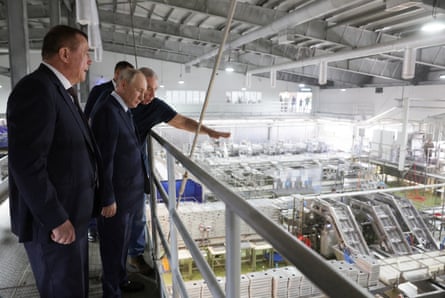 Vladimir Putin visits the Yasny fish processing complex on the southern Kuril island of Iturup last week. Photograph: Gavriil Grigorov/Reuters
theguardian.com
Vladimir Putin visits the Yasny fish processing complex on the southern Kuril island of Iturup last week. Photograph: Gavriil Grigorov/Reuters
theguardian.com
Vladimir Putin’s late-May 2023 visit to the Kuril Islands triggered a fresh round of diplomatic summonses between Moscow and Tokyo, according to The Guardian. Japan’s prime minister Sanae Takaichi called the trip “absolutely unacceptable”, while Russia accused Japan of making unfounded territorial claims and called in Japan’s ambassador.
The islands at the centre of the dispute are four in the southern part of the Kuril chain, an archipelago of 56 volcanic islands stretching from Russia’s Kamchatka peninsula to Japan’s Hokkaido. The southernmost island lies less than four kilometres from Japan, and the waters around the islands are rich fishing grounds. For years Japan paid Russia for fishing rights in the disputed area, an arrangement that The Guardian reports broke down after Japan imposed sanctions on Russia following the full-scale invasion of Ukraine in 2022.
What looks like a symbolic trip also lands in a practical map of military logistics. The islands sit between the Sea of Okhotsk and the Pacific Ocean; control of them helps shape access routes for Russia’s fleet based in Vladivostok and offers year-round reach into the Pacific. Russia has increased its military presence on the islands, including deploying anti-air missile systems in 2020, and the dispute has become harder to treat as a standalone bilateral issue as Japan aligns more closely with Western sanctions policy.
The argument over who owns what is older than the current war. The Guardian traces the dispute through a series of treaties: an 1855 agreement that codified Japanese sovereignty over the islands closest to Hokkaido, and a 1875 deal that gave Japan control of the entire Kuril chain in exchange for Russia gaining uncontested control of Sakhalin. After the second world war, the Soviet Union seized the four islands in the final days of the conflict, and Japan later renounced claims to the Kurils in the 1951 San Francisco peace treaty while maintaining that the four southernmost islands were not part of what it had given up. The Soviet Union never signed that treaty.
There have been periods when the dispute looked manageable. The late Japanese prime minister Shinzo Abe spent much of the 2010s pursuing rapprochement with Putin, an effort that suggested both sides saw value in keeping the issue in a diplomatic box. Since 2022 that box has been opened by events elsewhere: sanctions, military deployments, and the wider reordering of security ties in northeast Asia.
Putin is only the second Russian leader to visit the islands, The Guardian notes, after Dmitry Medvedev made several trips earlier in the 2010s. The four islands remain close enough to Hokkaido that the distance can be measured in kilometres, while the dispute itself is now measured in missile systems and cancelled fishing agreements.