
Senegal funds elite boarding school for girls on Gorée Island
Mariama Bâ school admits 35 students a year with 100% completion rate, state pays to solve dropout problem family budgets cannot
Images
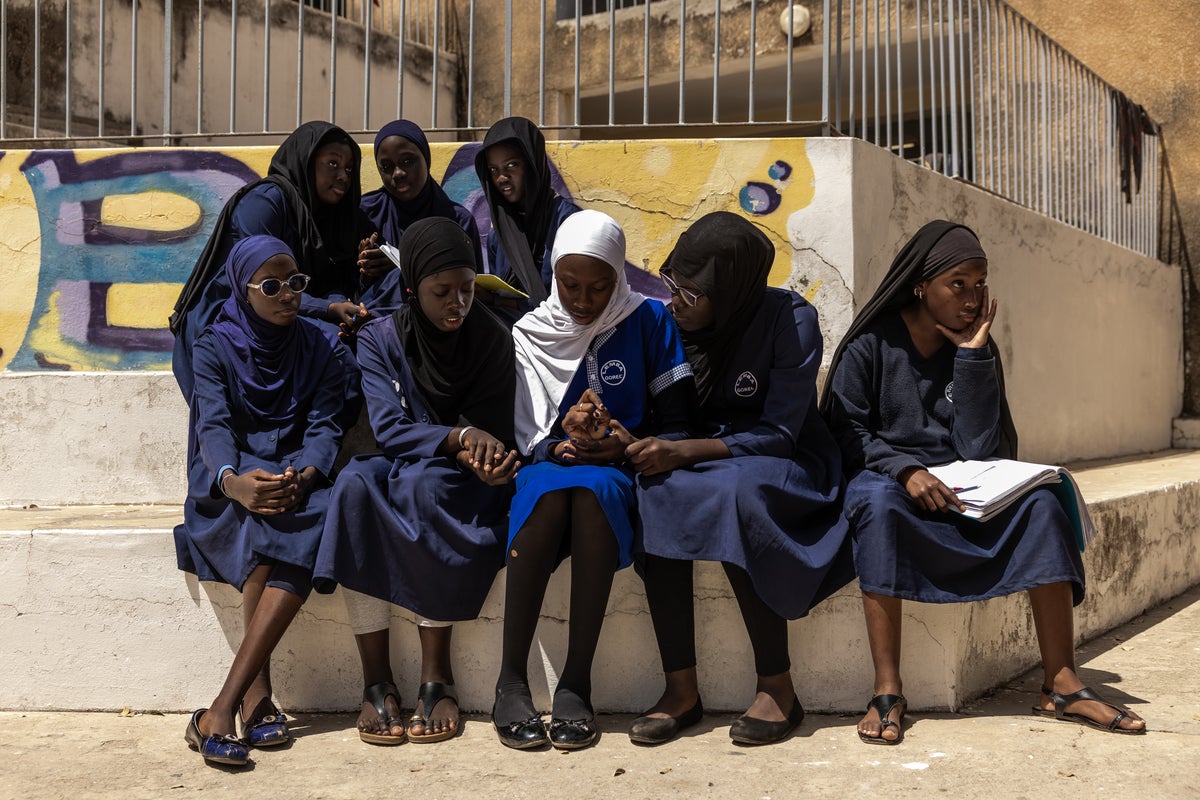 This school teaches Senegal's brightest girls to push back against patriarchal norms
independent.co.uk
This school teaches Senegal's brightest girls to push back against patriarchal norms
independent.co.uk
Thirty-five girls a year are admitted to Senegal’s first elite boarding school for girls, housed in a former French military barracks on Gorée Island off Dakar, according to The Independent. The school, named after the Senegalese novelist Mariama Bâ, is fully funded by the Senegalese state and posts a 100% completion rate. For students such as Ndeye Awa Diop, who arrived at 12 from rural Senegal and later became student council president, the campus offers a controlled environment designed to produce a female professional class.
The Independent describes a country where primary-school enrolment for girls is high, but where fewer than 20% of girls complete high school, and literacy still lags behind boys. Families with limited resources often prioritise sons’ schooling even when daughters are stronger students, and girls may miss classes when they begin menstruating. Teenage marriage and early motherhood remain common pressures pulling girls out of education.
Against that backdrop, the Gorée model is deliberately selective and deliberately expensive—just not for the families. Each year, about 35 girls are admitted from around 150 invited to sit an entrance exam based on grades, and tuition and boarding are paid by the state, The Independent reports. The daily schedule—wake, shower, prayer, meals, classes, study hall—reads like an institution built to outcompete the distractions and obligations that make ordinary schooling fragile.
The school’s pitch is that discipline buys freedom later. Headmistress Ramatoulaye Diagne Sarr told The Independent the structure is meant to create “the female elite Senegal depends on,” while teachers frame the project as widening opportunity in a society where men still tend to dominate. Alumni return to give talks, and students debate topics such as the history of slavery—an unavoidable subject on an island known as a major centre of the trans-Atlantic slave trade.
But the arrangement also shows how gender policy is being operationalised: not only through laws “on paper,” such as land-access guarantees and candidate quotas, but through a pipeline that concentrates public spending on a small cohort judged most likely to convert schooling into status and income. UNICEF’s Maissa Abdellaoui told The Independent the core challenge is no longer getting girls into classrooms, but keeping them through secondary school and into the job market.
On Gorée, there are no cars on the cobblestone streets, and the school sits behind the old walls of a barracks. Each year, 35 girls cross the water from the mainland to study inside a building that once served an empire, now repurposed to decide who gets to leave the expectations of home behind.