
Philippines school shooting kills two students
Attacker dies by suicide at Zamboanga campus linked to Ateneo de Zamboanga University, livestream claims spread faster than police statements
Images
 Ateneo de Zamboanga University after a shooting that killed two people in Zamboanga, southern Philippines, on Tuesday. Photograph: Nonoy Lacson/Reuters
theguardian.com
Ateneo de Zamboanga University after a shooting that killed two people in Zamboanga, southern Philippines, on Tuesday. Photograph: Nonoy Lacson/Reuters
theguardian.com
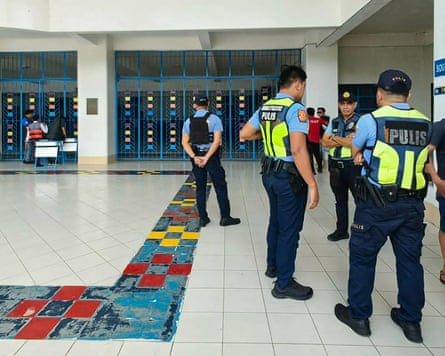 Philippine police gather at the school in Zamboanga after the shooting. Photograph: Roel Parreno/AFP/Getty Images
theguardian.com
Philippine police gather at the school in Zamboanga after the shooting. Photograph: Roel Parreno/AFP/Getty Images
theguardian.com
 Philippines: Two dead including attacker in high school shooting in Zamboanga City
independent.co.uk
Philippines: Two dead including attacker in high school shooting in Zamboanga City
independent.co.uk
Two students were killed in a shooting at a school attached to Ateneo de Zamboanga University in Zamboanga City in the southern Philippines on Tuesday, according to The Guardian and The Independent. Authorities said the suspected gunman, himself a student, shot a fellow student and later died by suicide. The school suspended classes as police began establishing what happened and urged the public not to circulate unverified images and claims.
According to The Guardian, the attacker was armed with a high-powered firearm and a pistol, and fired first at a teacher but missed before moving to another room and shooting a student who fell. The Independent reports the suspected gunman brought both a pistol and a rifle onto campus and opened fire inside a classroom, with two other people injured. Zamboanga City mayor Khymer Adan Olaso said the student apparently wore a body camera and that a video of the attack was live-streamed, with The Guardian saying a clip appeared to have been broadcast on Facebook and circulated by local media.
The episode lands in a country that is not usually treated as part of the global school-shooting story, yet officials there are now talking in the language of repetition. The Guardian notes this is the second fatal school shooting in the Philippines in two months, after an incident in June at a public high school in Tacloban City that killed three students and injured about 20. After that June attack, the Philippine government banned the online game GoreBox because at least one alleged shooter regularly played it, and the Department of Education told a senate committee more support was needed to prevent a “copycat phenomenon,” according to The Guardian.
Those responses point to a familiar pattern: once violence arrives in a setting built on routine and trust, institutions hunt for levers they can pull quickly. Banning a game is administratively simple, while hardening schools, tightening access to weapons, and building credible early-intervention systems for troubled students is slower, costlier, and politically messier. Even the information problem becomes part of the event: police appeals to stop sharing unconfirmed footage suggest that, in practice, the first version of the story is now often written by whoever uploads first.
For the private school community in Zamboanga, the immediate facts are stark: a student brought lethal weapons onto a secured campus, shots were fired in classrooms, and two children are dead. The question investigators now face is not just why one student decided to kill, but how he managed to arrive at a desk with a gun at all.