
Nick Reiner seeks access to parents trust fund for murder defense
NBC says trustee cites California slayer statute to block payments, probate court becomes a pretrial fight over legal resources
Images
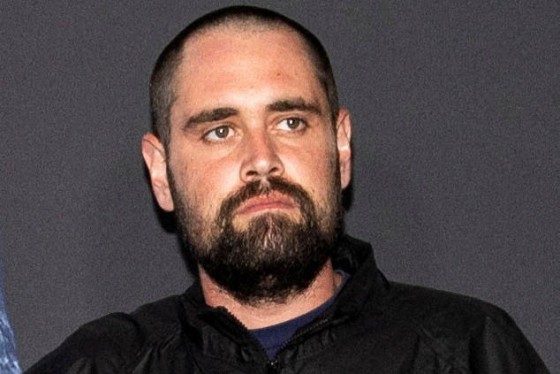 Nick Reiner, son of Rob Reiner, attends the Los Angeles Premiere of ''Spinal Tap II: The End Continues'' in Los Angeles on Sept. 9, 2025.
nbcnews.com
Nick Reiner, son of Rob Reiner, attends the Los Angeles Premiere of ''Spinal Tap II: The End Continues'' in Los Angeles on Sept. 9, 2025.
nbcnews.com
 nbcnews.com
A probate hearing in Los Angeles this week turned a double-murder case into an argument over a trust fund. According to NBC News, Nick Reiner has already used part of a trust created by his parents to pay for his defense, while a court-appointed trustee is trying to block further access.
NBC reports the trust holds $1.63 million and was set up by Rob Reiner and Michele Singer Reiner for their son. Prosecutors have charged Nick Reiner with two counts of murder with special-circumstance allegations, after his parents were fatally stabbed at their home in Brentwood in December; he has pleaded not guilty. At the hearing, an attorney representing Reiner’s probate interests said about $200,000 has been spent from the trust, including an undisclosed amount paid to his previous defense lawyer, Alan Jackson, who resigned in January citing “circumstances beyond our control.” Jackson appeared at the probate hearing and indicated he could return to the defense team if the money dispute is resolved.
The fight is less about guilt than about timing. Reiner was scheduled to receive the full trust at age 35, and was due to receive a smaller distribution at age 30 but chose not to withdraw it, NBC reports. His lawyers argue he should be allowed to use the money now because he has not been convicted, framing the trust as his own property and the defense as a necessary expense. The trustee’s objection leans on California’s “slayer statute,” which is designed to stop killers from profiting from their victims’ estates—an idea that collides with the presumption of innocence when the case is still pending.
That collision is where the system’s incentives show through. Murder prosecutions are built around slow timelines: investigations, pretrial motions, expert testimony and jury selection can stretch on, while a defendant’s ability to mount a defense is shaped by what can be paid for in the meantime. A trust fund changes the starting position. It can keep a high-profile private defense team in place even as the estate becomes the subject of separate litigation, and it can turn the probate court into a parallel battlefield where each side tries to shape what resources exist before a jury ever hears evidence.
Los Angeles County Superior Court Judge Ruben Garcia did not rule at the hearing and ordered both sides back to court on October 23, NBC reports. Until then, the trust remains intact on paper, with roughly $200,000 already converted into legal bills.