
Shasta County plans to hire Tina Peters
Election office recruits consultant convicted over voting-system breach, outsider credibility replaces institutional trust
Images
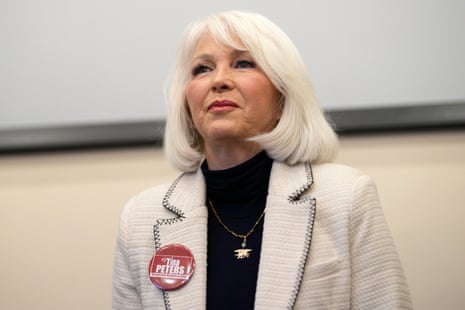 Tina Peters in Hudson, Colorado, in February 2023. Photograph: David Zalubowski/AP
theguardian.com
Tina Peters in Hudson, Colorado, in February 2023. Photograph: David Zalubowski/AP
theguardian.com
A northern California county that became a national testing ground for election-system rebellion is preparing to hire Tina Peters, a prominent Colorado election denier recently released from prison, as an elections consultant. Clint Curtis, Shasta County’s top election official, told The Guardian he plans to bring Peters in to replace his deputy, who is on medical leave. Curtis said Peters would not have access to the county’s voting system.
According to The Guardian, Shasta County has spent recent years trying to turn distrust of voting technology into administrative policy. In 2023 its governing body sought to cut ties with Dominion Voting Systems and move to hand-counting ballots, a plan experts warned would be costly and less accurate; the state ultimately blocked the change. The same period saw losing candidates in local races sue to overturn results while promoting conspiracy theories about fraud, turning routine election administration into a permanent political battleground.
Peters is not a generic partisan hire. She was convicted in 2024 of four felonies and three misdemeanors after allowing an activist affiliated with MyPillow CEO Mike Lindell to impersonate a county employee and attend a Dominion voting software upgrade in Mesa County, Colorado, The Guardian reports. Screenshots of sensitive county information were later published by the Gateway Pundit. Colorado Governor Jared Polis commuted Peters’ nine-year sentence, and she was released from prison in June 2024—an outcome celebrated on the political right.
The Shasta County story also sits inside a wider pattern: election offices are increasingly treated as ideological posts rather than compliance-heavy bureaucracies. Shasta’s board appointed Curtis in 2023 despite his lack of prior election-office experience; he has opposed voting machines and argued US elections are manipulated, according to The Guardian. Investigations earlier in 2024 concluded he created a hostile work environment and made violent threats against workers—claims he denied—before the county censured him for ongoing personnel-rule violations.
Hiring a figure whose notoriety comes from breaching voting equipment is a signal to allies and adversaries alike. Even if Peters is formally walled off from the voting system, the county would still be paying for a particular brand of legitimacy: one rooted in suspicion of the machinery and the people who run it. The practical costs—staff turnover, litigation, procurement delays, and state intervention—tend to arrive later, after the political benefit of the announcement has already been collected.
Curtis told The Guardian Peters would not have access to Shasta County’s voting system. Shasta County’s last attempt to replace its voting system was blocked by the state.