
Spanish CSIC nanostructured polymer cools surfaces without electricity
Rooftop tests near Madrid show up to 12.9°C temperature drop, passive cooling competes with air conditioning by sending heat to space
Images
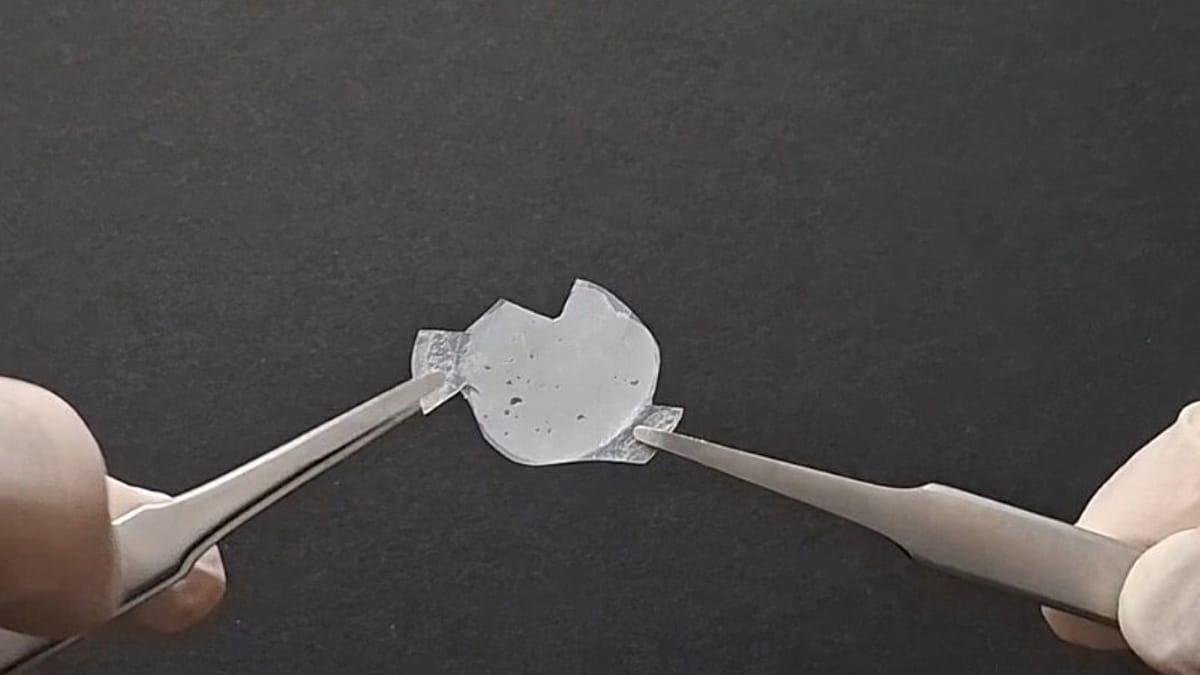 New Spanish nanomaterial cools surfaces by up to 12.9C without electricity
euronews.com
New Spanish nanomaterial cools surfaces by up to 12.9C without electricity
euronews.com
A polymer film engineered with nanoscale pores kept test surfaces in the Madrid area up to 12.9°C cooler than an untreated sample during rooftop trials last summer, according to Euronews and the Spanish research council CSIC. The material, developed by a CSIC team at the Institute of Micro and Nanotechnology, is designed to cool sun-exposed surfaces in daylight without using electricity. The work was published in the journal Nanophotonics.
The approach relies on “daytime passive radiative cooling”: instead of moving heat with compressors and fans, the surface is tuned to reflect incoming sunlight while emitting its own heat as infrared radiation through an atmospheric window between 8 and 13 micrometres, where that energy can pass through the air and out to space. Euronews reports the researchers used polyvinylidene fluoride (PVDF), a polymer that emits efficiently in the relevant infrared band and is described as durable, water-repellent and resistant to ultraviolet light. To control how the film interacts with light, the polymer was infiltrated into nanoporous templates of anodised aluminium oxide, creating a three-dimensional nanostructure whose internal geometry determines optical performance.
In laboratory characterisation, the optimised material reflected an average of 82.4% of solar radiation and emitted 96.7% of heat in the 8–13 micrometre band, Euronews reports. The team also cites a theoretical cooling capacity of 182.3 watts per square metre under a solar irradiance of 1,000 W/m², with a rooftop test in Tres Cantos reporting similar performance under peak irradiance of 962 W/m². After ultraviolet treatment that whitened the surface and improved reflectance, the treated sample remained up to 12.9°C cooler than the untreated one on the “hottest, driest, and sunniest” days, according to the report.
Cooling demand is a large and growing electricity load—Euronews notes it accounts for nearly 20% of global electricity consumption—so even incremental reductions in air-conditioning use can translate into grid and fuel savings. But the path from a rooftop comparison to city-scale impact is full of practical bottlenecks: building products must survive years of dirt, abrasion, and weathering, and they must be cheap enough that owners choose them over conventional coatings. The researchers describe the manufacturing process as relatively inexpensive and compatible with existing industrial processes, and they point to potential uses on roofs and façades as well as electronics, vehicles and personal cooling systems.
The most concrete result so far is still the rooftop in Tres Cantos: a polymer film, whitened by ultraviolet treatment, sitting measurably cooler than a neighbouring untreated surface under the same midday sun.