
Earthquake hits eastern Indonesia
Tsunami warning lifted as aftershocks continue, self-evacuations and satellite offers arrive before rebuilding plans
Images
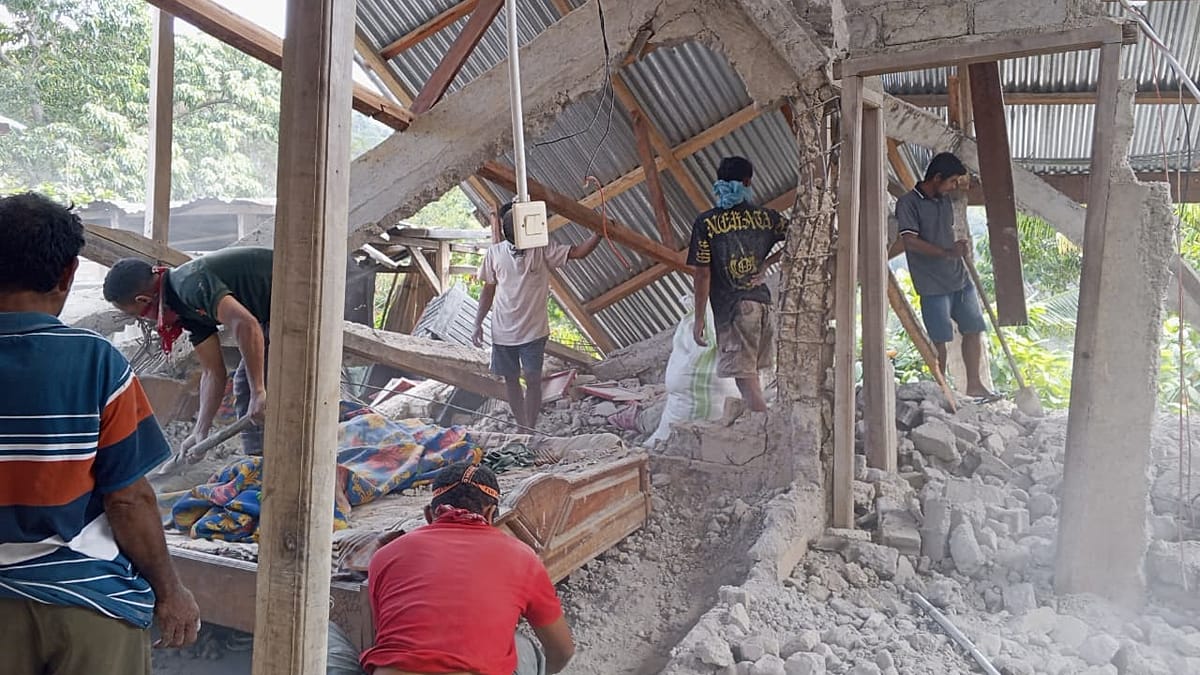 Powerful 7.7-magnitude earthquake strikes Indonesia, killing 40
euronews.com
Powerful 7.7-magnitude earthquake strikes Indonesia, killing 40
euronews.com
A 7.7-magnitude earthquake struck off Indonesia’s eastern Flores island early Saturday, killing dozens and prompting a tsunami warning that was later lifted. Indonesian authorities reported widespread panic, injuries, and self-evacuations as aftershocks continued through the day, while officials assessed damage across multiple regencies.
According to Euronews, the quake was shallow, with the first tremor reported at around 10 km depth — the kind of event that turns a moment of shaking into collapsed masonry, broken roads, and severed communications. The National Agency for Disaster Countermeasure said thousands of residents in one regency self-evacuated, a detail that hints at how much of the immediate response still depends on households moving faster than any formal rescue chain. Indonesia’s meteorological agency said it lifted the tsunami warning after it no longer detected significant sea-level rises, but it also urged the public to avoid rumours and rely on official channels — a familiar instruction in disasters where information travels faster than verification.
The same report described tremors felt across a wide swath of eastern and central Indonesia, from East Nusa Tenggara to parts of Sulawesi and West Nusa Tenggara, underscoring how a single rupture can stress a sprawling archipelago with uneven infrastructure. As rescue efforts begin, the pressure point is not only physical damage but logistics: moving medical care, shelter and supplies across islands where ports, roads and power grids can be fragile even in normal conditions. International support offers can arrive quickly — European Commission President Ursula von der Leyen said the EU was ready to deploy Copernicus Earth-observation satellites — but satellite imagery does not clear debris, reopen bridges, or restore water systems.
Later, a second earthquake struck on the western island of Sumatra, at greater depth, with authorities still assessing its impact. Indonesia sits on one of the world’s most active seismic zones; the recurring question is how much rebuilding translates into resilience rather than a return to the same vulnerabilities.
By Saturday evening, officials were still warning that aftershocks were ongoing. The tsunami warning was lifted, but thousands had already left their homes on their own initiative.