
Trump orders cuts to US South Korea military drills
Ulchi Freedom Shield starts with reduced scope after Iran dispute, deterrence posture shifts while North Korea trains on Ukraine lessons
Images
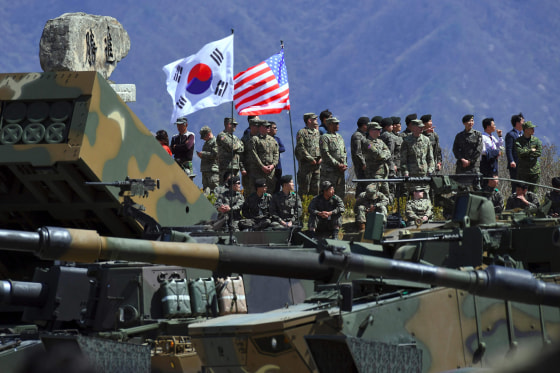 Image: South Korean and US soldiers watching from an observation post during a joint live firing drill between South Korea and the US at the Seungjin Fire Training Field in Pocheon, northeast of Seoul
nbcnews.com
Image: South Korean and US soldiers watching from an observation post during a joint live firing drill between South Korea and the US at the Seungjin Fire Training Field in Pocheon, northeast of Seoul
nbcnews.com
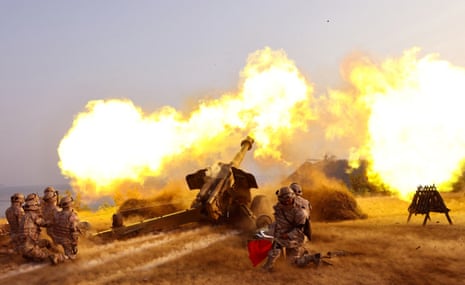 File image of an artillery drill carried out for North Korean leader Kim Jong-un in May 2025. Photograph: KCNA/Reuters
theguardian.com
File image of an artillery drill carried out for North Korean leader Kim Jong-un in May 2025. Photograph: KCNA/Reuters
theguardian.com
Trump orders major cuts to US South Korea drills, Ulchi Freedom Shield exercise proceeds but scaled down after Seoul rejects Iran request, North Korea gets deterrence signal without paying for it
Donald Trump says he has told the Pentagon to “substantially reduce” joint US-South Korea military exercises just as the annual Ulchi Freedom Shield drills are set to begin. NBC News reports Trump linked the decision to South Korea’s refusal to join a US push to “denuclearise” Iran, while also citing his “very good relationship” with North Korean leader Kim Jong Un. South Korea’s defence ministry, according to the Guardian, said the drills would proceed as previously scheduled.
Ulchi Freedom Shield is one of South Korea and the United States’ two major annual exercises, designed to test combined command arrangements and readiness across military and civilian agencies. The Guardian reports the exercise was expected to involve about 18,000 South Korean troops, US forces, and personnel from 11 of the 18 member states of the United Nations Command, the multinational body tied to the 1953 armistice. Trump framed the drills as both expensive and politically provocative, saying they send a “hostile” signal to Pyongyang.
The timing collides with a shift in how US and South Korean planners describe the North Korean threat. South Korean and US officials have said they want this year’s scenarios to reflect battlefield lessons from Ukraine, where North Korea has supported Russia with troops, artillery ammunition and ballistic missiles after deepening ties with Moscow. A US-led command spokesperson, Col Ryan Donald, told the Guardian that the exercise would incorporate threats such as drones, GPS disruption and cyber attacks, linking them to what North Korean units have learned in combat.
Trump’s decision also lands amid a visible thinning of US high-end military presence in Asia. NBC News notes that the US recently pulled its last aircraft carrier in Asia, the USS George Washington, to replace the USS Abraham Lincoln in the Persian Gulf. That redeployment shifts scarce assets toward the Middle East while Washington simultaneously reduces a marquee deterrence display on the Korean peninsula.
For Seoul, the episode ties alliance symbolism to a separate war it did not choose. Trump presented participation in one theatre as a condition for full reassurance in another, turning exercises meant to deter North Korea into leverage over Iran policy. For Pyongyang, the outcome is simpler: a long-criticised “war rehearsal” is cut back by order of the US president, while North Korea’s own missile tests and threats remain outside the bargain.
The drills are scheduled to start on Monday, and South Korea says they will go ahead. Trump says they will be smaller.