
Nato fighter shoots down drone over Romania
Air-policing mission engages after radar contact and permission to fire, attribution stays vague while border incidents become routine
Images
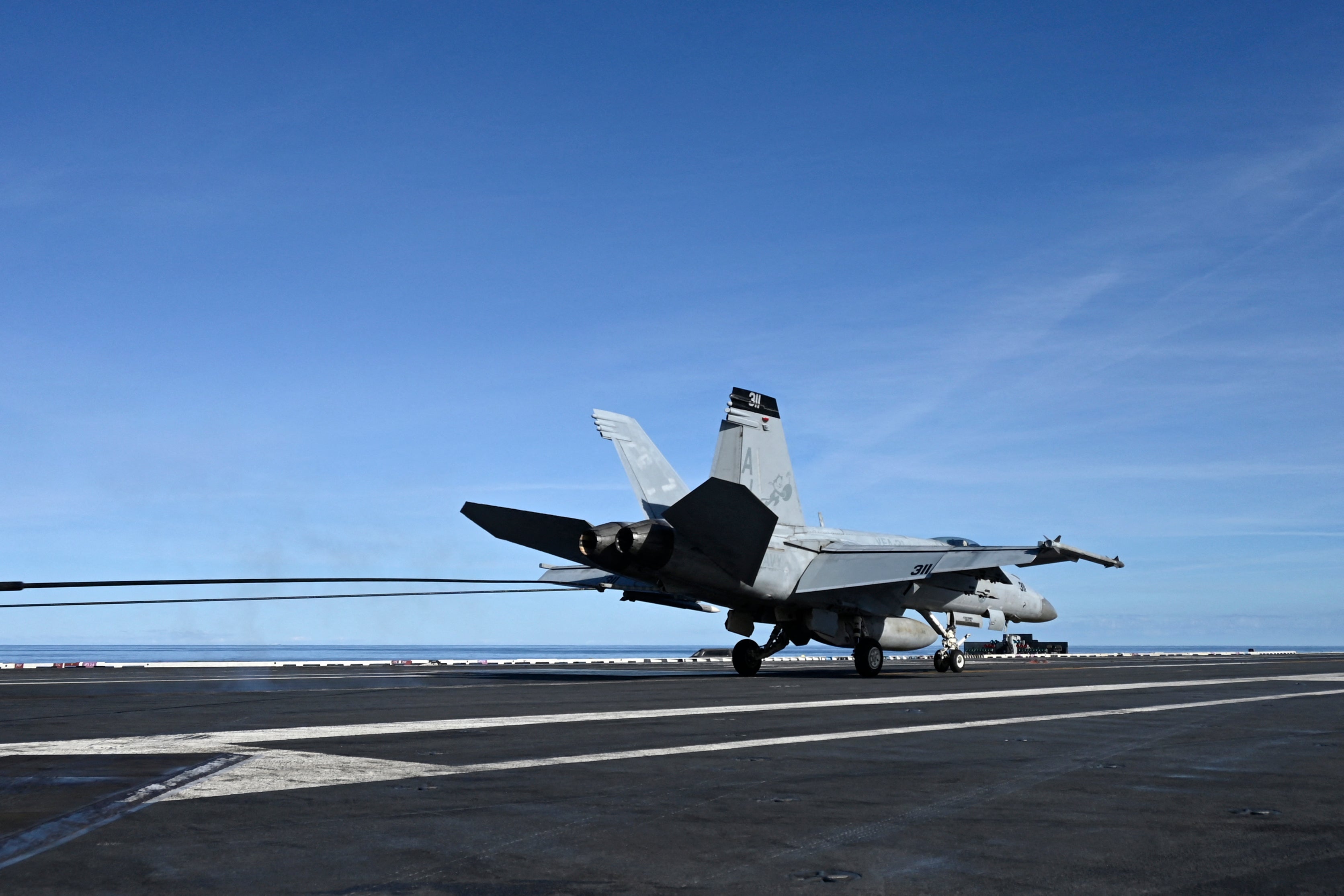 In July, Romanian F-16 fighter jet pilots shot down three Russian drones breaching national airspace for the first time after dozens of such incursions since the start of Russia's war in Ukraine (AFP/Getty)
AFP/Getty
In July, Romanian F-16 fighter jet pilots shot down three Russian drones breaching national airspace for the first time after dozens of such incursions since the start of Russia's war in Ukraine (AFP/Getty)
AFP/Getty
A Nato fighter jet shot down a drone after it entered Romanian airspace, according to The Independent, with fragments falling in an uninhabited area between two villages. The incident follows repeated incursions along Romania’s border region, as Bucharest and Nato track unmanned aircraft crossing from the direction of the war next door.
Romania’s defence ministry did not specify the drone’s origin, but Nato representatives suggested a Russian link, and Nato spokesperson U.S. Army Colonel Martin O’Donnell said the alliance was monitoring threats and ready to act, while details remained under investigation. The jet involved was an F-18 operating under Nato’s air policing mission as part of a Spanish contingent deployed in Romania, The Independent reports. The aircraft made radar contact with the drone and received permission to engage before shooting it down.
The episode adds to a pattern in which air-defence decisions are forced by geography and timing rather than by a clean attribution process. Romania has a long land border with Ukraine and has recorded numerous airspace incursions by Russian drones over recent years, alongside hazards such as floating sea mines in the Black Sea that threaten shipping and energy routes. Each intrusion is small in itself, but each one consumes radar attention, fighter hours, and political bandwidth, and turns the border into a running test of what counts as an “incident” that demands a larger response.
The operational details also show how alliance reassurance is delivered in practice: not through communiqués, but through standing deployments that can act within minutes and then file reports for weeks. Even when a drone is destroyed “safely”, as The Independent describes this case, the debris still lands somewhere, and local residents are left to absorb the risk while governments argue over provenance. Romania’s ministry noted previous shootdowns and crashes in the same general area in earlier years, suggesting that the deterrent effect of publicised interceptions is limited when drones are cheap and routes are repetitive.
As the war in Ukraine continues to push missiles and drones across borders, the airspace of neighbouring Nato states becomes part of the conflict’s logistics: a place where mistakes, navigation failures, and probing flights all look similar on radar until after the fact. That ambiguity is manageable only as long as the incursions stay small enough to be treated as routine.
The drone was detected crossing into Romanian territory from Moldova, The Independent reports. It was brought down by an air-policing fighter, and the fragments fell between two villages rather than into a town.